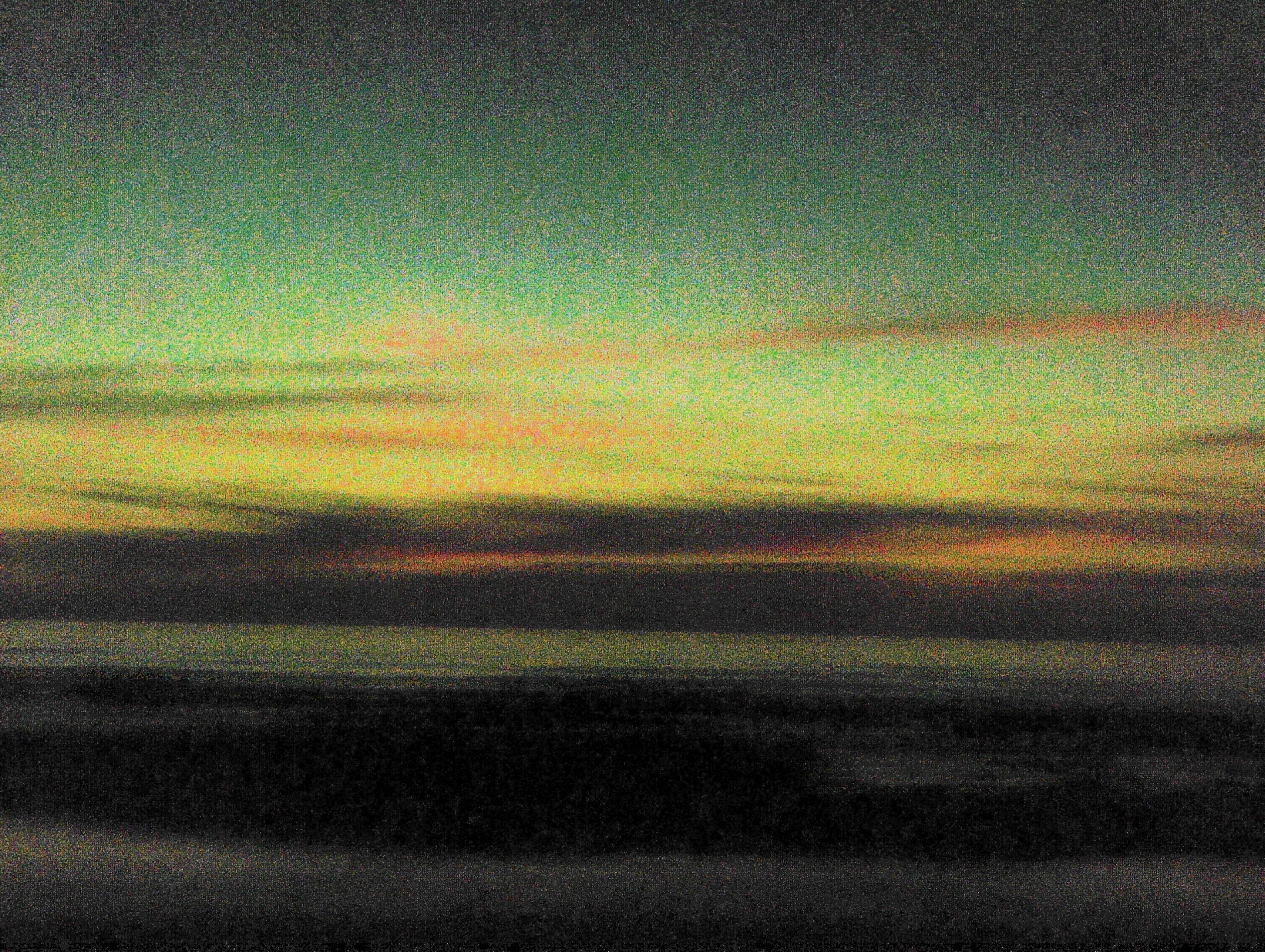
Oct 1
Barcelona
Part 1: graffiti
At this point I had been in Barcelona for a week or so. I was dead tired with jet lag and insomnia. Every moment I heard or saw Spanish I felt like such an idiot for not speaking it. High school Spanish had failed me - by passing me.
The work conference I was there for was over. Now I was just walking around like a damned tourist. This day, the first thing I did was meander through the city looking for street art with my mom. She had some sort of map guiding us to various bits of graffiti. We got lost about 10 times and the streets smelled like sewage but we got to see some interesting sights.

bob esponja
I unfortunately wasn’t taking too many pictures because of how tired I was, but here are some more.
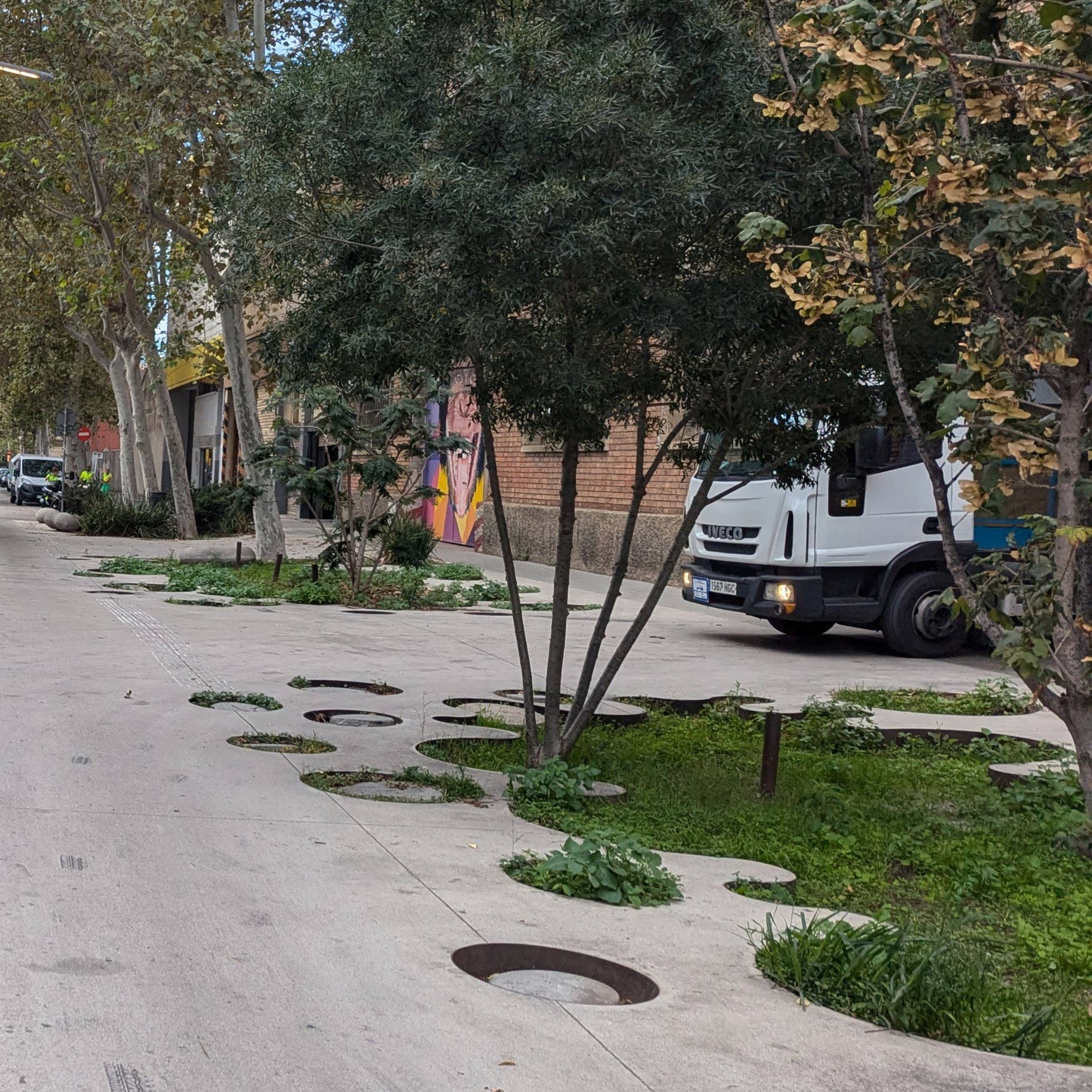
We entered a somewhat industrial area of the city which had a lot of unusual greenery. This was probably one of my favorite parts of the city.
"Ha, how could I be a tourist! I’m walking around an industrial area. This is where the real locals hangout...”
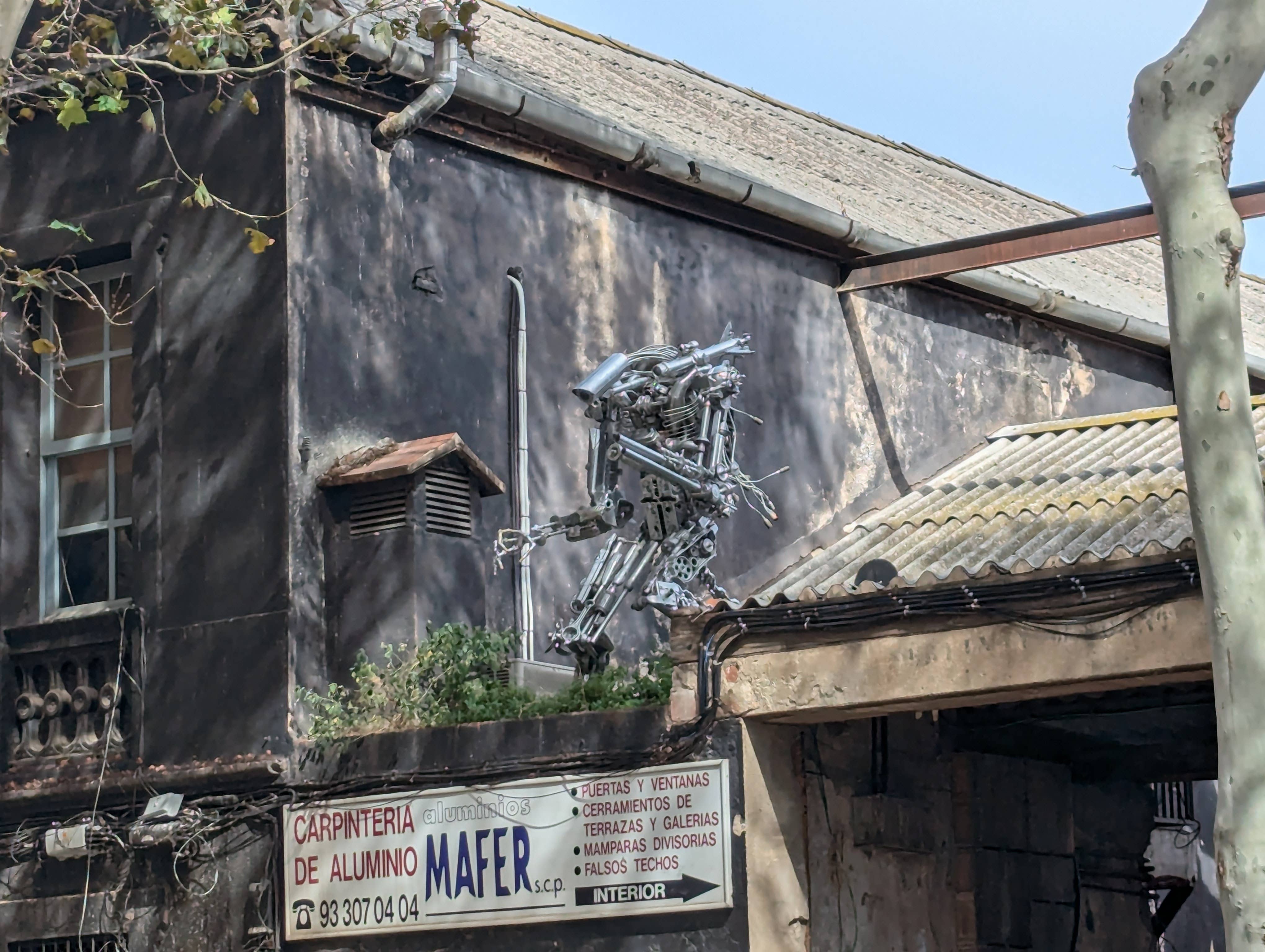
robot
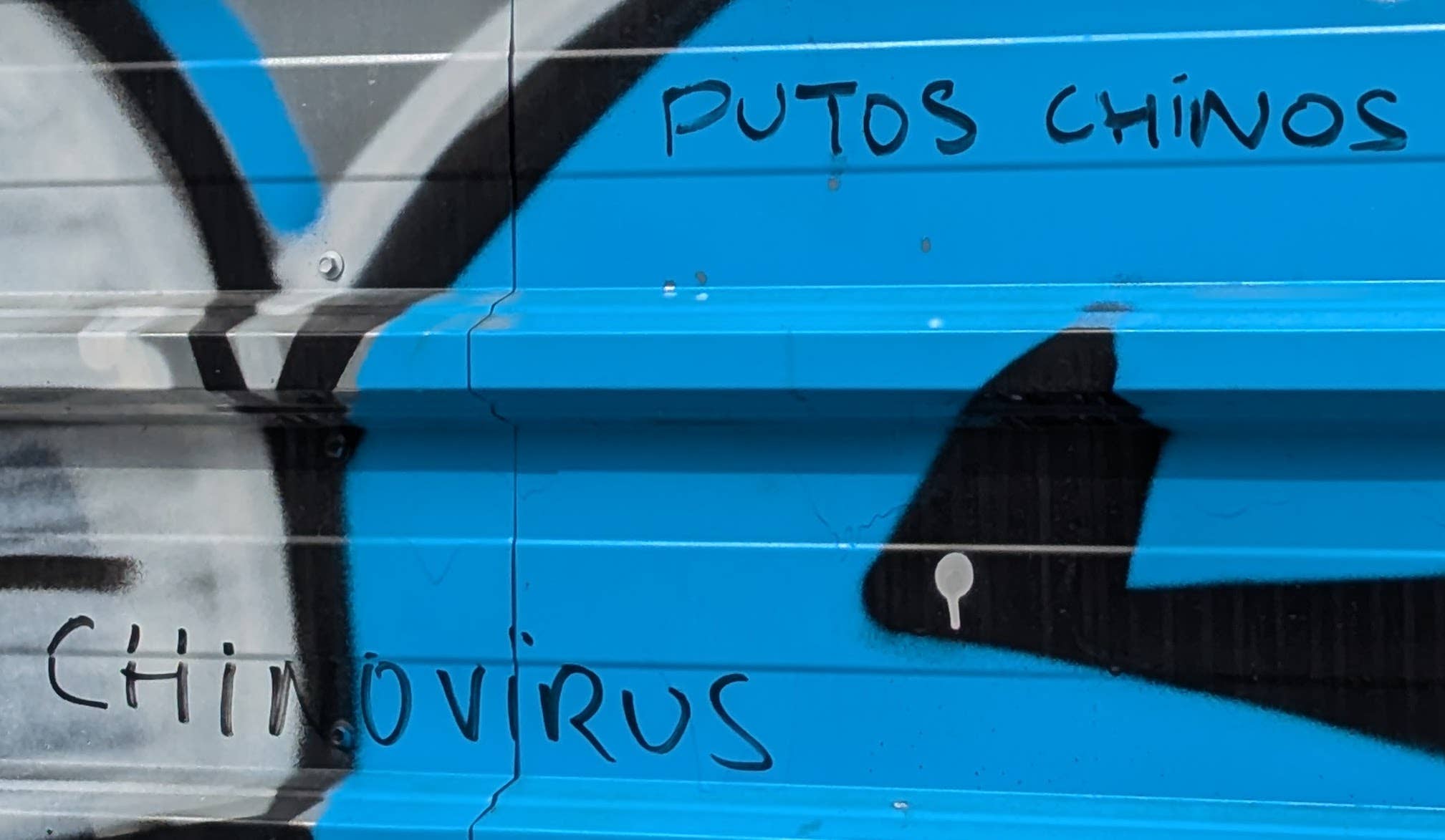
putos chinos = fucking chinese
chinovirus = chinavirus
At first when I read this I thought it was anti-tourist, because I got gringo mixed up with chino for some reason. But this is actually much worse.
Part 2: bleeding ears
I wanted to escape the shit stenched tourist filled nightmare of Barcelona so I picked a bit of wetland near the airport to search for Mediterranean Slant-faced Grasshoppers.
As a tourist you have a couple options to get around. The metro, light rail, and bus are all good ones. But if you want to get to some obscure swamp at the edge of town you've only got one: a suicidal maniac driving a little yellow and black taxi. Roads in Barcelona are narrow, and there are a lot of pedestrians, so naturally that means the whole place should be driven around in like it's a Formula 1 race.
* And these drivers are as skilled as F1 racers. It's actually extremely impressive.
sights on the drive there

It reminded me of Doofenshmirtz Evil Incorporated.
Sadly the top part is a fancy restaurant. Make it an Arbys's.
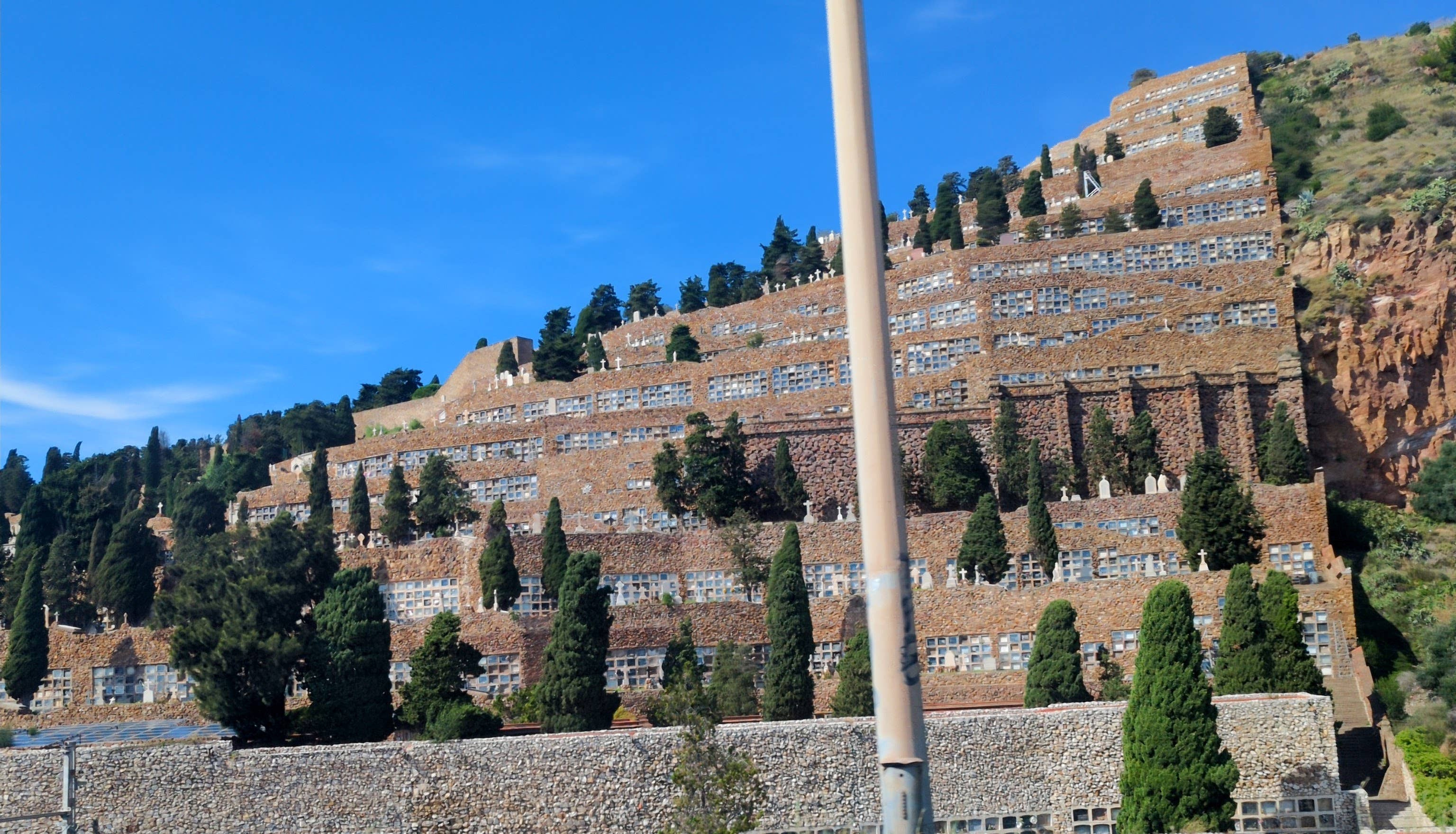
Cementiri de Montjuïc
Built 1883
We arrived at a part of the Llobregat Delta to the west of the airport. As you can see from the map below, the runways are directly aligned with both wetlands to either side. Meaning that every 10 minutes I had to cover my ears or risk going deaf.
The first bugs I encountered were a couple Western Willow Spreadwings (Chalcolestes viridis). Spreadwings are a kind of damselfly found under the family Lestidae. They keep their wings spread open while resting, instead of folding them together like most damselflies do.
* Not all members of Lestidae spread their wings like this, but the majority of damselflies that possess this trait fall under this family.
The genus Chalcolestes contains 2 similar looking species and ranges througout most of Central and Southern Europe along with a bit of Northwest Africa, and the Middle East. They have a typical odonate lifecycle. And they breed on overhanging trees, such as willows, which is where they get their name from. As far as damselflies go they are relatively large, sitting at around 2 inches in length.
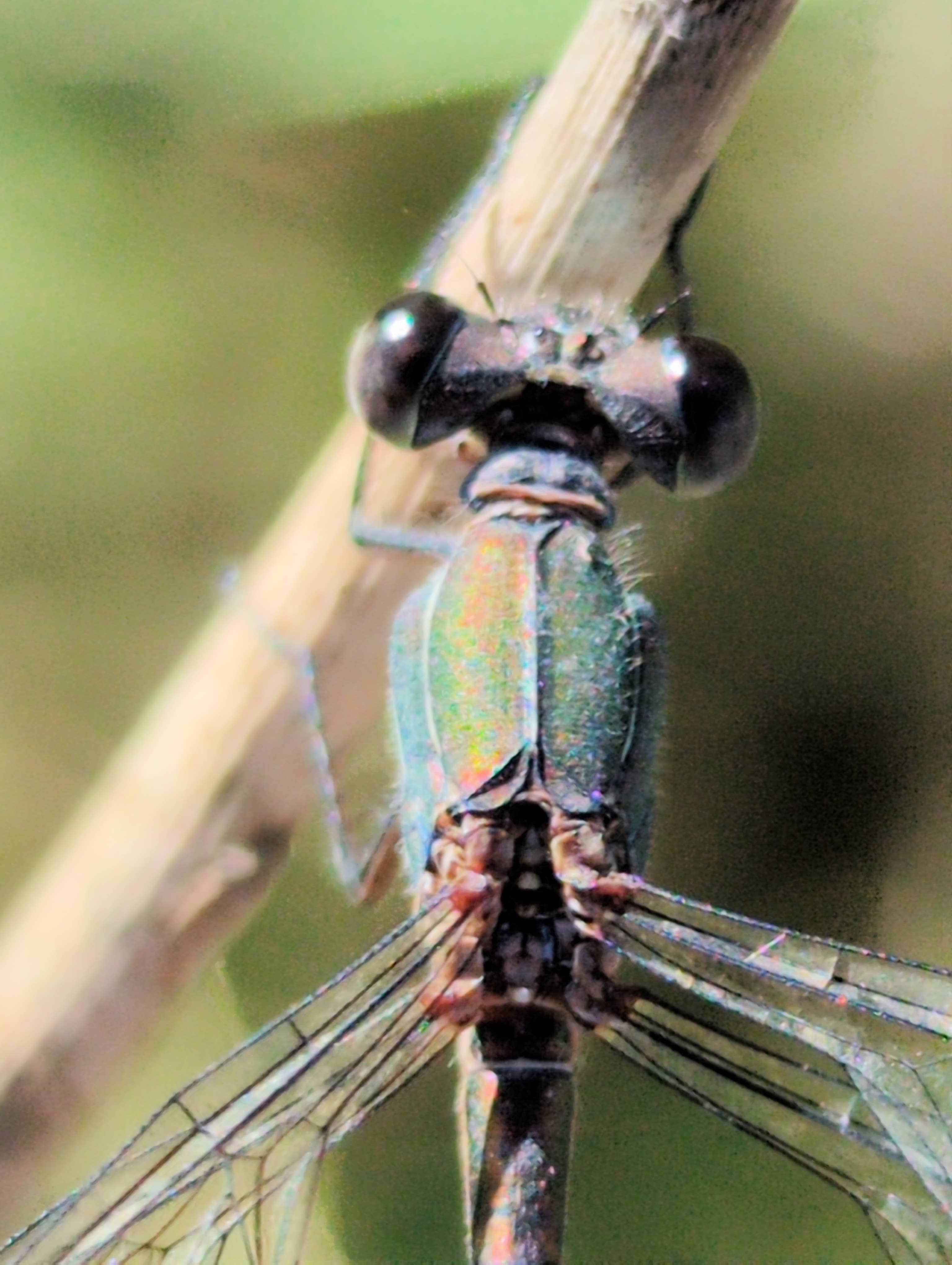
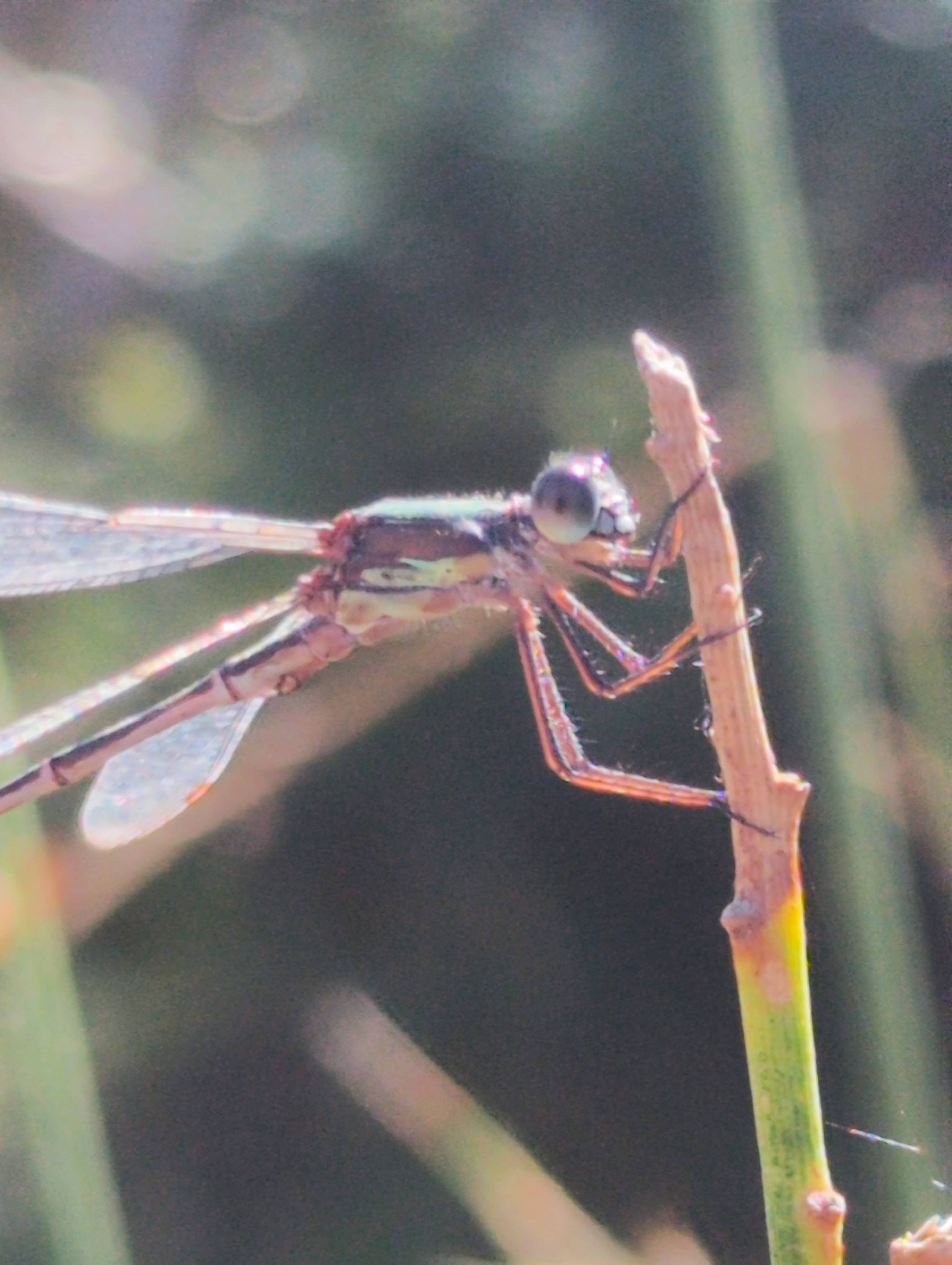
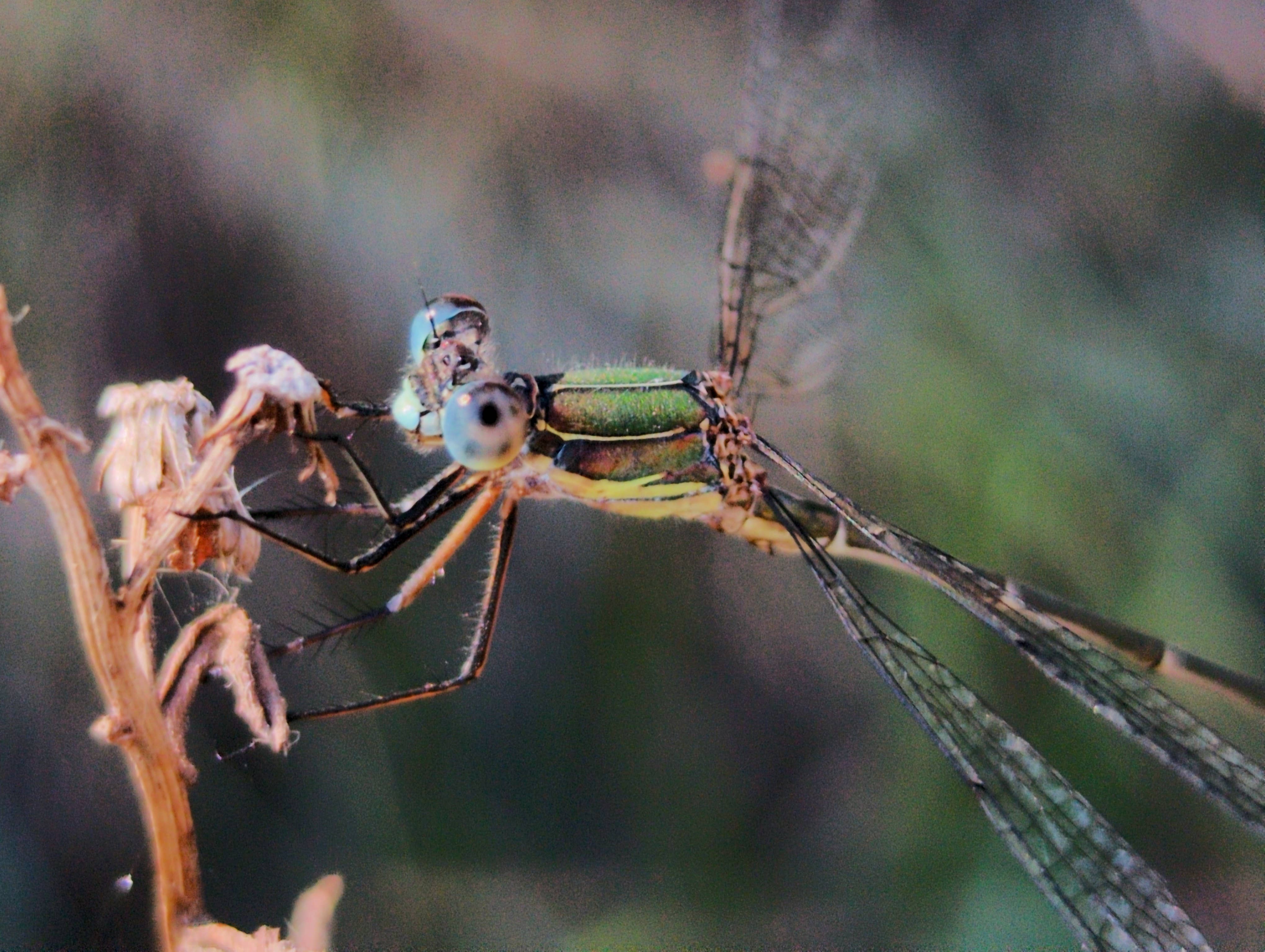
Chalcolestes viridis
These damselflies were the tamest I've ever encountered. They would frequently land on bushes next to me, even while I was walking past with my net. This made it really easy to get close and get some pictures.
Aspects I like:
- Their eyes can be shades of pastel pink, green, and blue. * I've seen lots of other pictures online showing C. viridis with reddish eyes so I don't know if the pastel colors I experienced are common.
- Their thorax has this armored look to it, I'm not sure if I can call it geometric but something about it is extremely satifying to look at. The color of the thorax is also amazing, metallic green with red and yellow iridescence.
- The spreadwing trait itself along with how they horizontalishly perch gives them this robustness ("cool factor") that dragonflies have. * But unlike dragonflies I prefer damselfly faces, along with their personalities. I find them to be a lot more relatable. So these guys are in a sense the best of both odonate worlds.
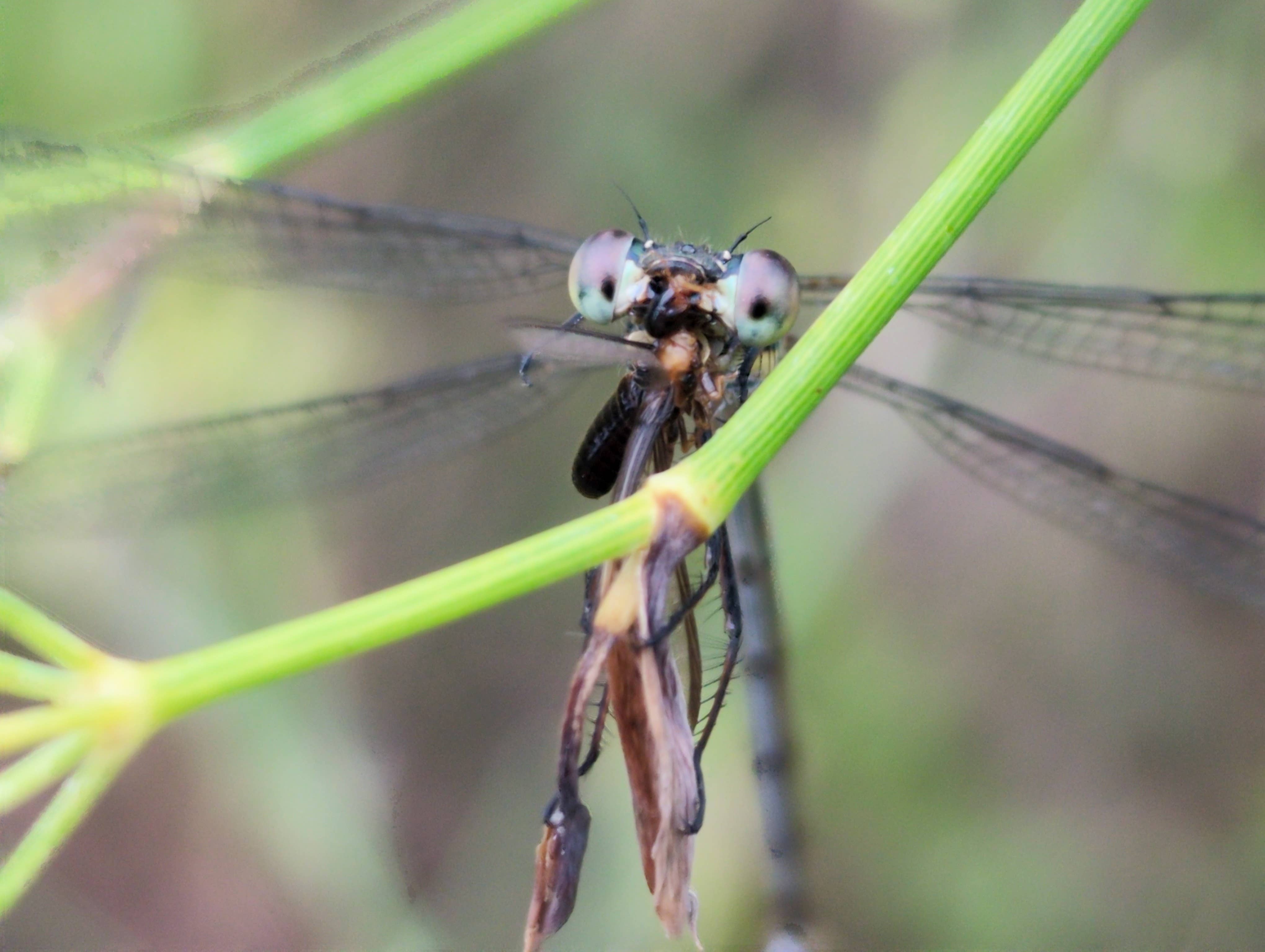
Chalcolestes viridis eating some other bug. You can really see the pastel eyes here.
Some other odonates I saw:
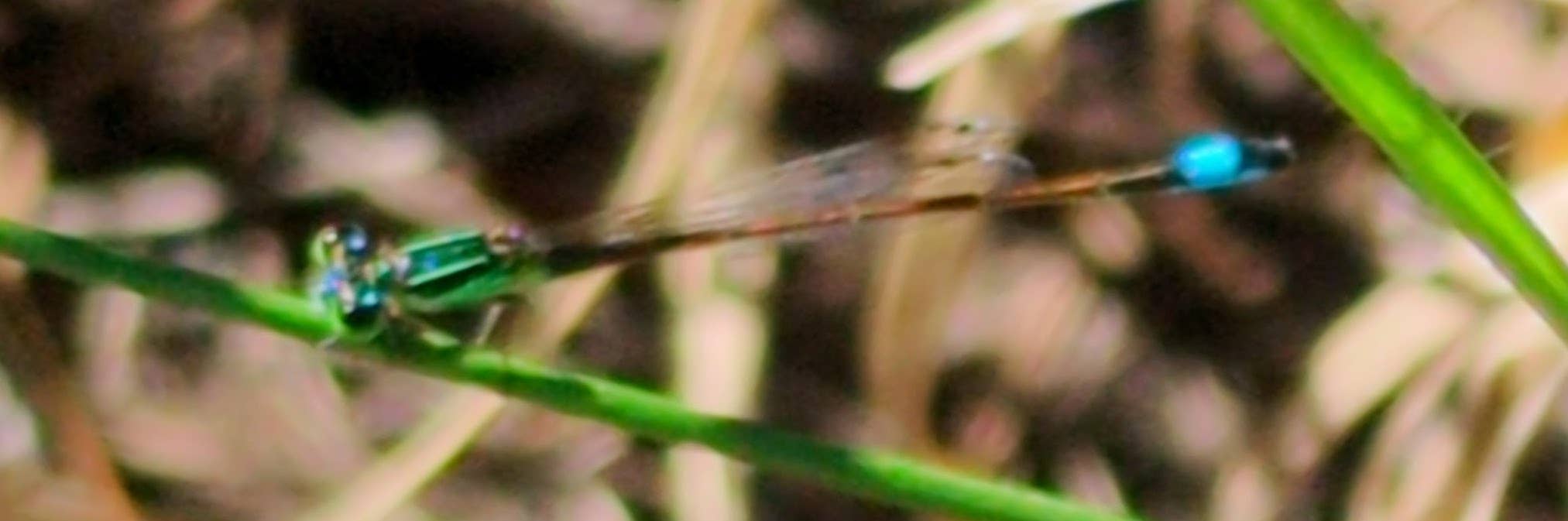
Example of typical damselfly morphology. A little Ischnura. Beautiful, the colors are so saturated!
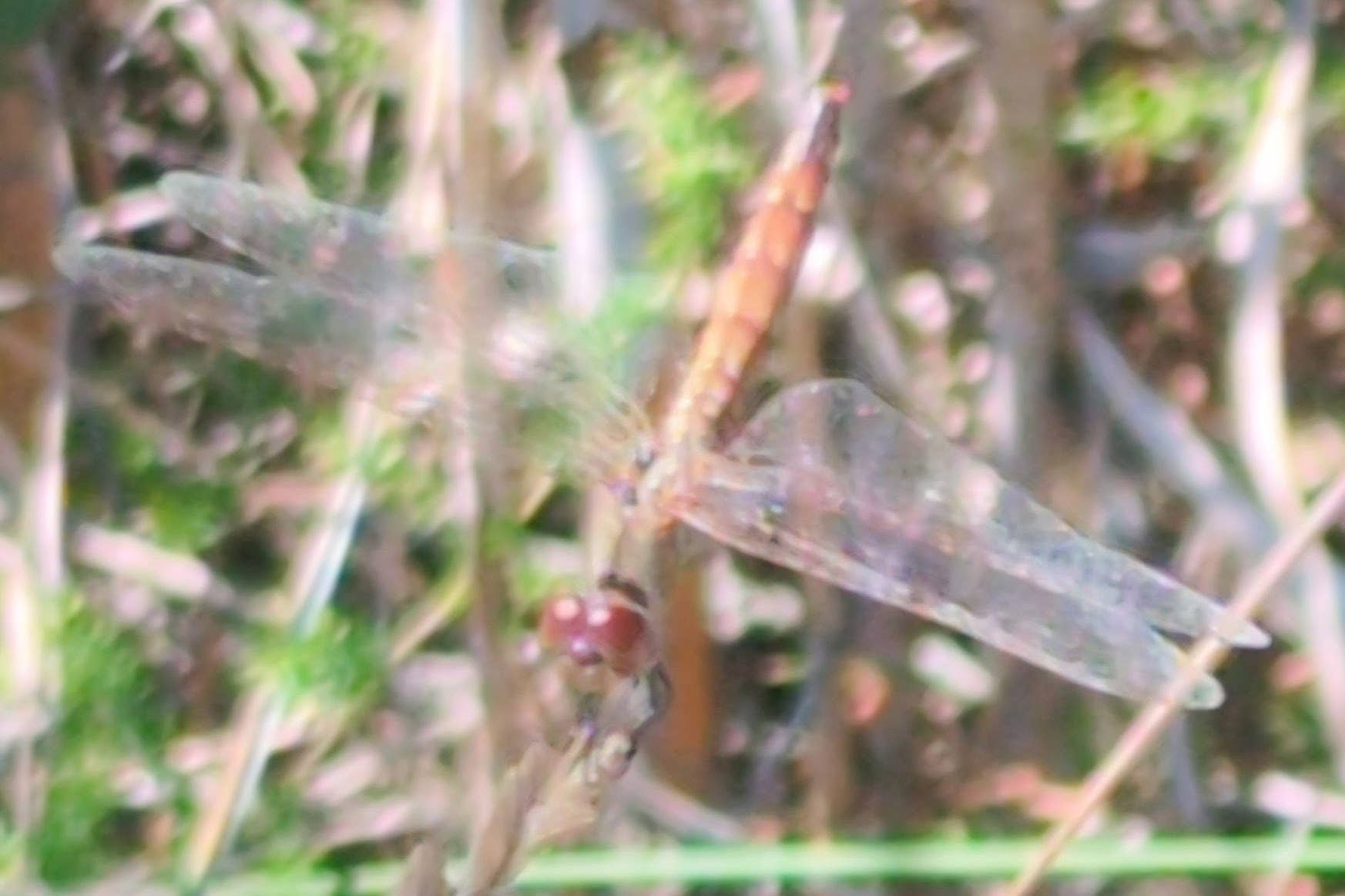
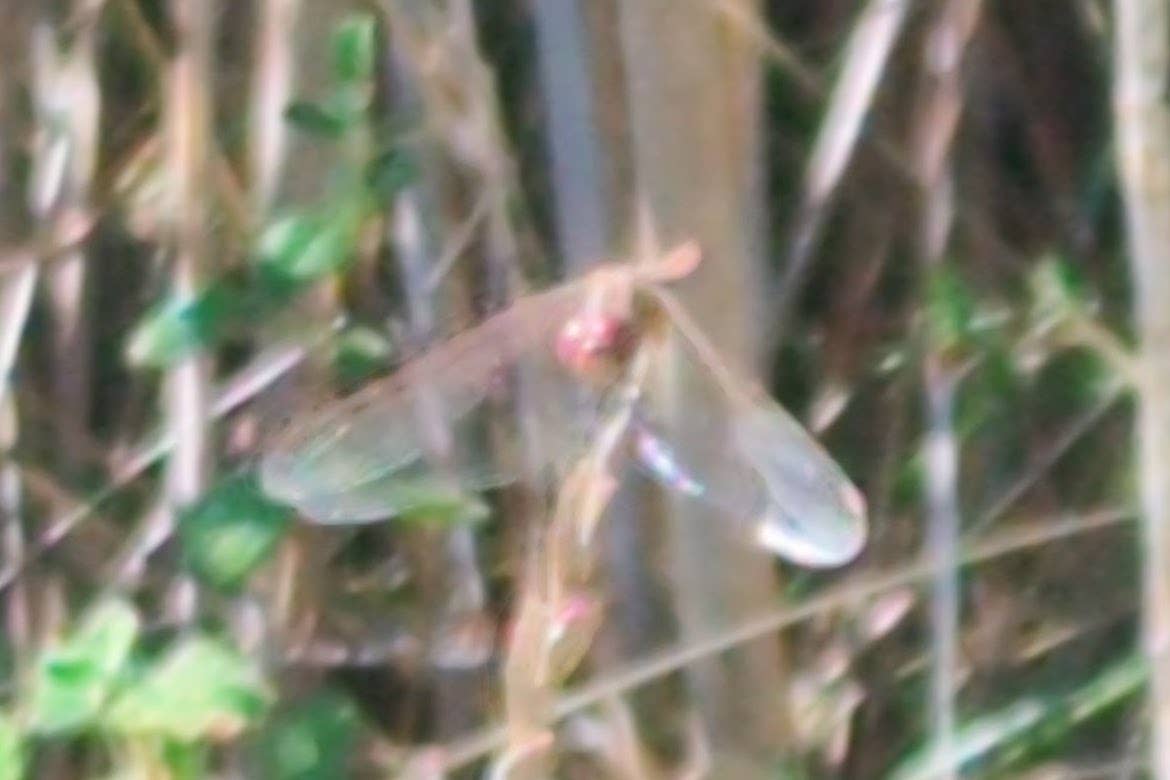
A Violet Dropwing (Trithemis annulata). A dragonfly of Southern Europe, Africa, and the Middle East. Another odonate with an atypical resting wing orientation. This is such a cool place to look for Odonata. This one is more dull in color because it's a female, but the males are an intense neon violet with red wing veins. Finding a male T. annulata is one of my goals. On my quest to rename insects I'd name these "Droopwings", it just makes more sense.
My bugging along this stretch mainly consisted of scanning through large bushes and scrubs.
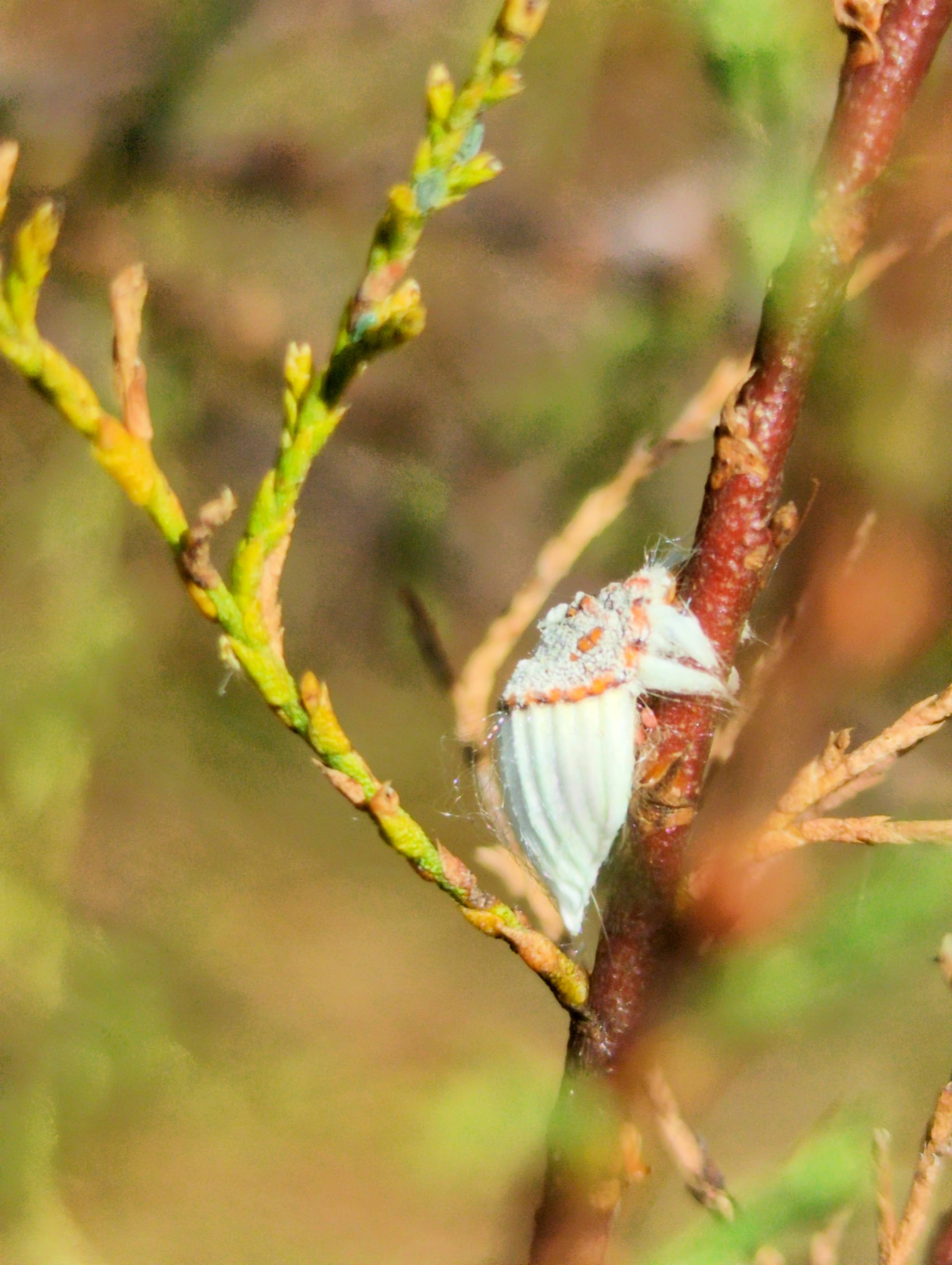
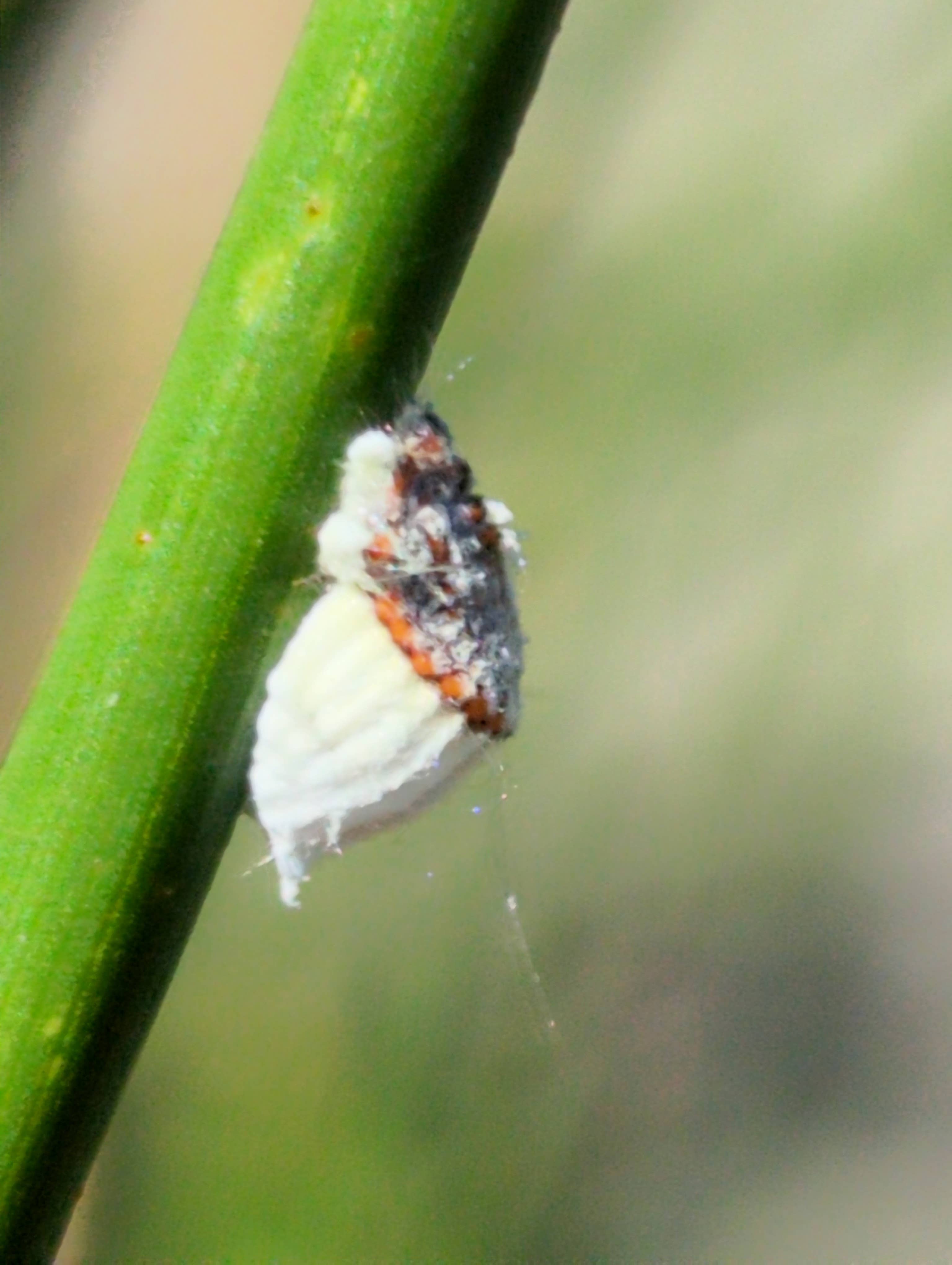
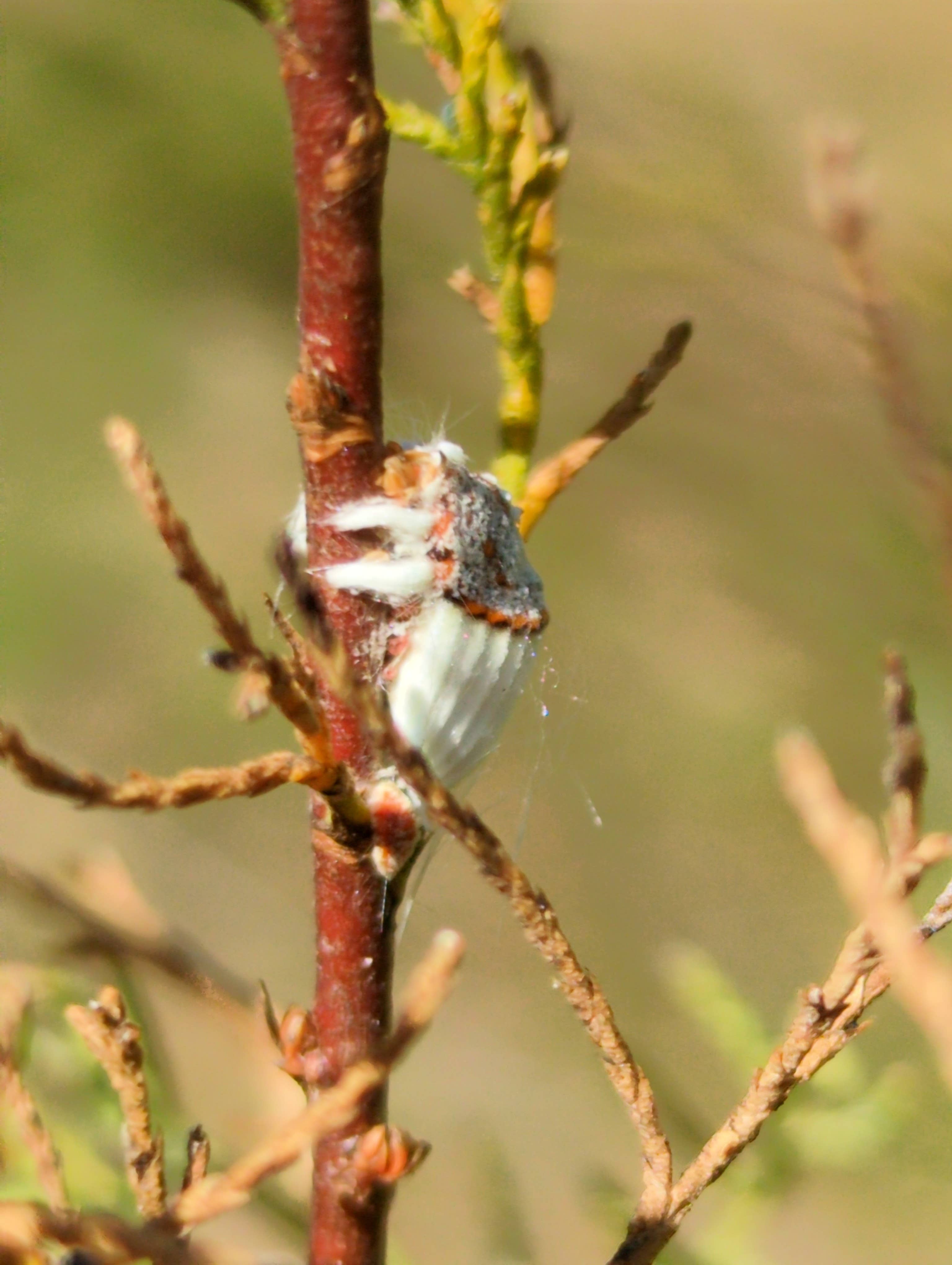
Cottony Cushion Scale (Icerya purchasi)
I had seen pictures of this species before since it's the most observed Scale Insect (superfamily Coccoidea) on iNaturalist. It was funny when I encountered it because I hadn't realized I was in an area where I could find it. I was just like "oh shit I know you". (Apparently it's invasive here, and it's originally from Australia). To be honest, I still dont fully understand the anatomy of these things. I guess there are 6 legs and a proboscis sucking up plant juices somewhere in there. If Scale Insects confuse you, for reference they're in the same suborder as Aphids, and are part of the order Hemiptera which also contains Cicadas and Stink Bugs. Here's a life cycle diagram I found -> here. I've had trouble finding cross sections of these things, but I think the female exoskeleton is mostly a soft waxy substance? I'll let the rest remain a mystery in my mind for now.
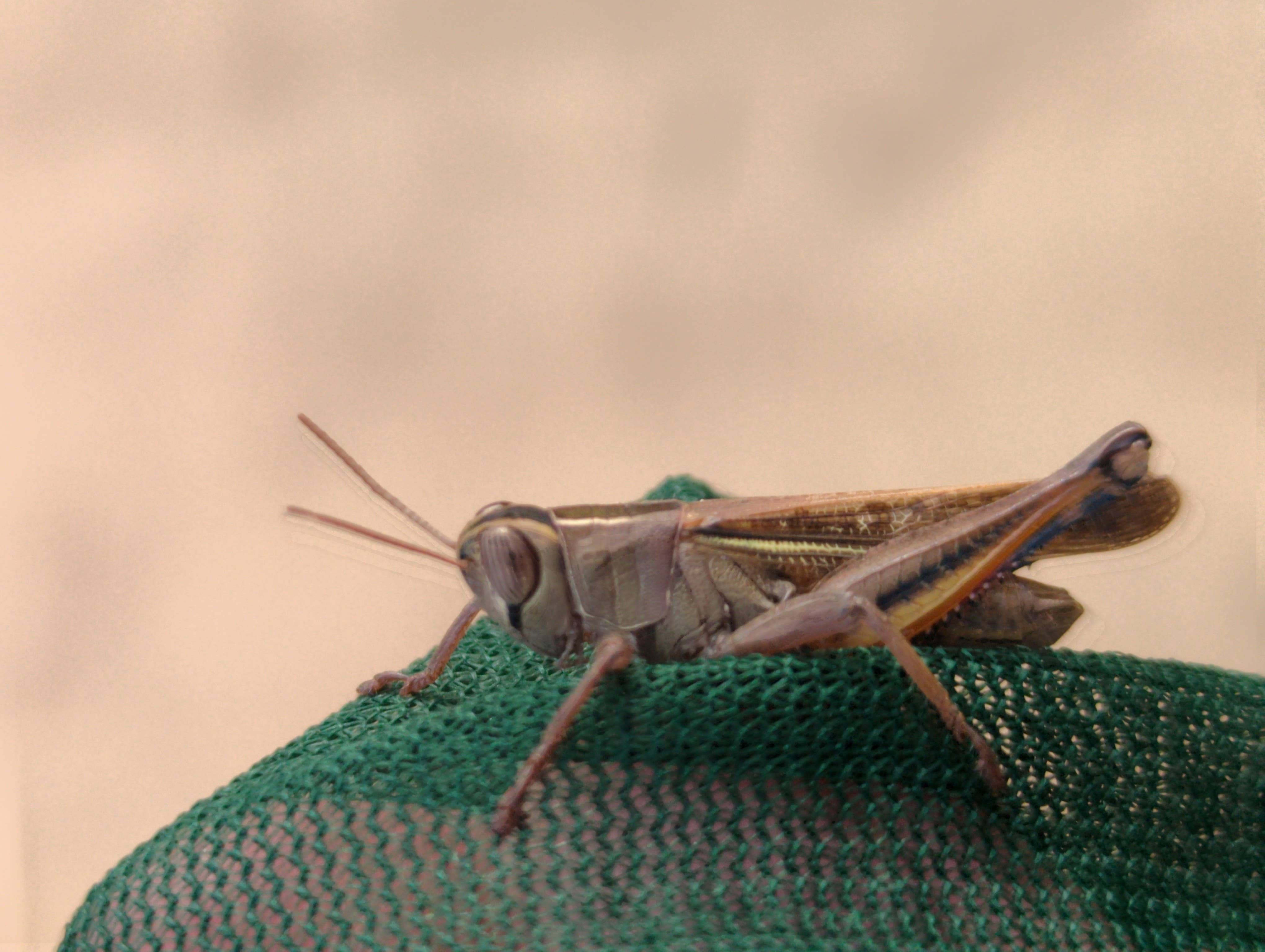
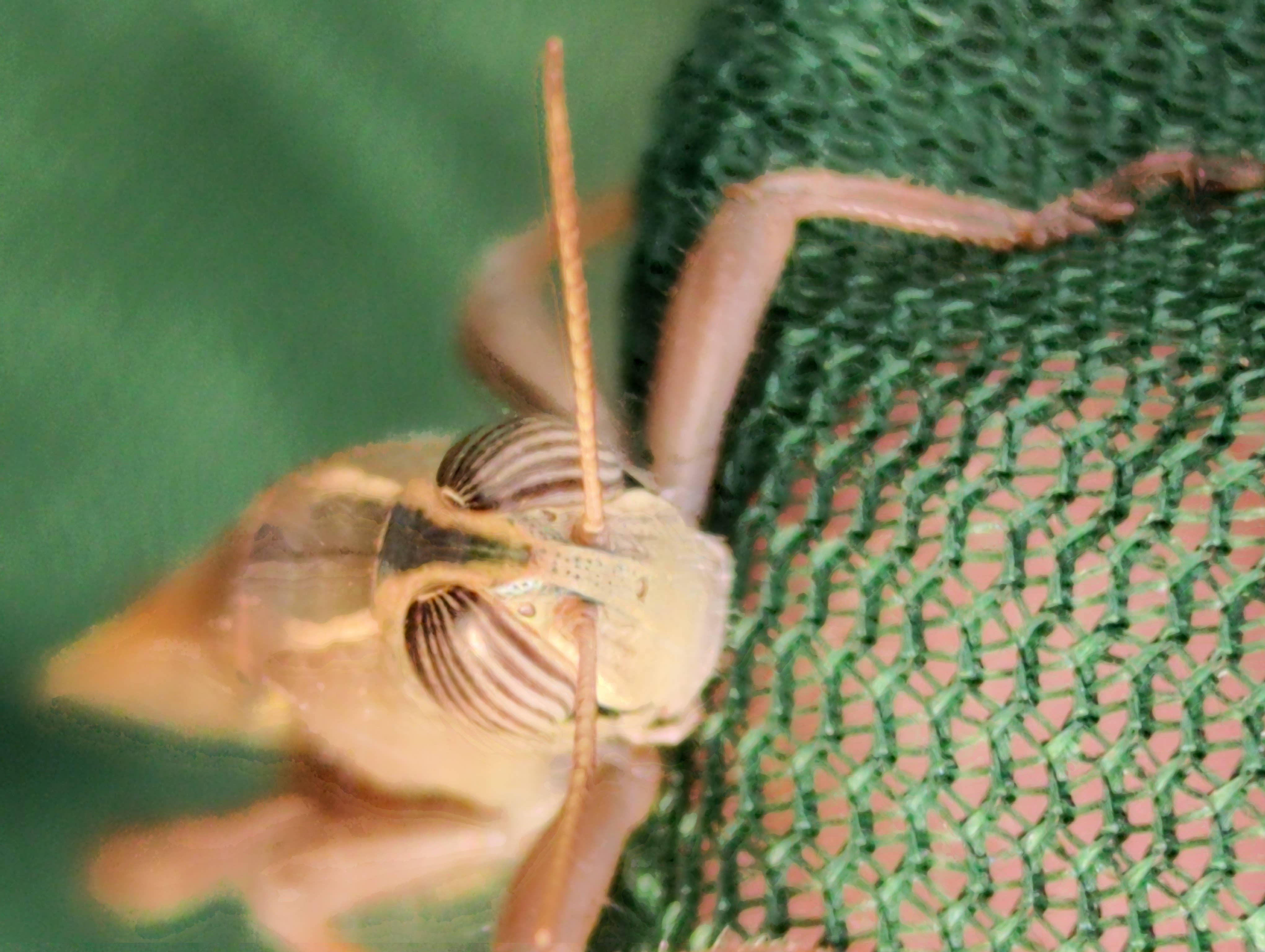
Lamenting Grasshopper (Eyprepocnemis plorans)
Get me a pair of these glasses.
(||||) _ (||||)
It's not just this species... it seems like a fair amount of grasshoppers under the tribe Eyprepocnemidini have striped eyes similar to this. Sick tribe !! (|||) _ (|||) (|||) _ (|||) !!
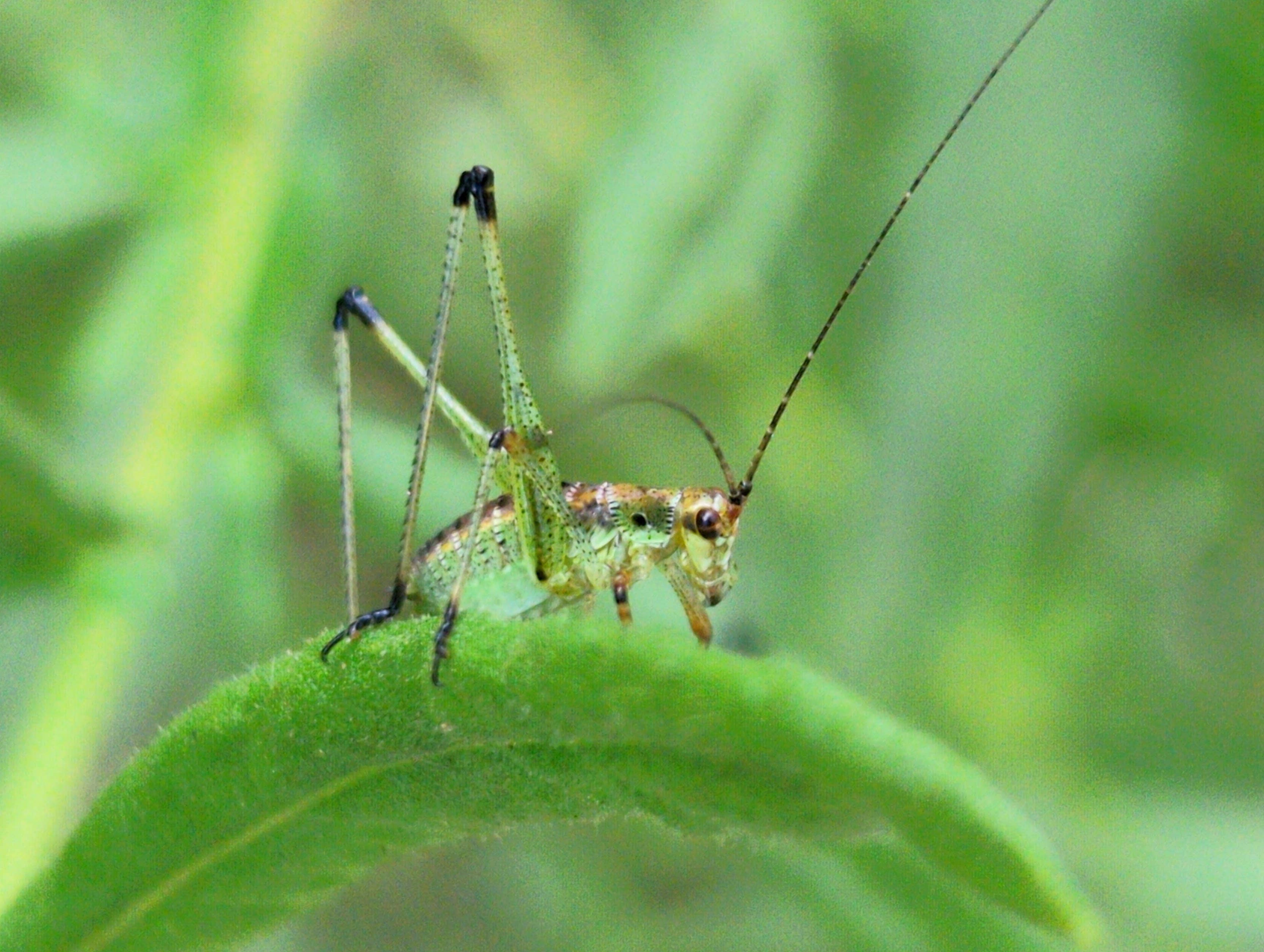
Leaf Katydid (subfamily Phaneropterinae)
A cute little nymph with big antenae. It's hard to identify Leaf Katydid nymphs so I haven't even tried for this one.
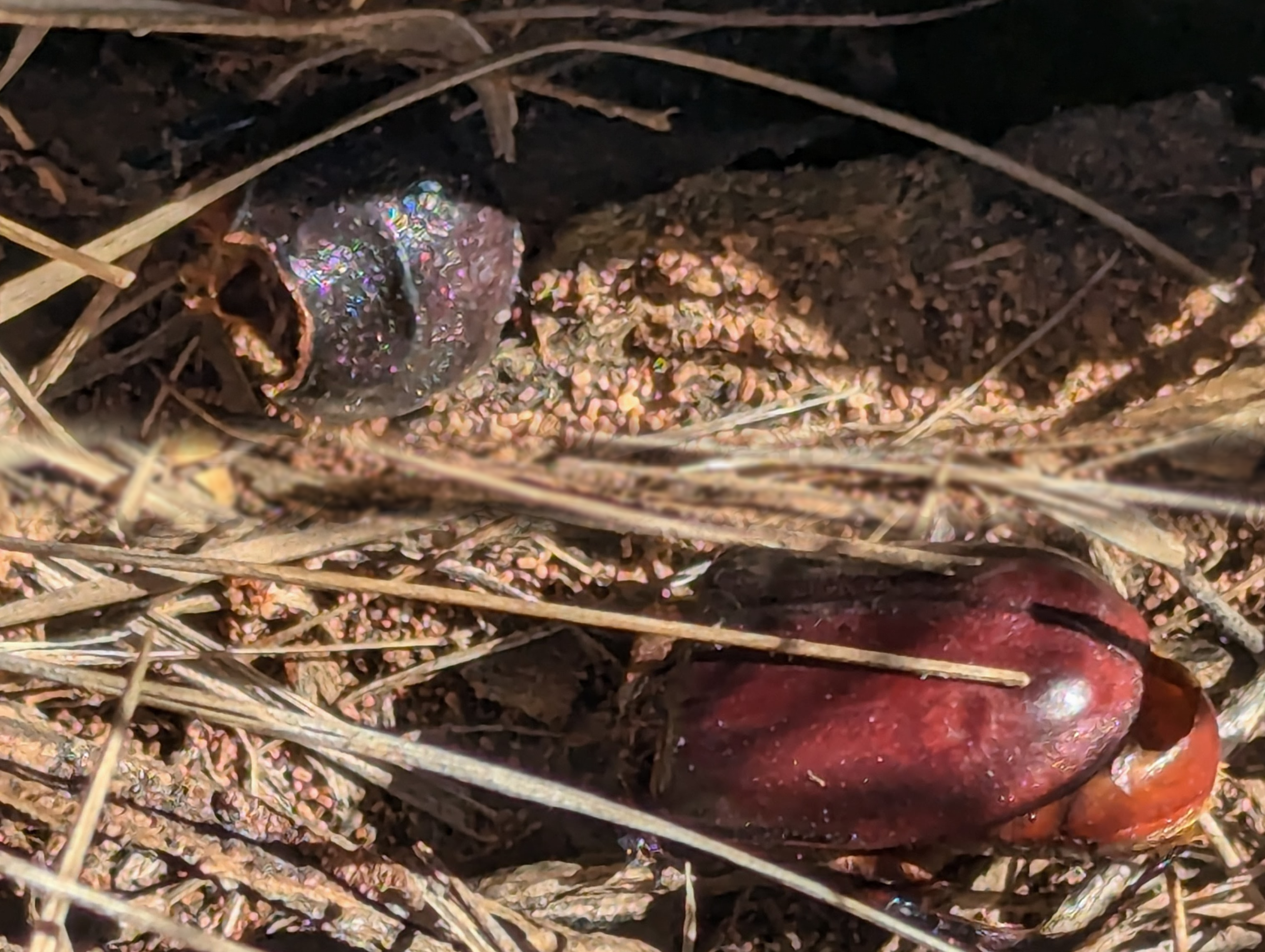

European Rhinoceros Beetle
(Oryctes nasicornis)
corpse (Oct is out of season for adults)
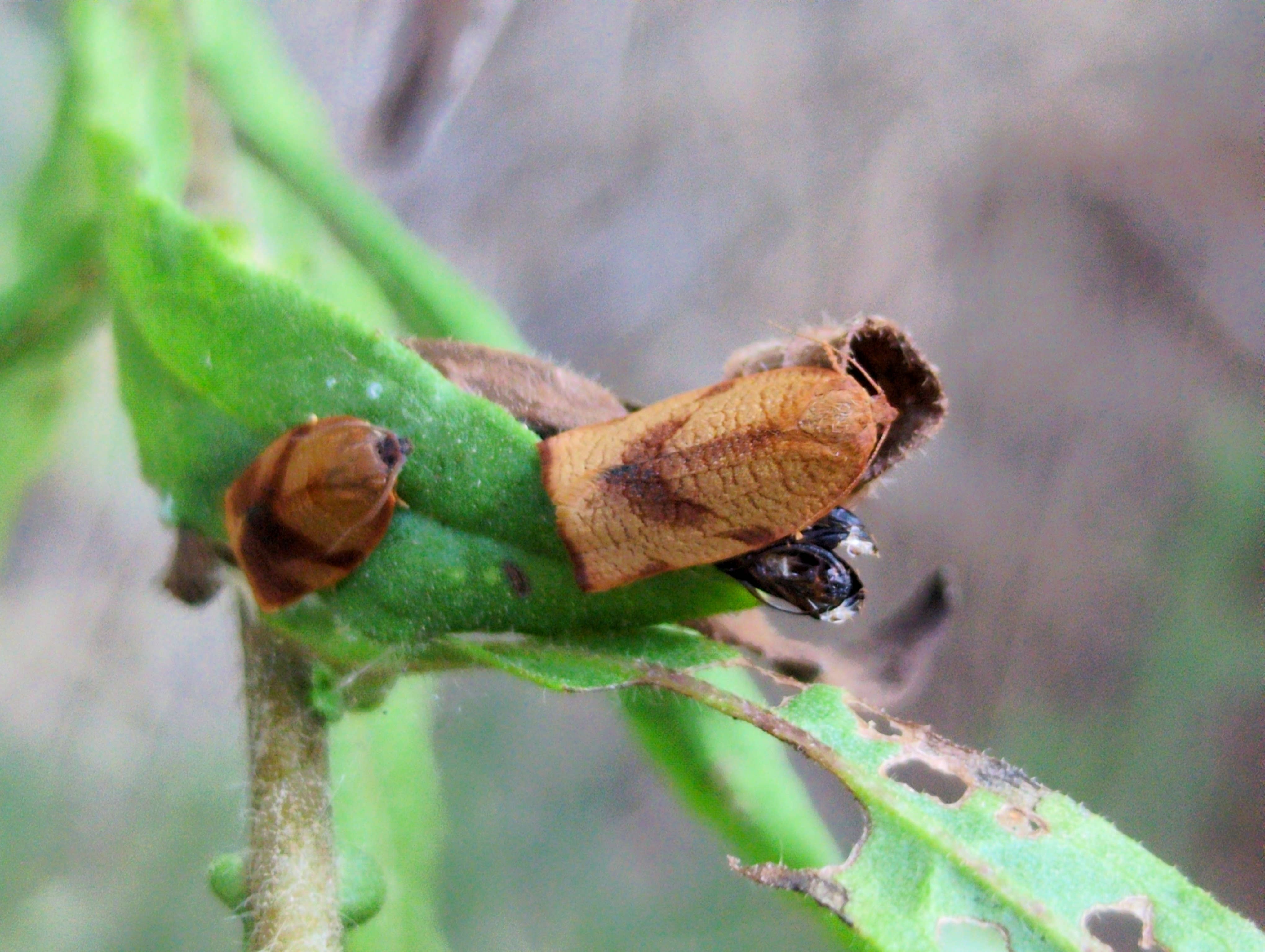
Some moths.
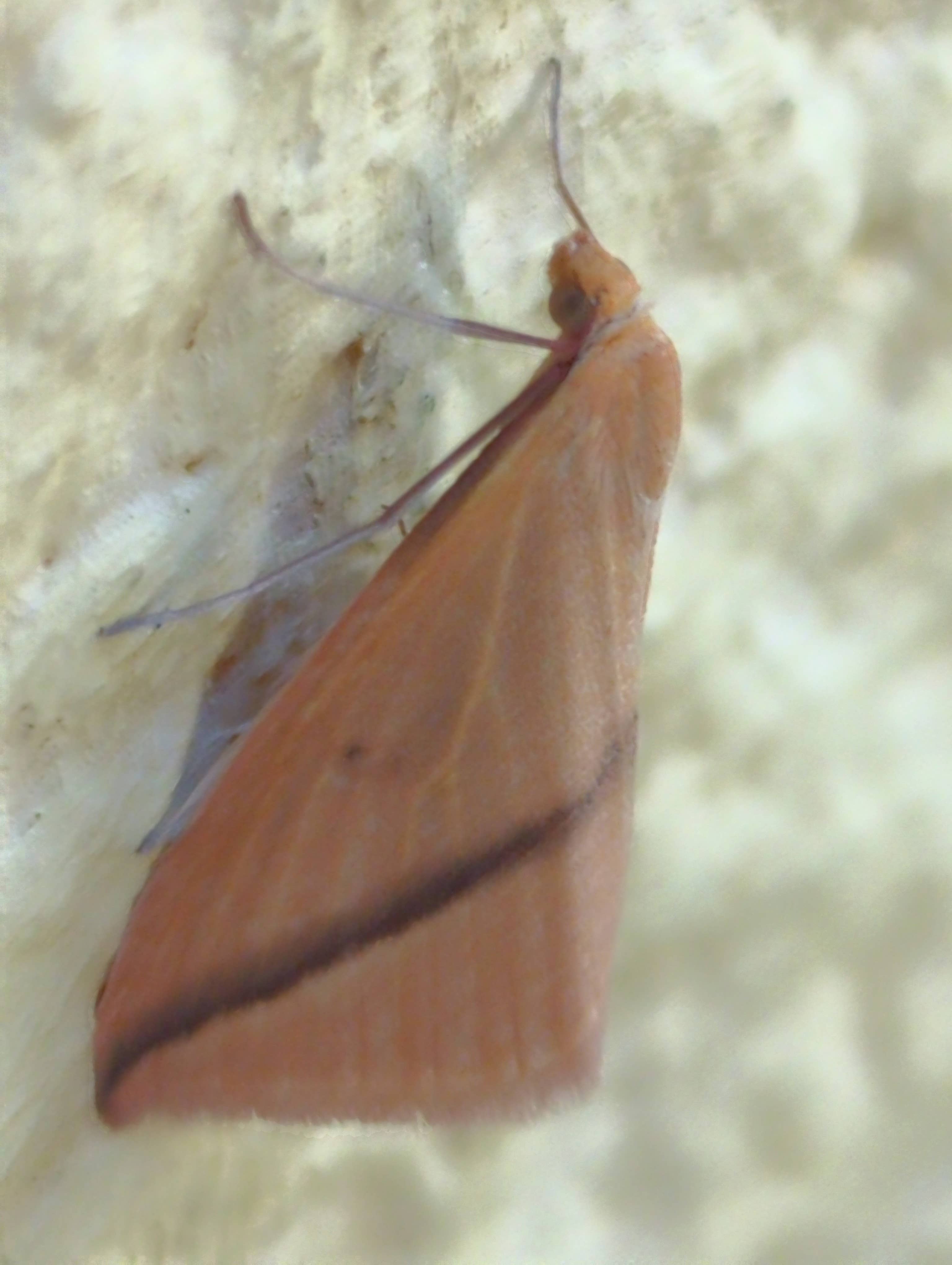
Carnation Tortrix (Cacoecimorpha pronubana)
Native
Beet Webworm Moth (Spoladea recurvalis)
Introduced
Unfortunately for me, I didn't know this at the time. This is a "mistake" that I've made before, where I'll find something so rare I don't realize it. (--_--)
I think all things considered, I got a nice picture.
Oenopia doublieri is a species of Lady Beetle (family Coccinellidae) native to the Mediterranean. The species seems to have some association with water, many observations being located along the coast or near rivers or lakes. So it makes sense that I found one here.
Pink animals are rare. I think finding pink animals gives you extra points or something.
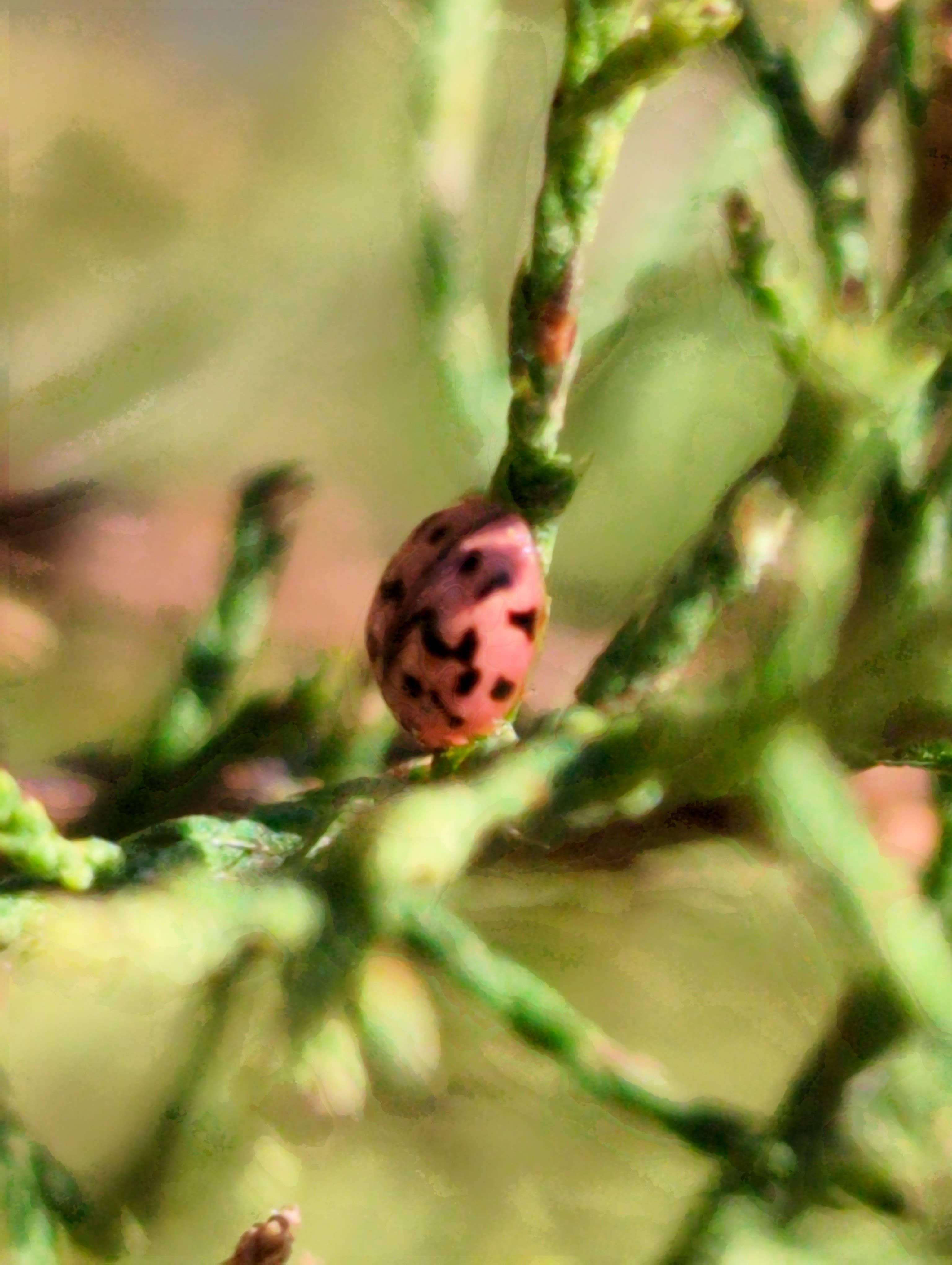
spot the alien
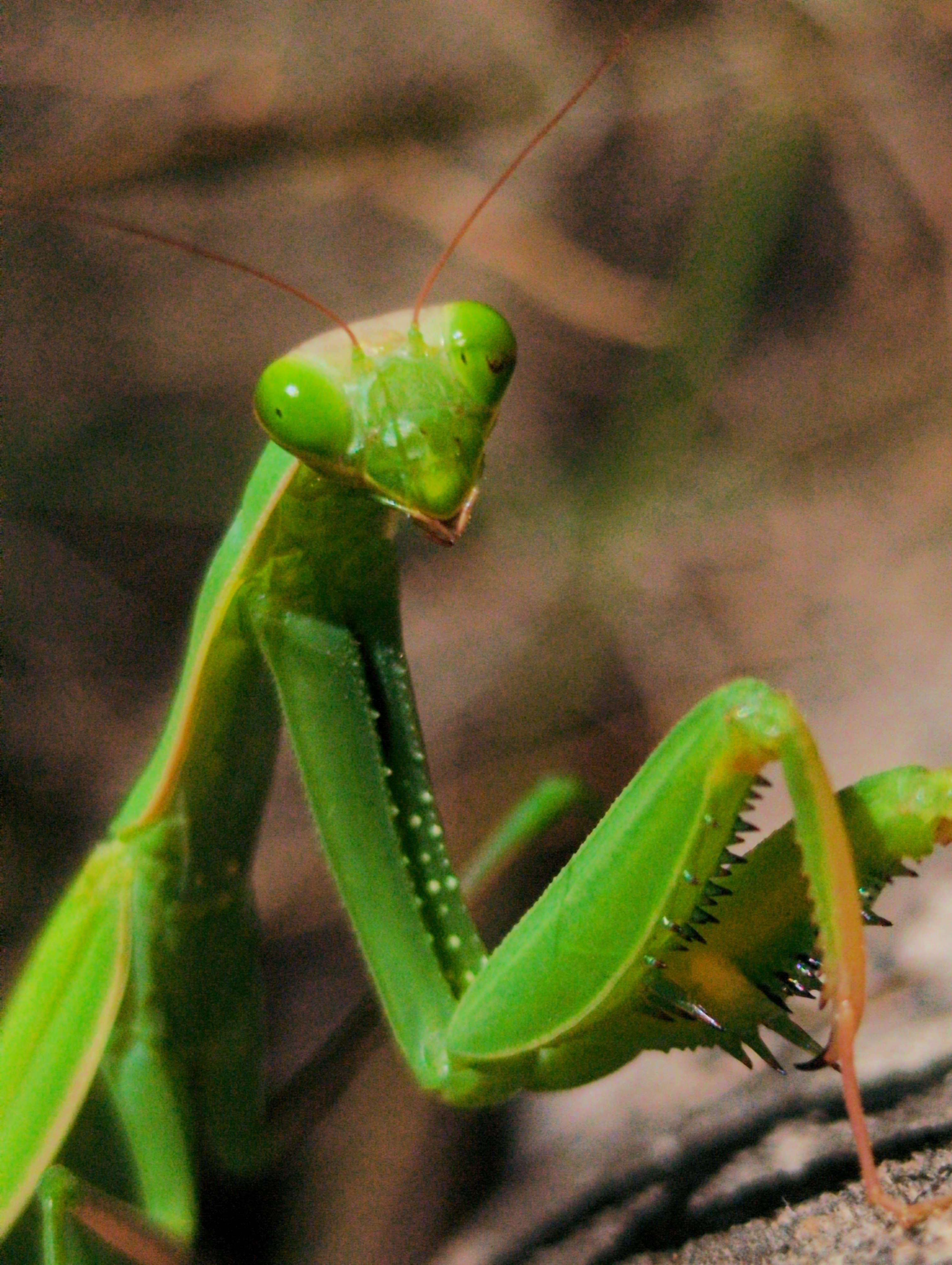
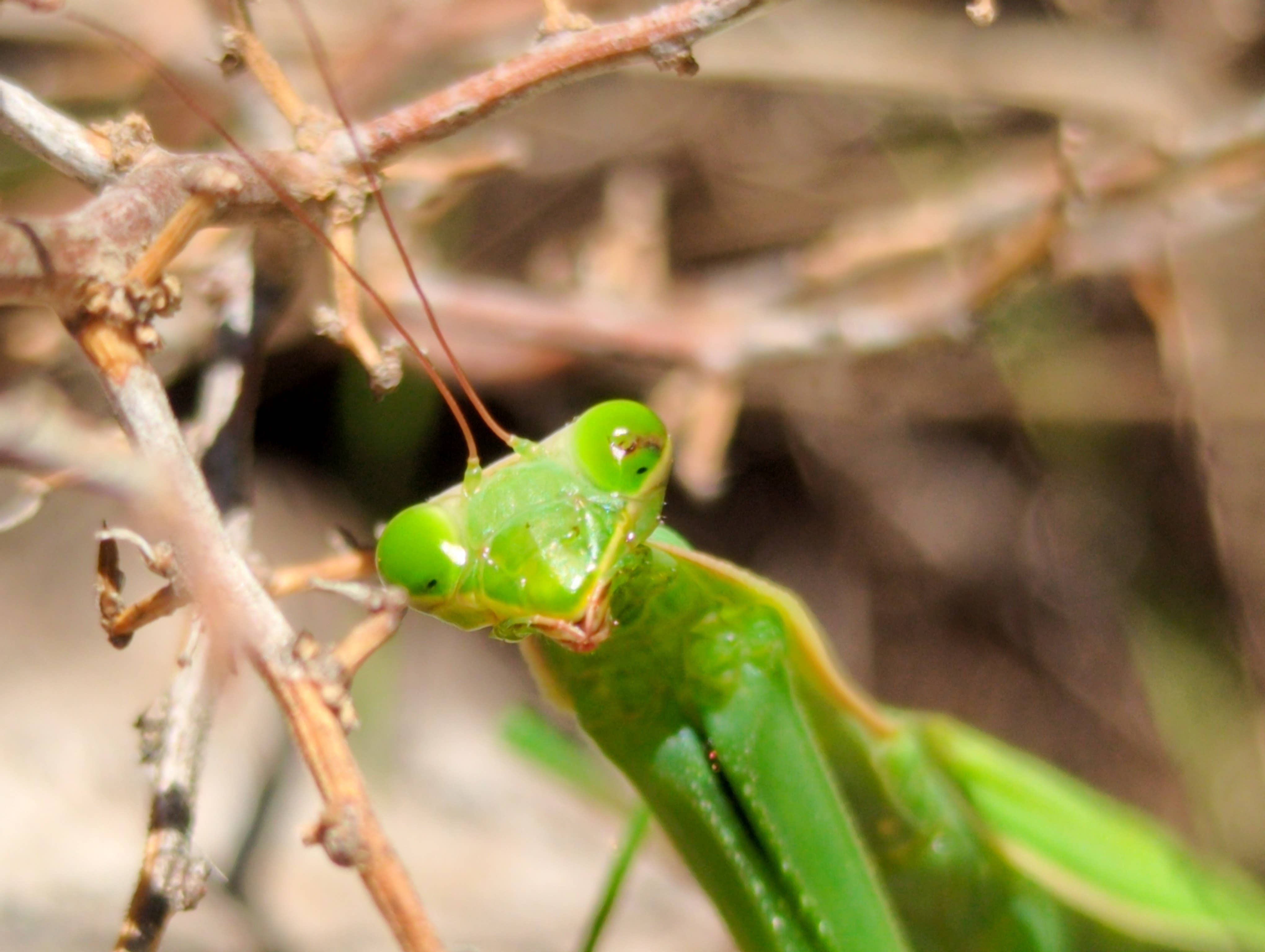
European Mantis
(Mantis religiosa)
caught the alien
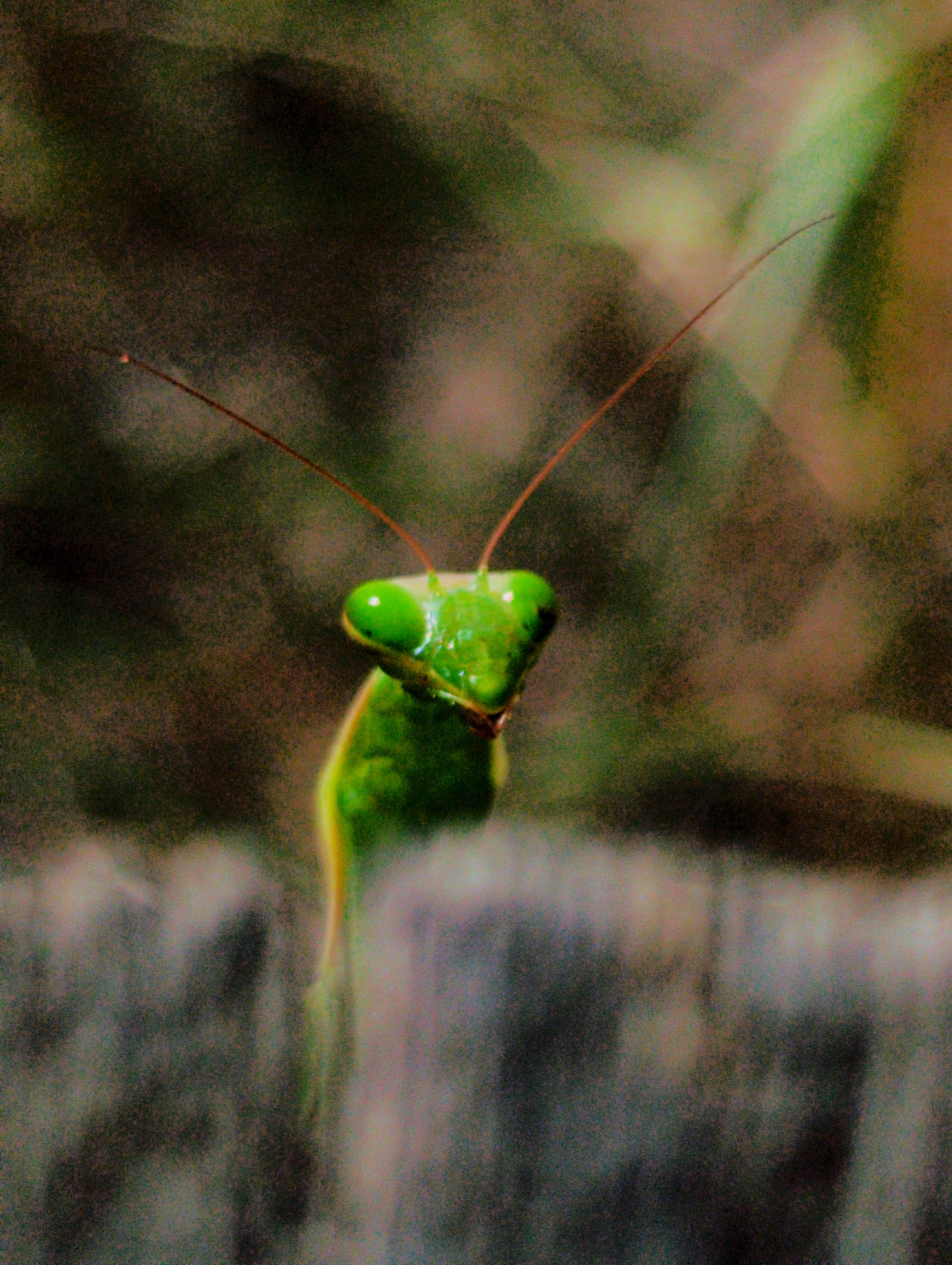
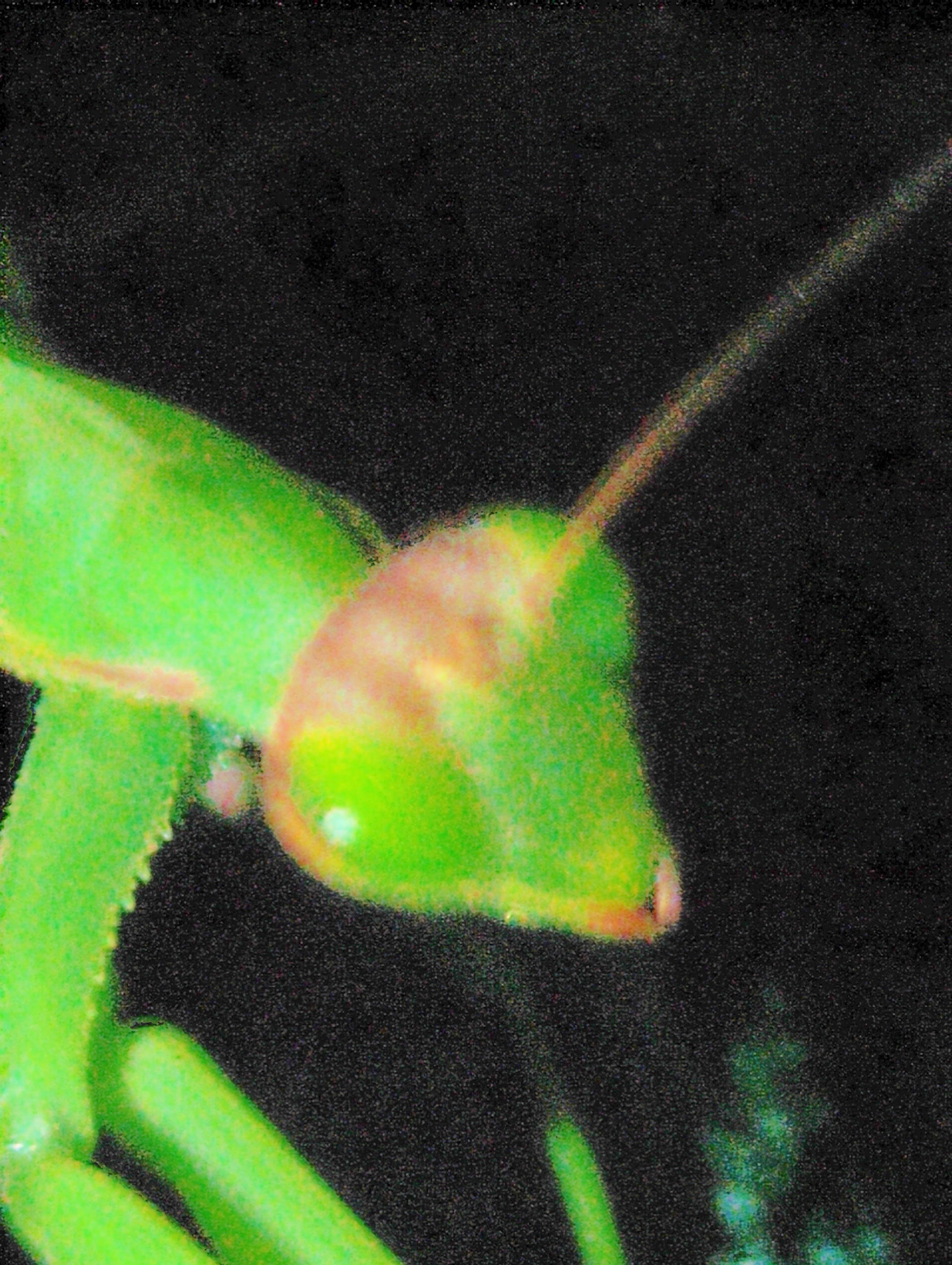
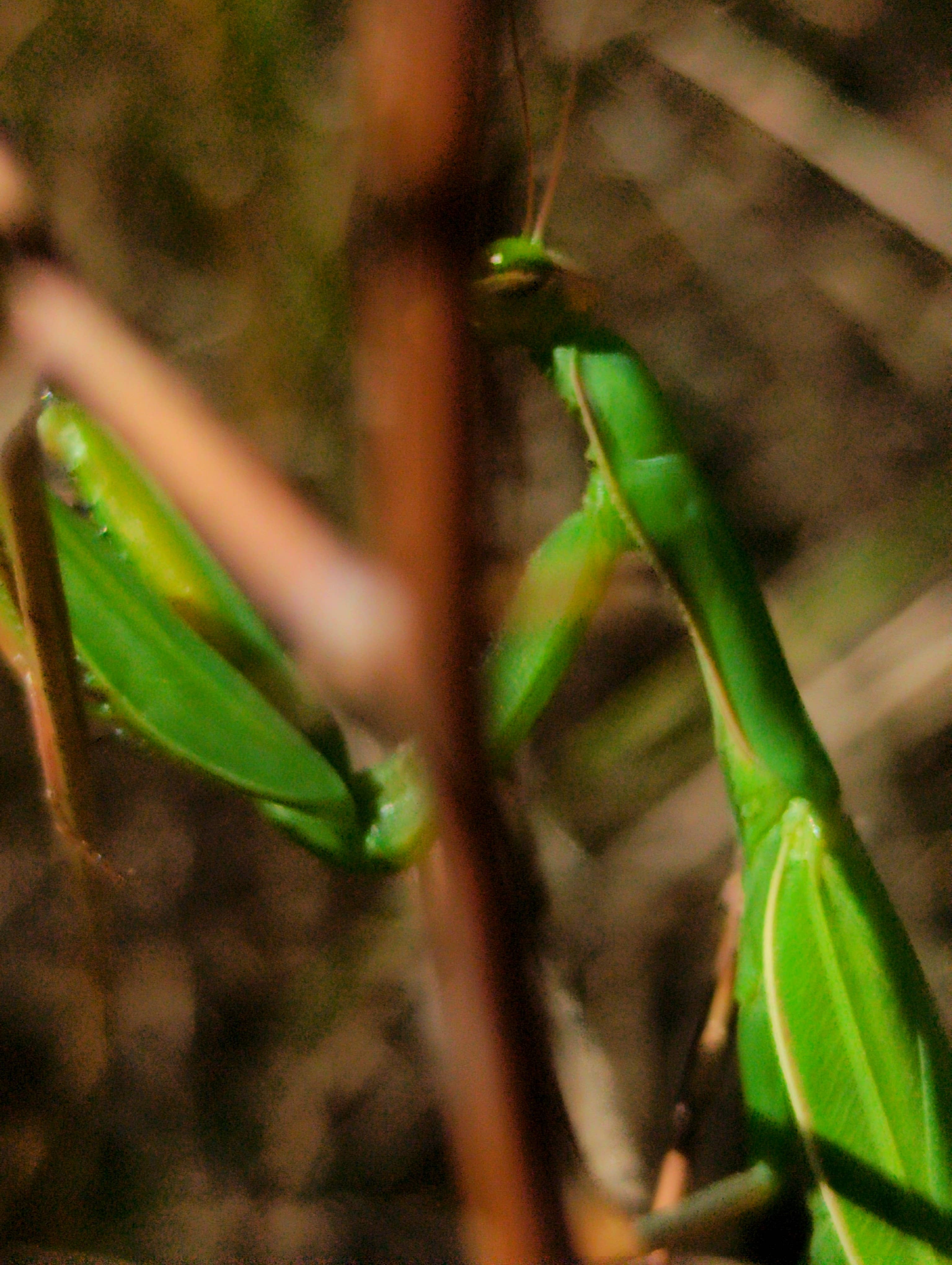
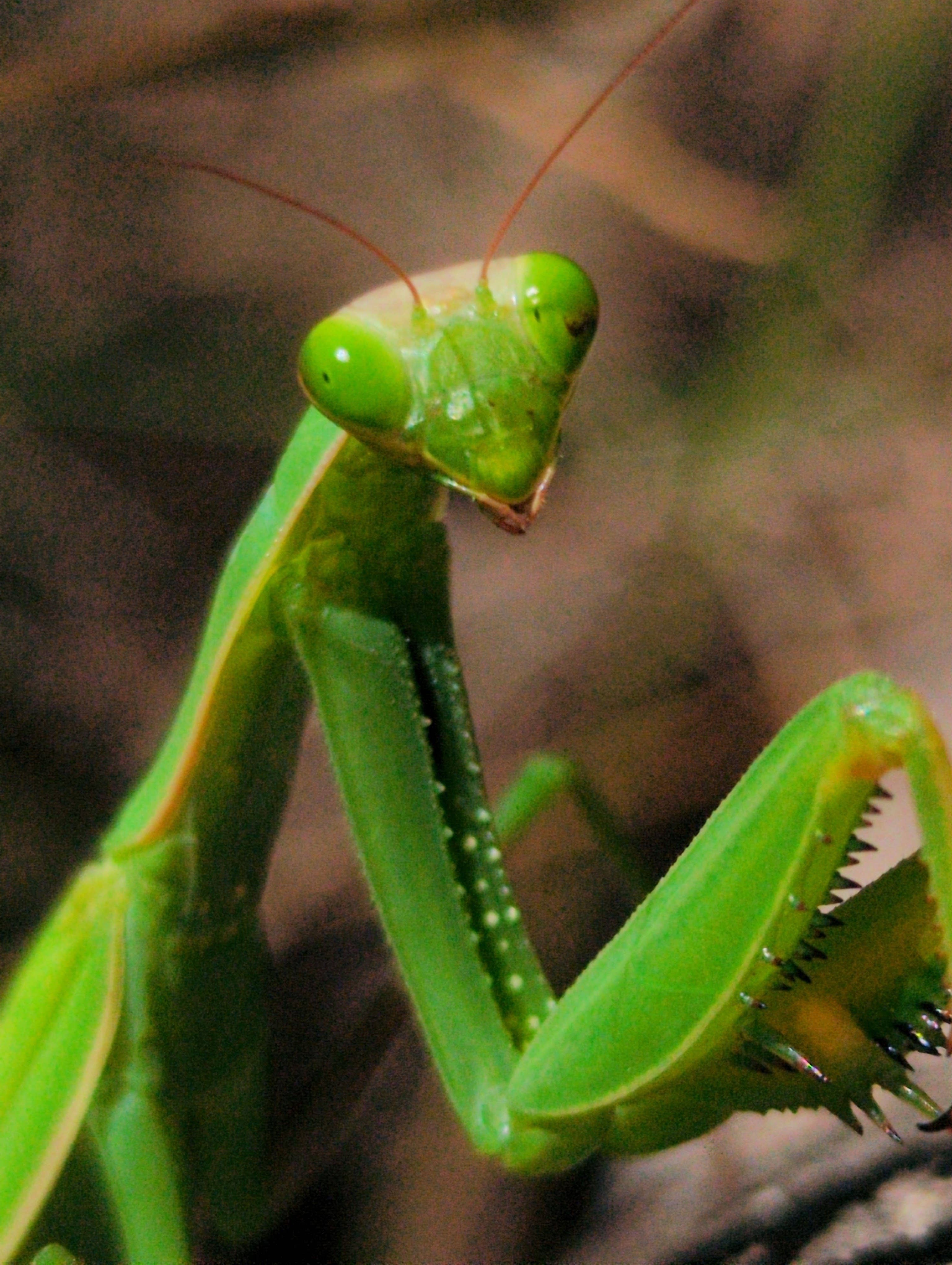
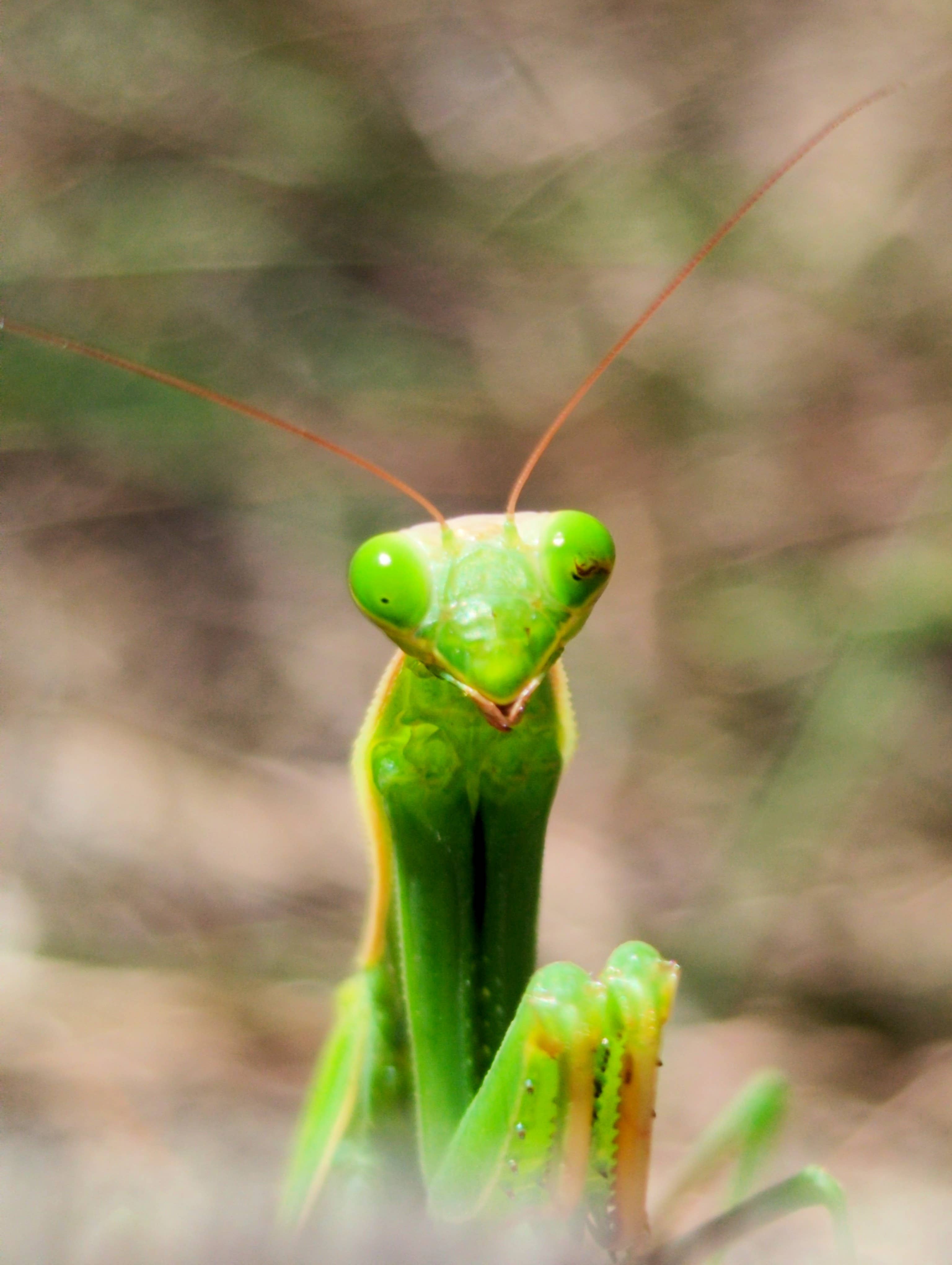
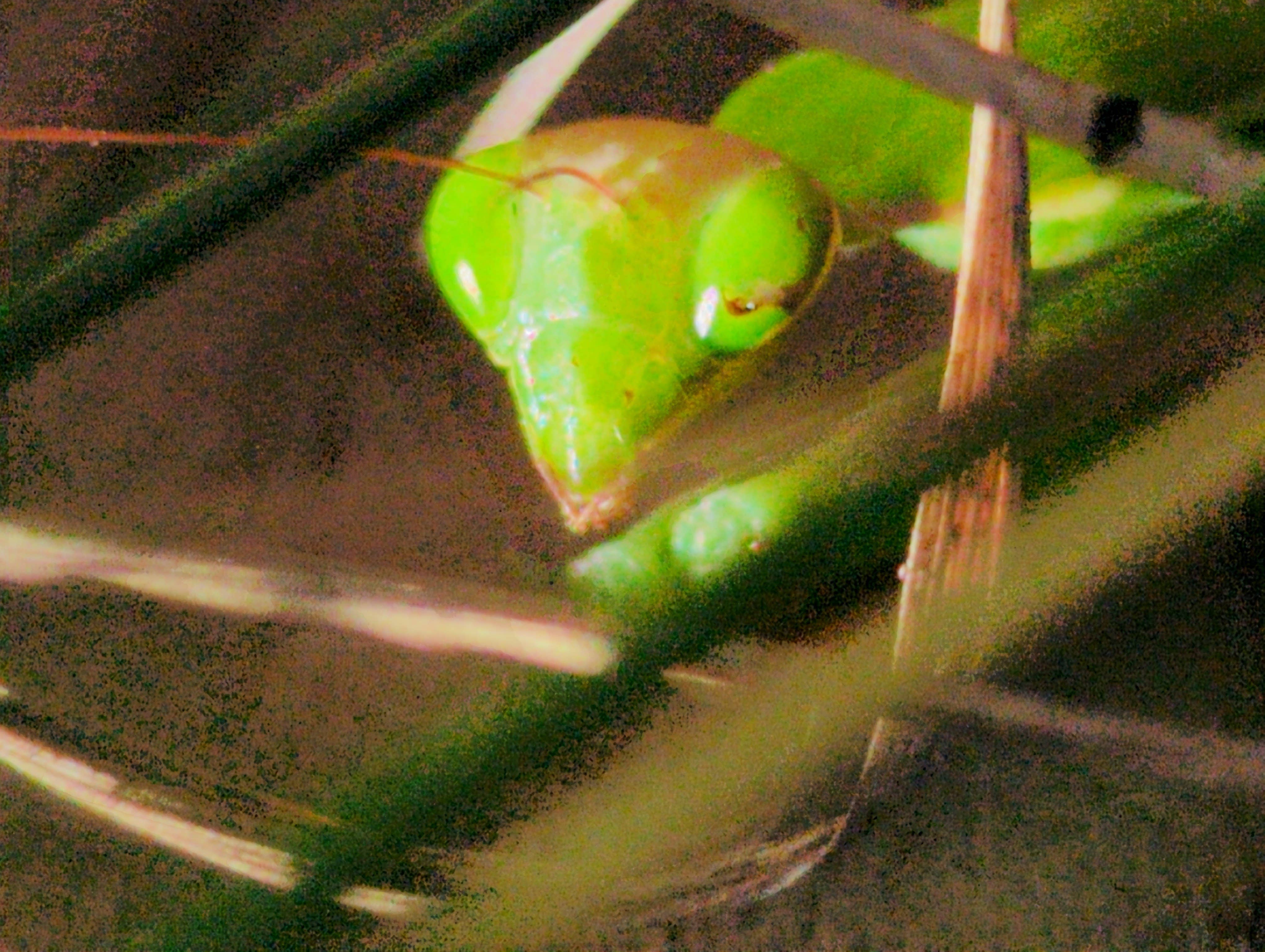
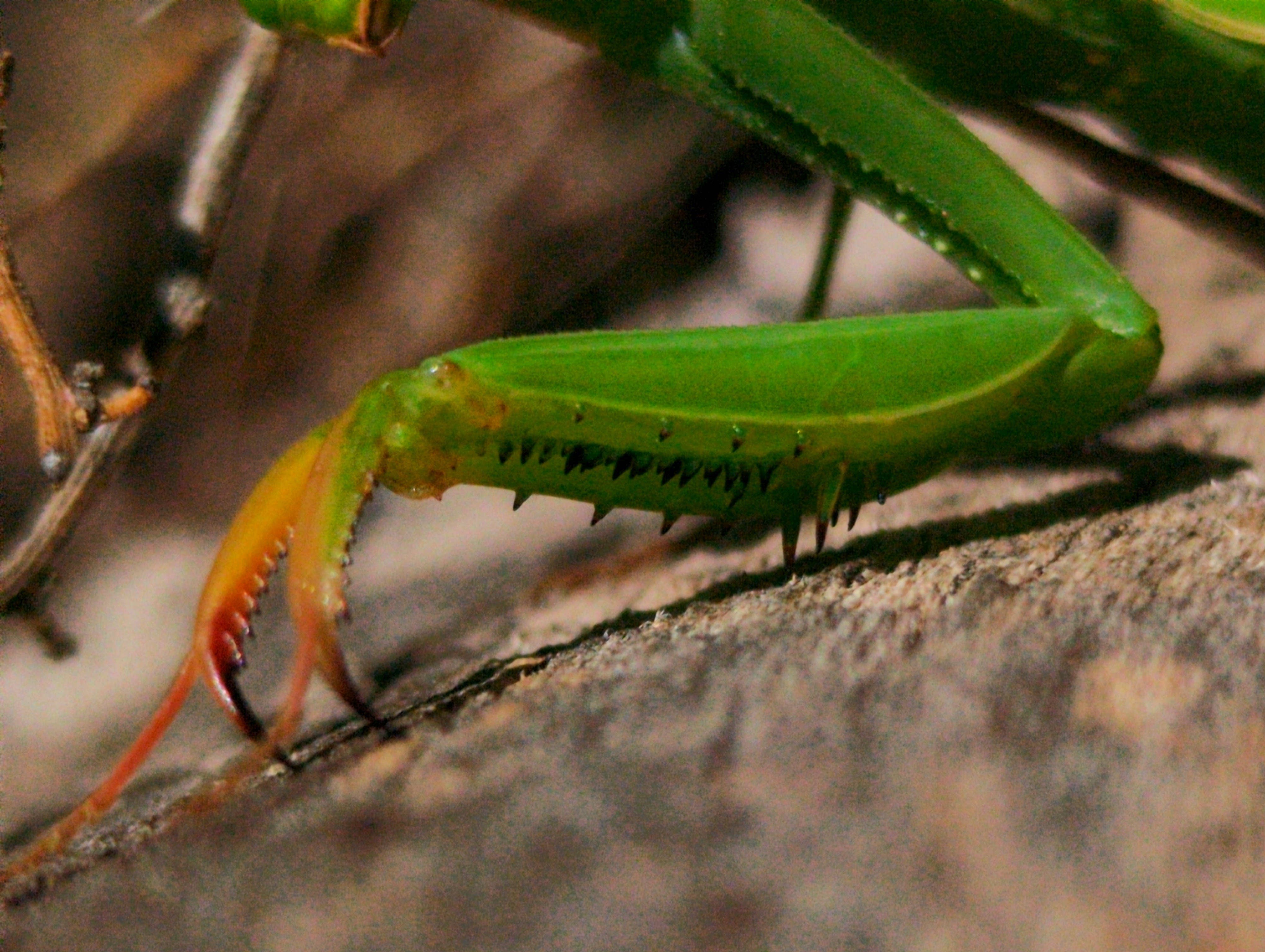
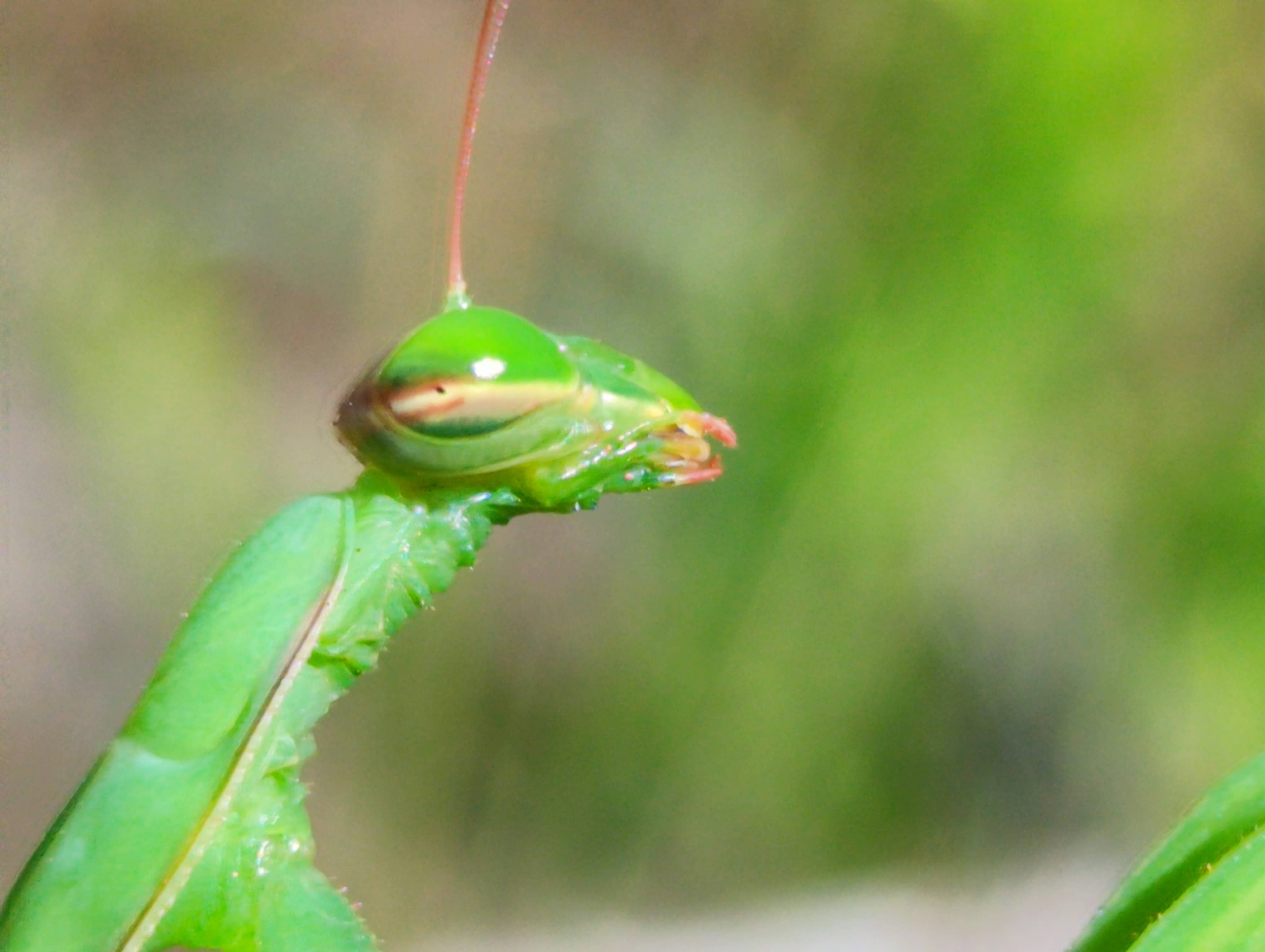
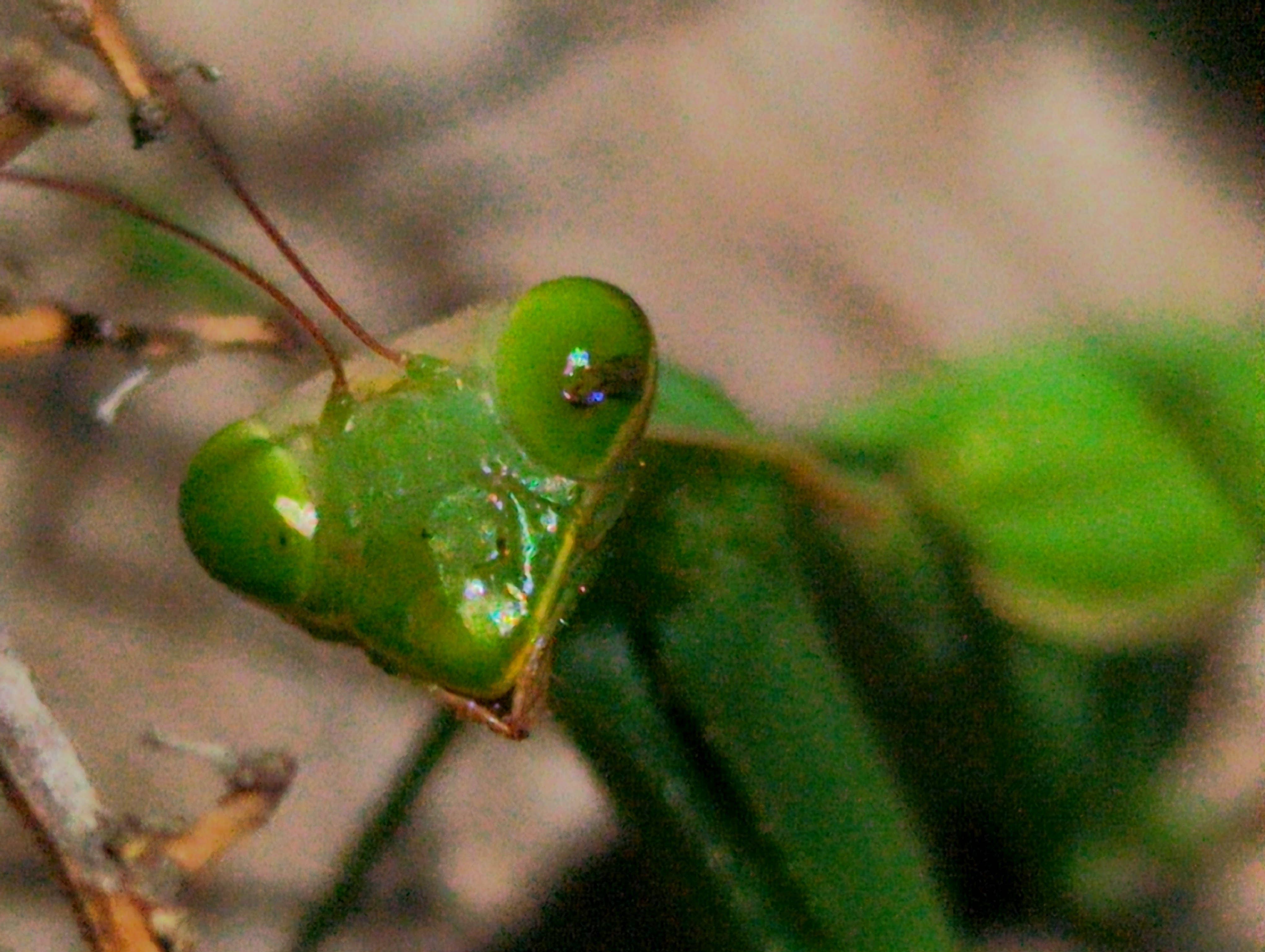
For those asking: Why are all of your photos pixelated, grainy, blurry, and distorted?
My goal with photography is always interesting > good. I've seen a million good photos and they're become incredibly boring. I think the era of wildlife photography we're in right now is all to sterile and focuses on techincal aspects much more than artistic ones. "The more pixels, the more detail, the more in focus, the better" I don't agree with this. A photo can still benefit from these things, but only focusing on those aspects can ignore the heart and soul a photo should have. * and if you can't tell one photographers photos from an other, something is missing
I'm not claiming my photos are even good artistically, but I can explain my process and goals anyways. I like taking photos that give me a full feeling when I look at them, so I find that a cohesive color palette is really important for that. I use an open-source camera app called Open Camera. In the app I'm able to configure things like ISO, manual focus, etc. And it has modes that distort color in ways I like, I'm able to end up with backgrounds that match the forgrounds, and I just generally love how some of the colors turn out. This mode also ends up adding a lot of grain to the photos, which I also do sometimes like as the texture can enhance the color.
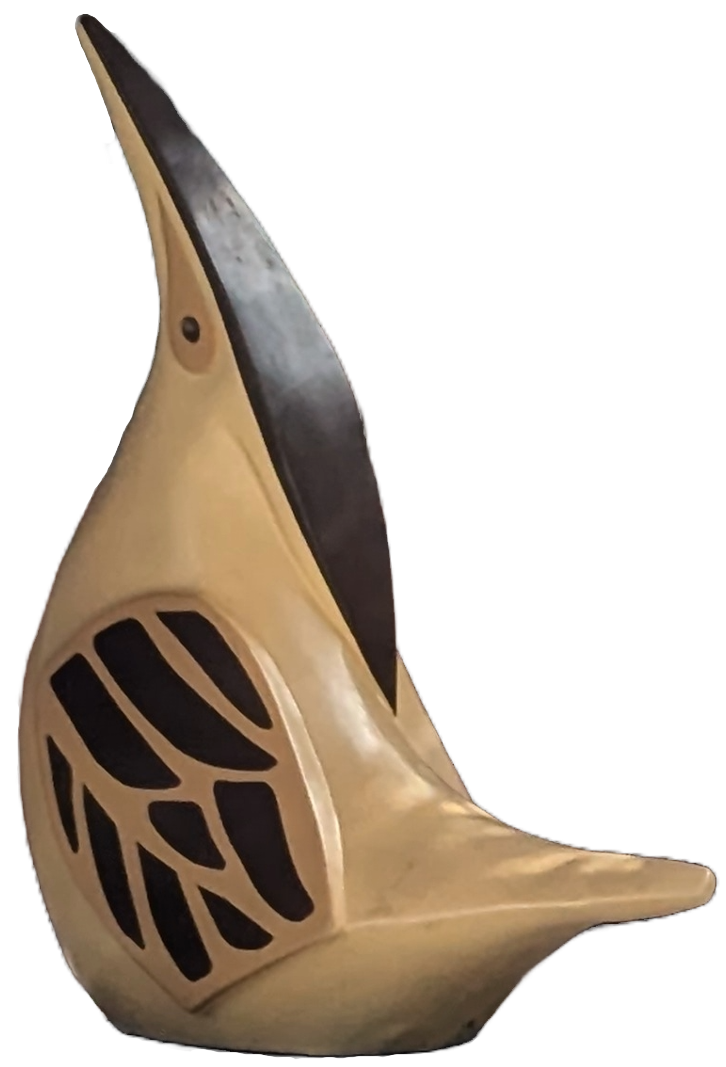
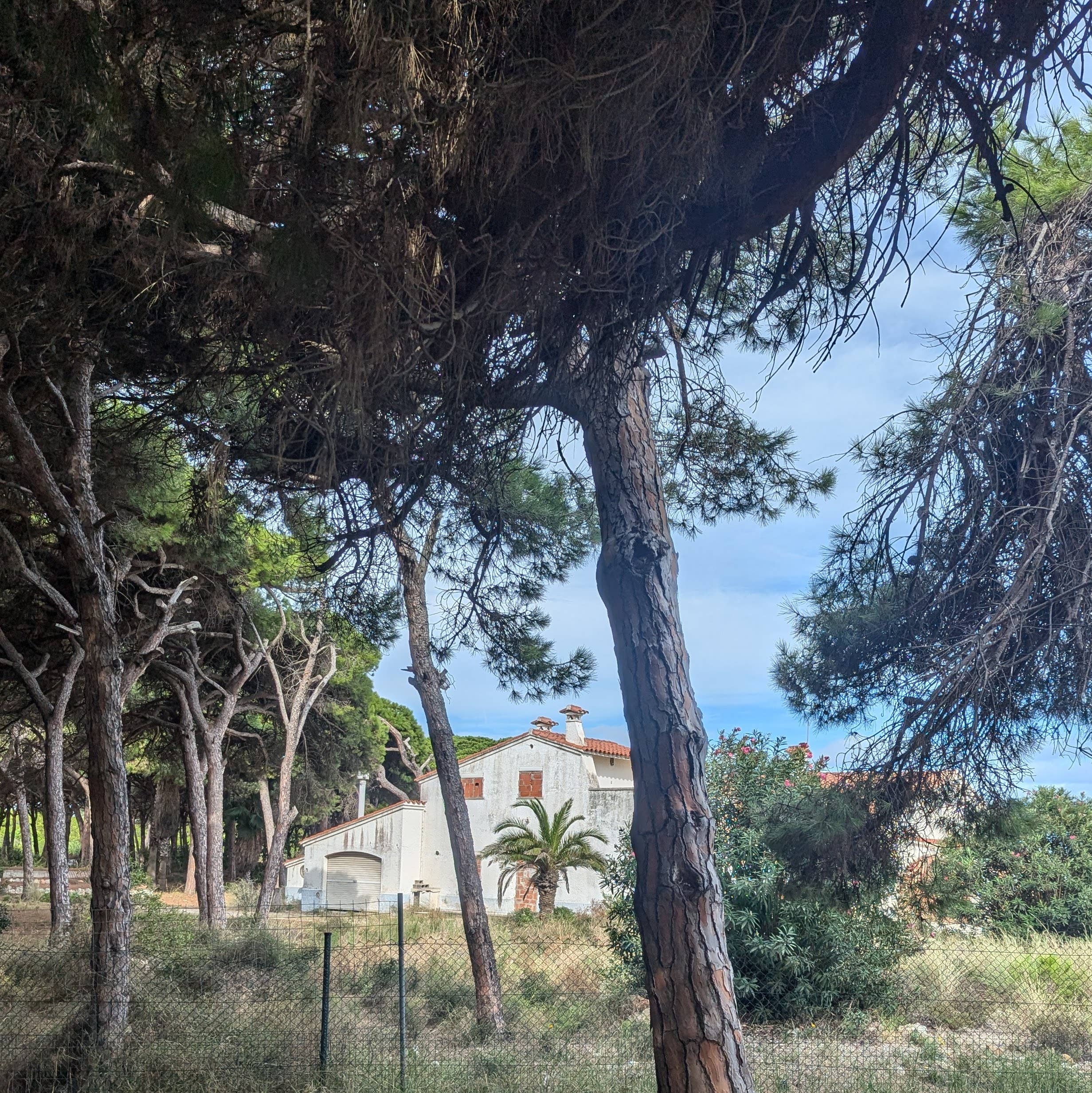
At this point I reached a path to the beach through windswept pines.
I think these are Stone Pines (Pinus pinea). I hadn't realized that pines could come in this shape. They're almost like acacias.
At the beach there was potential to find another target species... A large strange sand beetle.
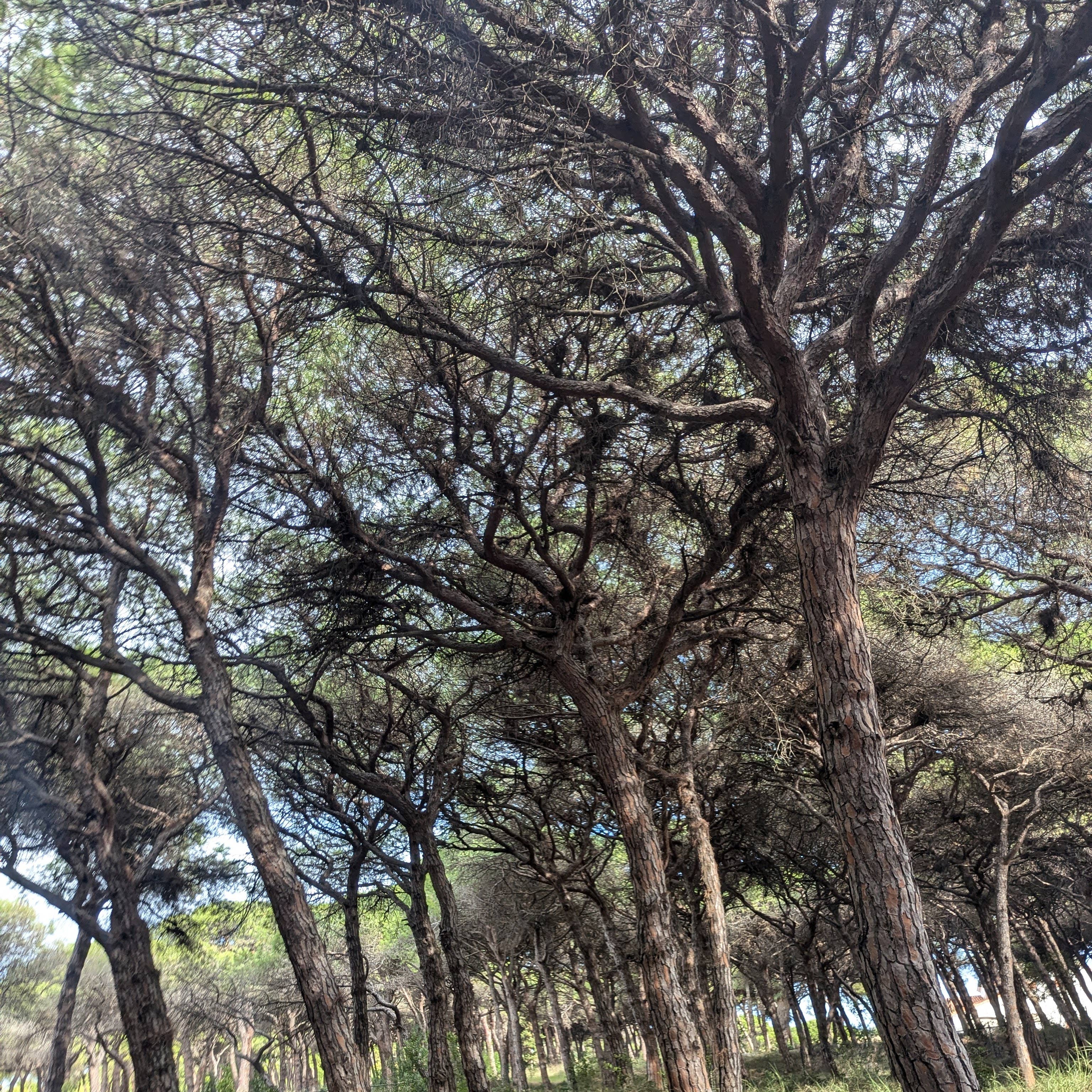
At the beach there was a small mirador (spanish for viewpoint). A small wooden tower with a compact spiral staircase leading to the top. Up 10ft the wind was slightly more intense. I stood for a while and took in the dreary skies.
After a couple moments I remembered about the potential of finding one of those large sand beetles, so I decided to use the mirador to search for larger black dots in the sand. Eventually to my surprise, I actually spotted a strange looking black spot. I assumed it was trash or something but I decided to look anyway.
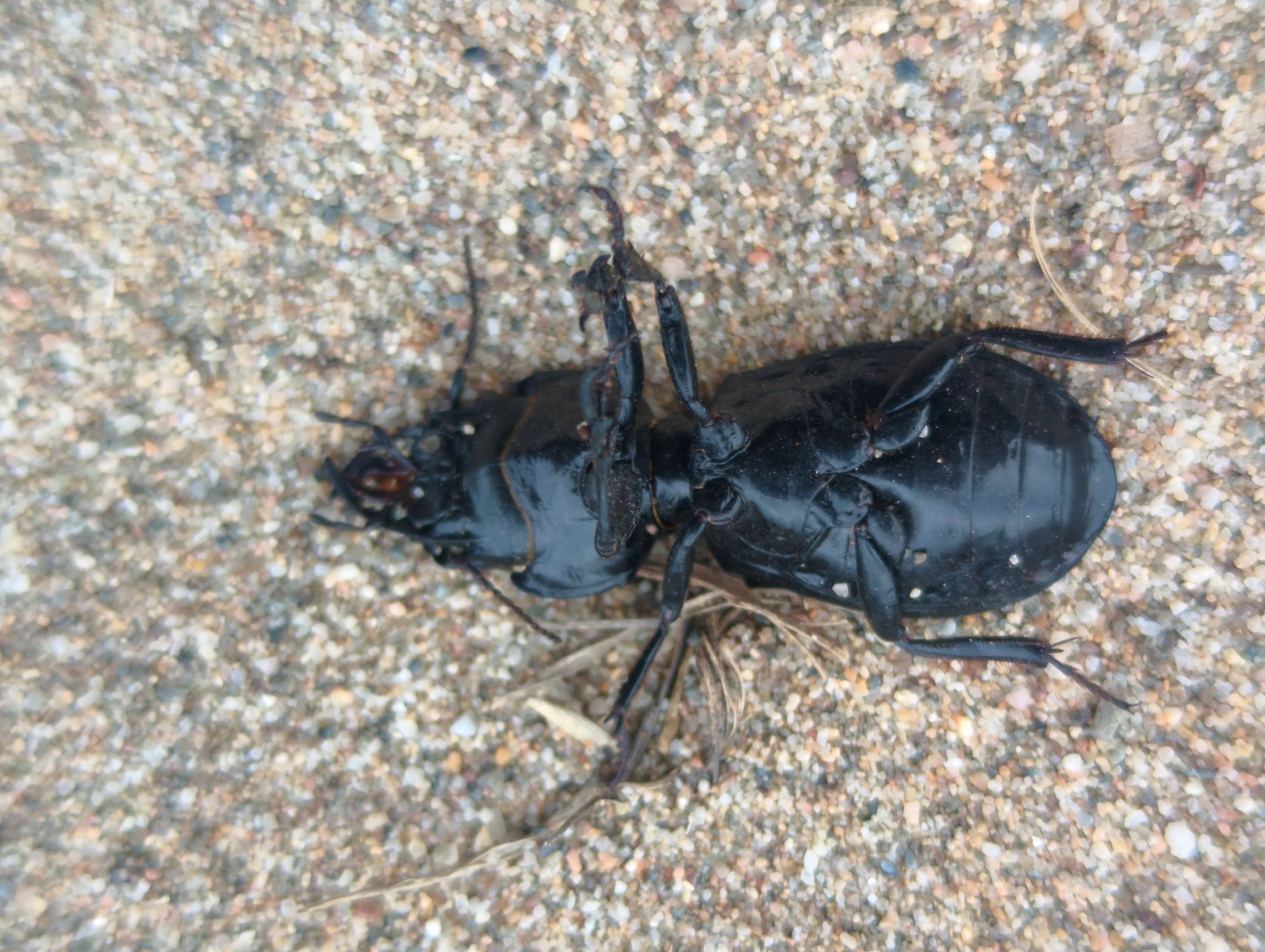
And there it was, the belly up corpse of a Scarites buparius.
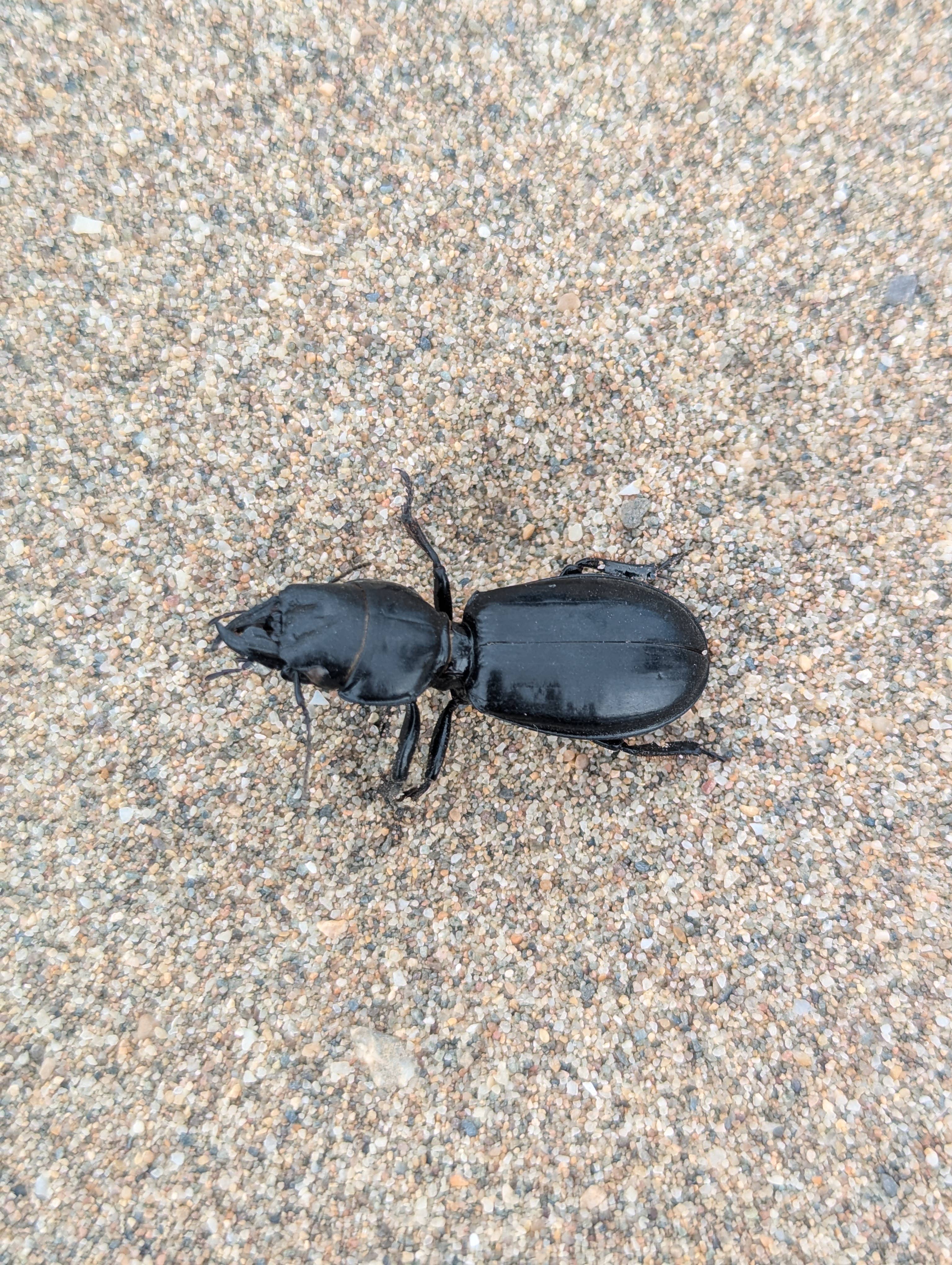
Technically this was found out of season, but there were a decent amount of October observations of this species in this area so this wasn't too surprising.

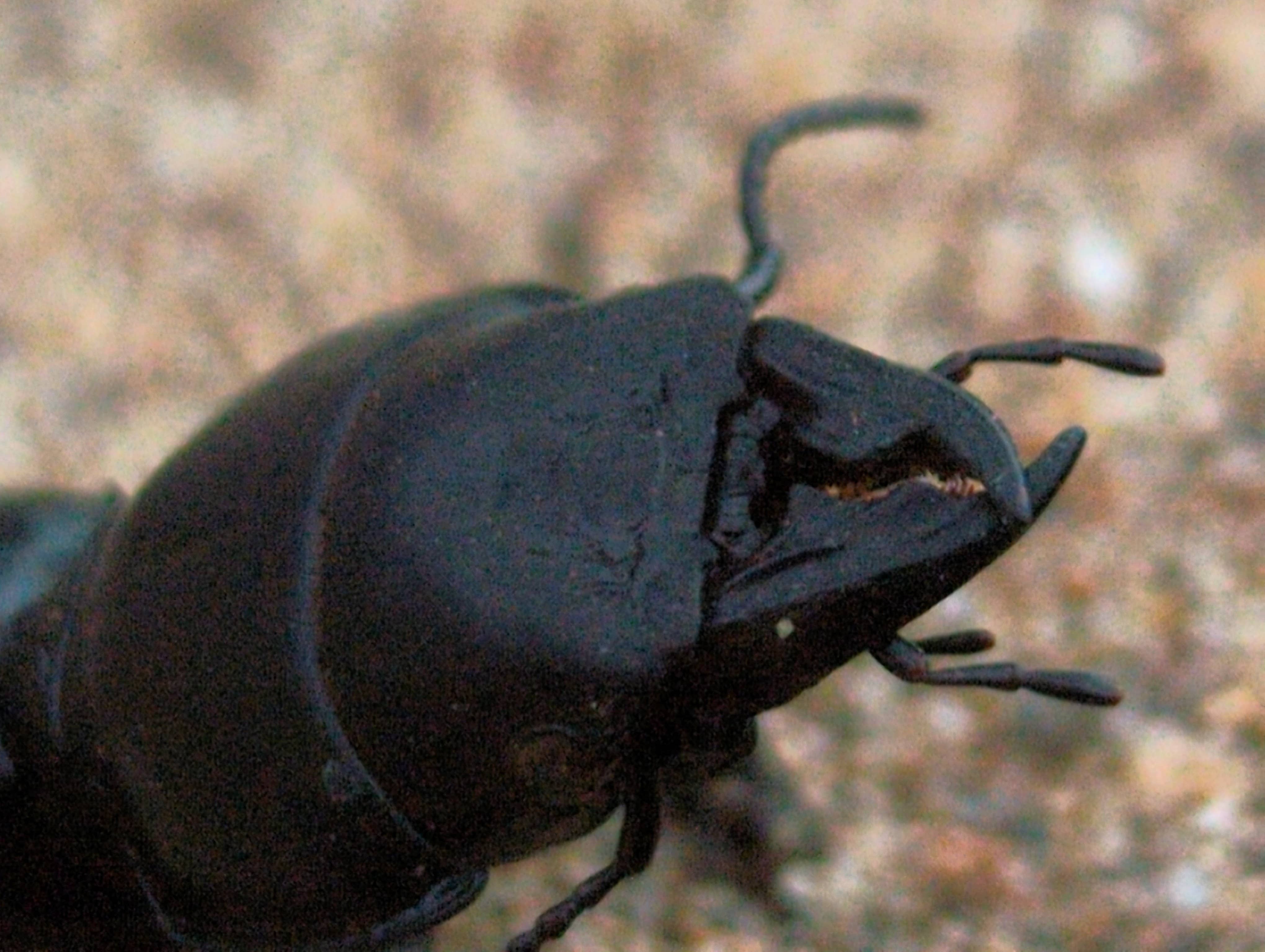
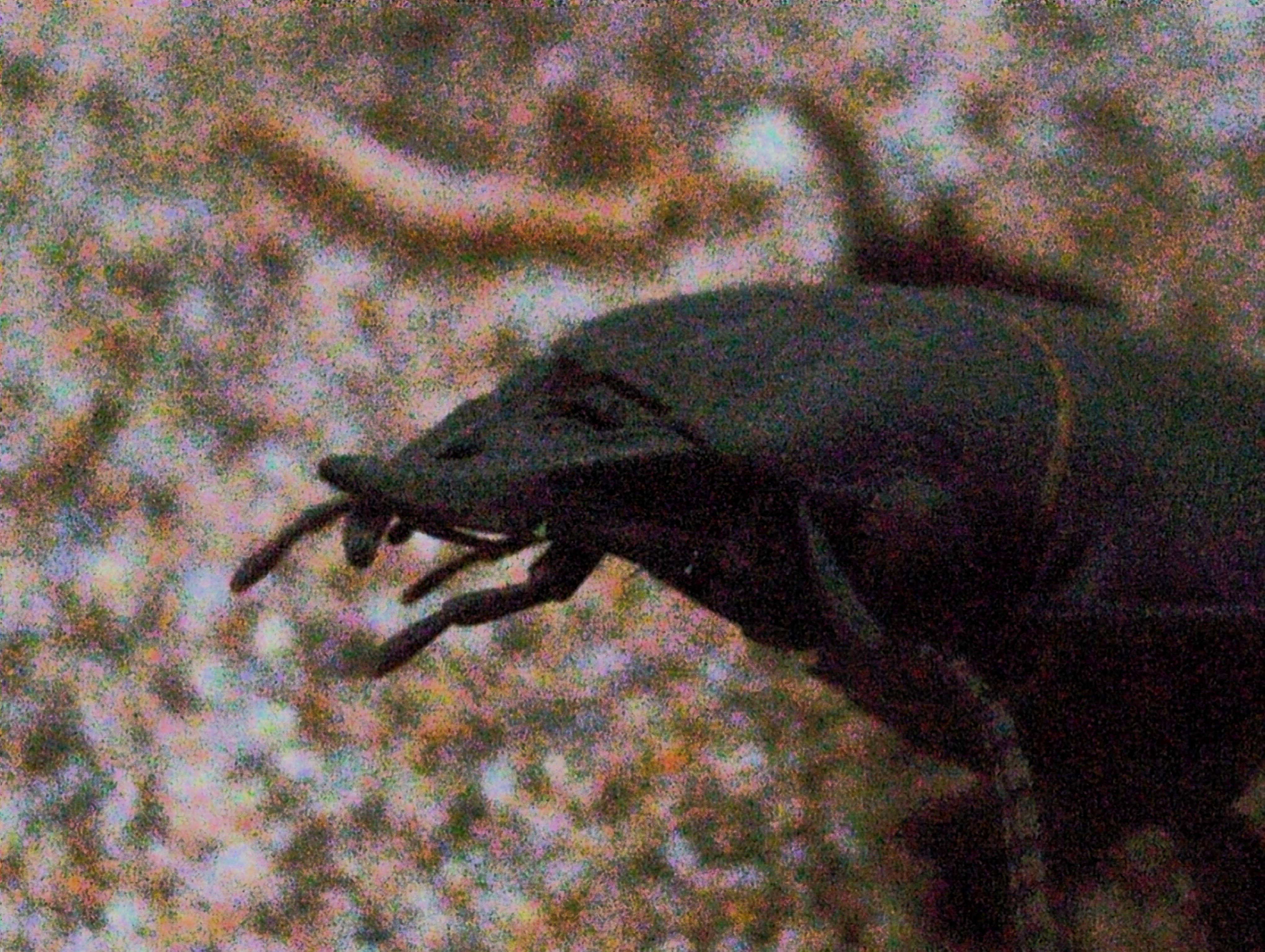
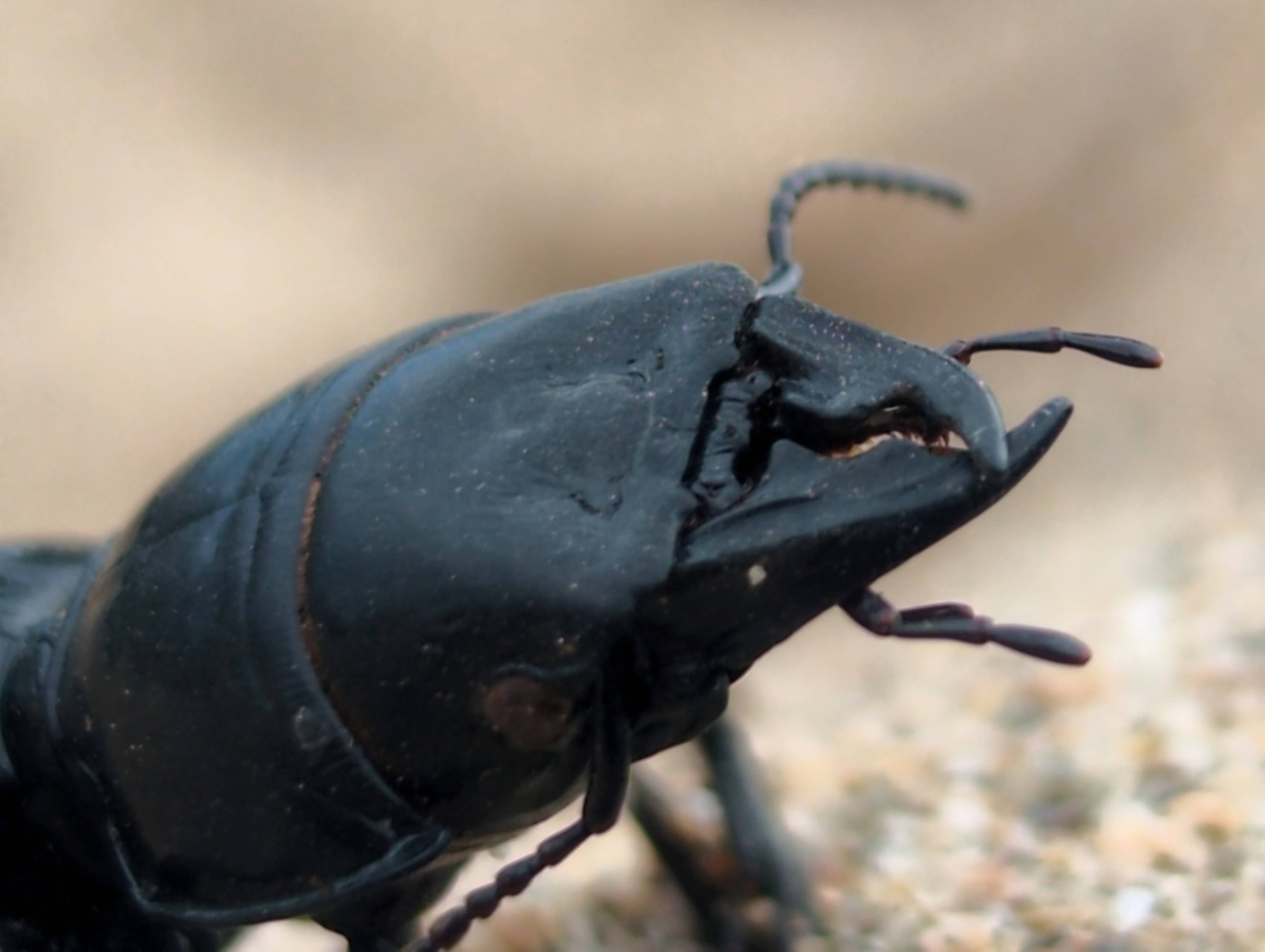
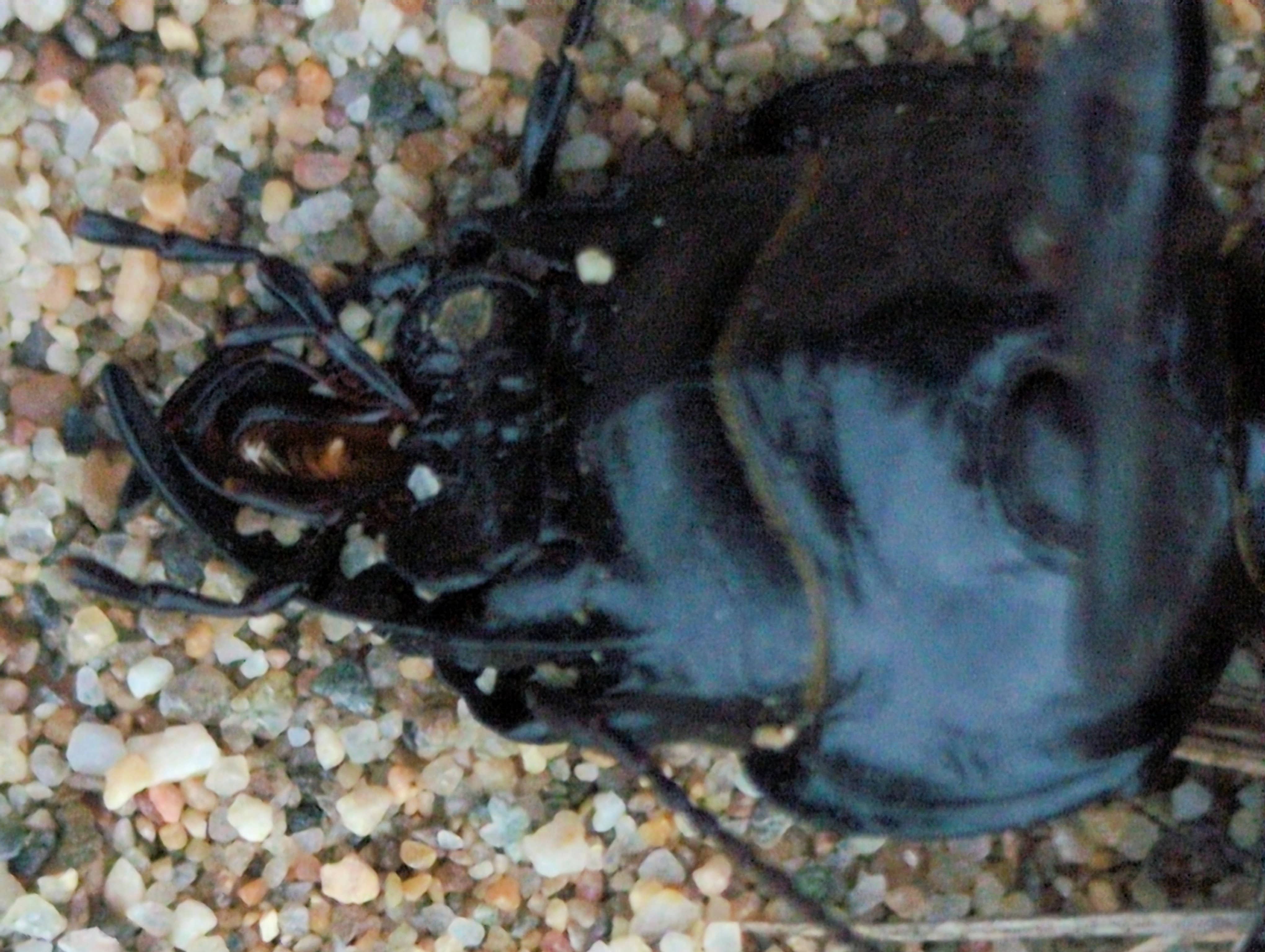
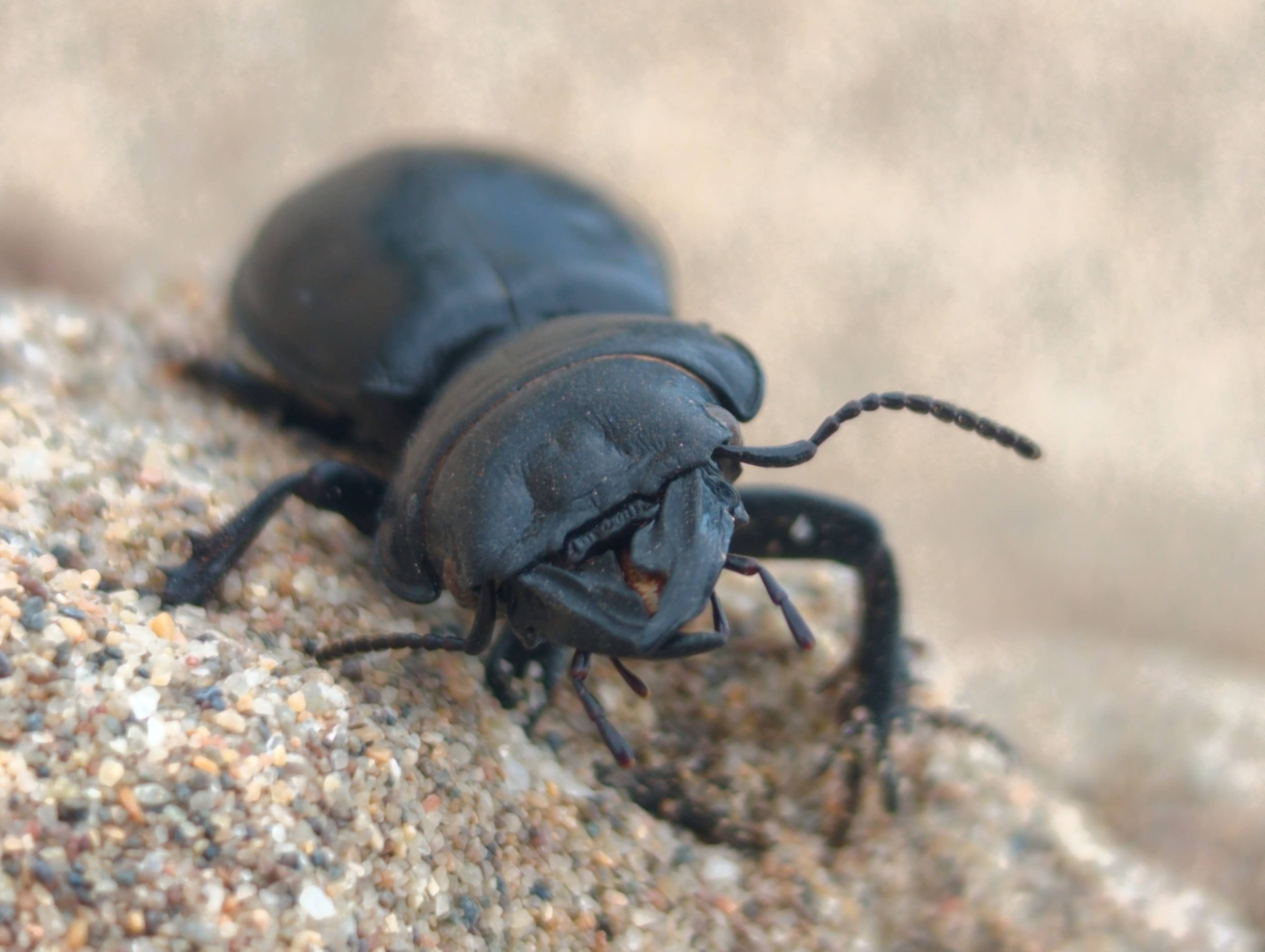
No offense to female S. buparius's but I was kinda hoping for a male since they have larger mandibles.
Notice the (blurry) digger foot to the right ^^^
For those new to beetles, this isn't a Stag Beetle. This isn't even closely related to a Stag Beetle. Stags and ground beetles are a part of beetle suborders that diverged around 250–300 million years ago. Beetle diversity is crazy.
Scarites buparius is a Pedunculate Ground Beetle (subfamily Scaritinae). A carabid subfamily characterized by a noticable separation between thorax and abdomen. (the term pedunculate means stalked or stemmed). In particular, S. buparius is part of the tribe Scaritini, which contains the strongest PGBs, such as the Warrior Beetles of NA. Give Scaritini the same respect you give Stags (▀̿Ĺ̯▀̿ ̿)
Scarites buparius is native to the Mediterranean coast. It's a predatory beetle, like most carabids, and eats other invertebrates like insects and gastropods. Males fight eachother with their large mandibles, like Stags do. These fights might be even more ferocious though, considering that Stags are damned vegans and Scaritinis are cornovoros.
After a minute of photos, I decided I didn't like the results I was getting. And since I had recently started a small bug collection (of bugs that I've found dead in the first place. it's a fully vegan collection.), I placed the beetle in a small strawberry Altoids tin and took it with me.
<--- corpse
<--- abducted
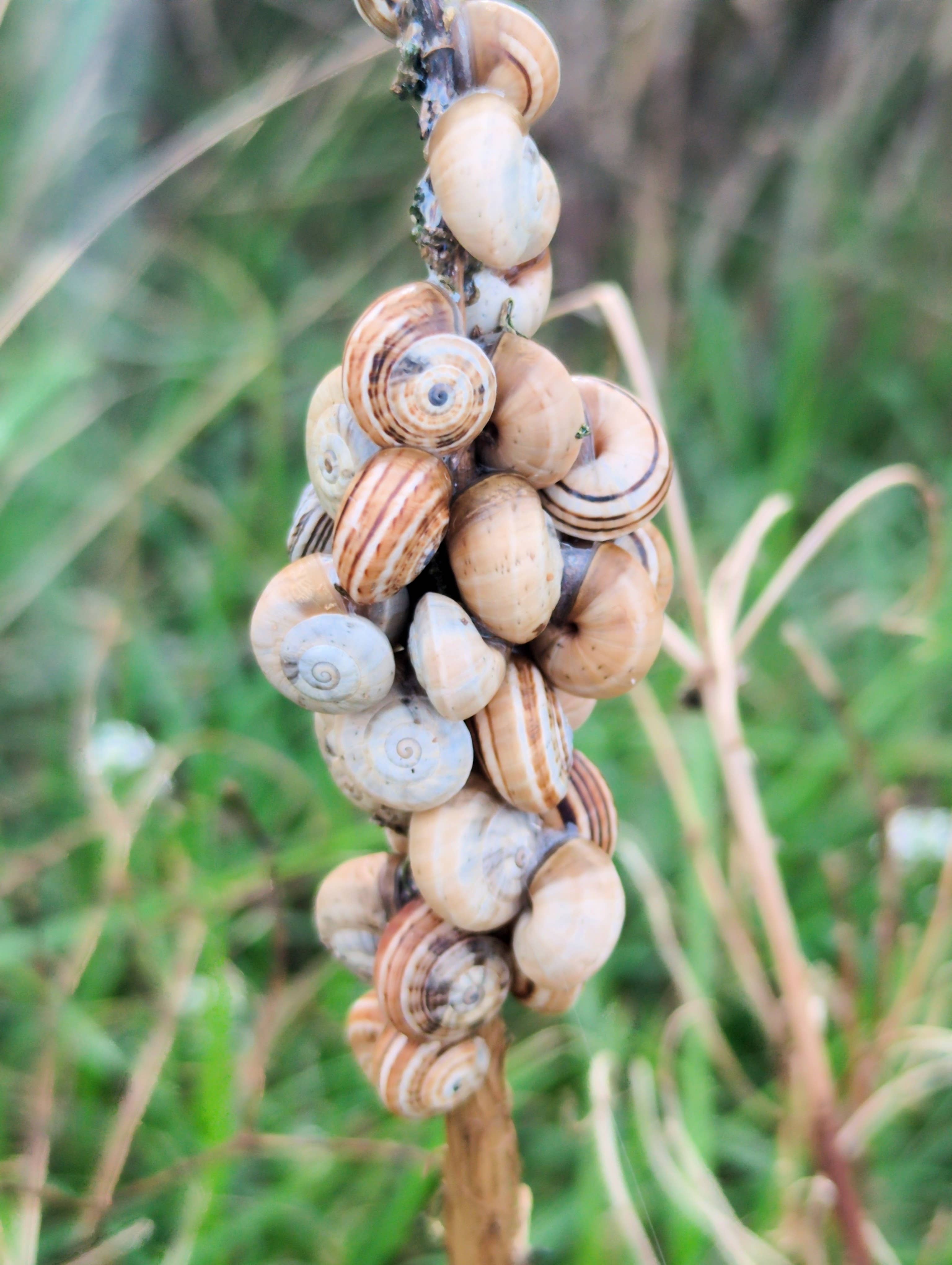
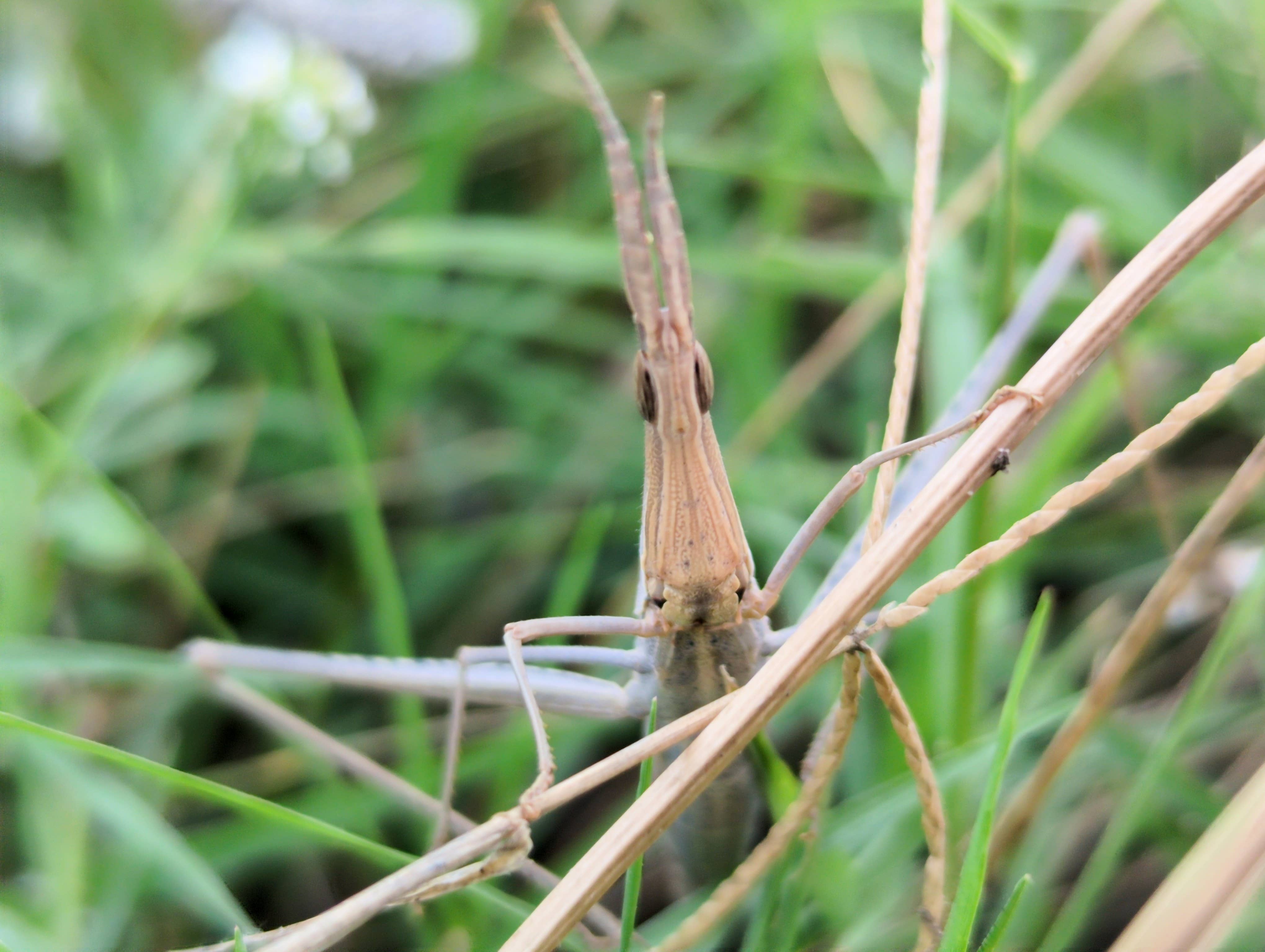
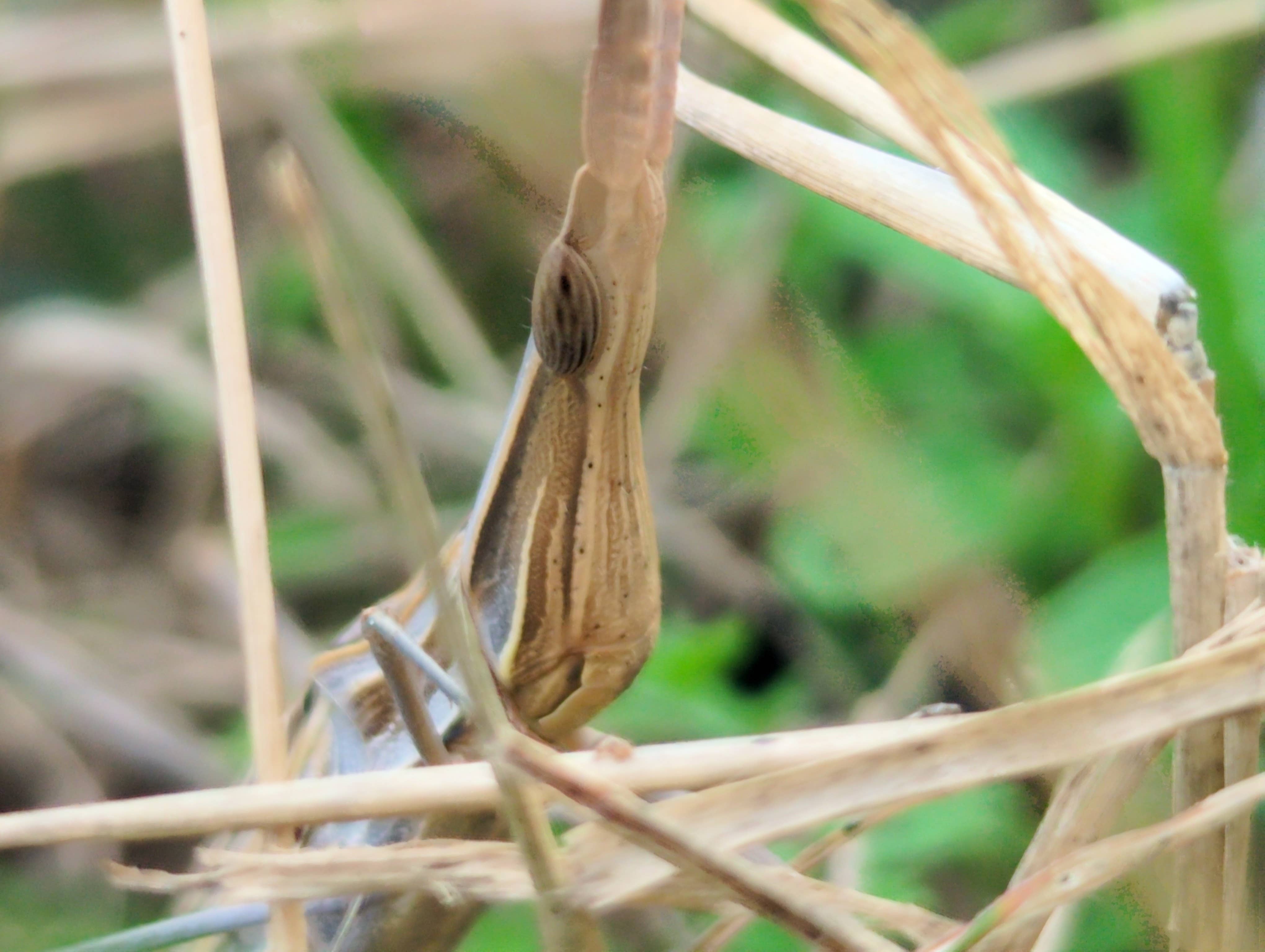
This whole time I had been searching for Slantface Grasshoppers by intensely scanning grass and reeds. They're main form of camoflauge is mimicing that sort of thing so that's all I had to go off of. When I ended up finding a Slantface, in some grass just 15ft away from where I found the sand beetle, I accidentally discovered an easier strategy. Slantface Grasshoppers hop incredibly awkwardly and are easily alarmed. When spooked, your average grasshopper is going to get real far away, go out and try it, it isn't easy to get close to one. But with Slantfaces, they only hop a couple feet away, you don't even need a net to catch them. (actually I'd recommend agaist using a net since these are spindly and fragile). So just stomping by tall grass and reeds and looking for movement is kind of a decent strategy for targeting Slantfaces. (you will end up scaring other species away though).
the hardest part is finding them once they've settled down
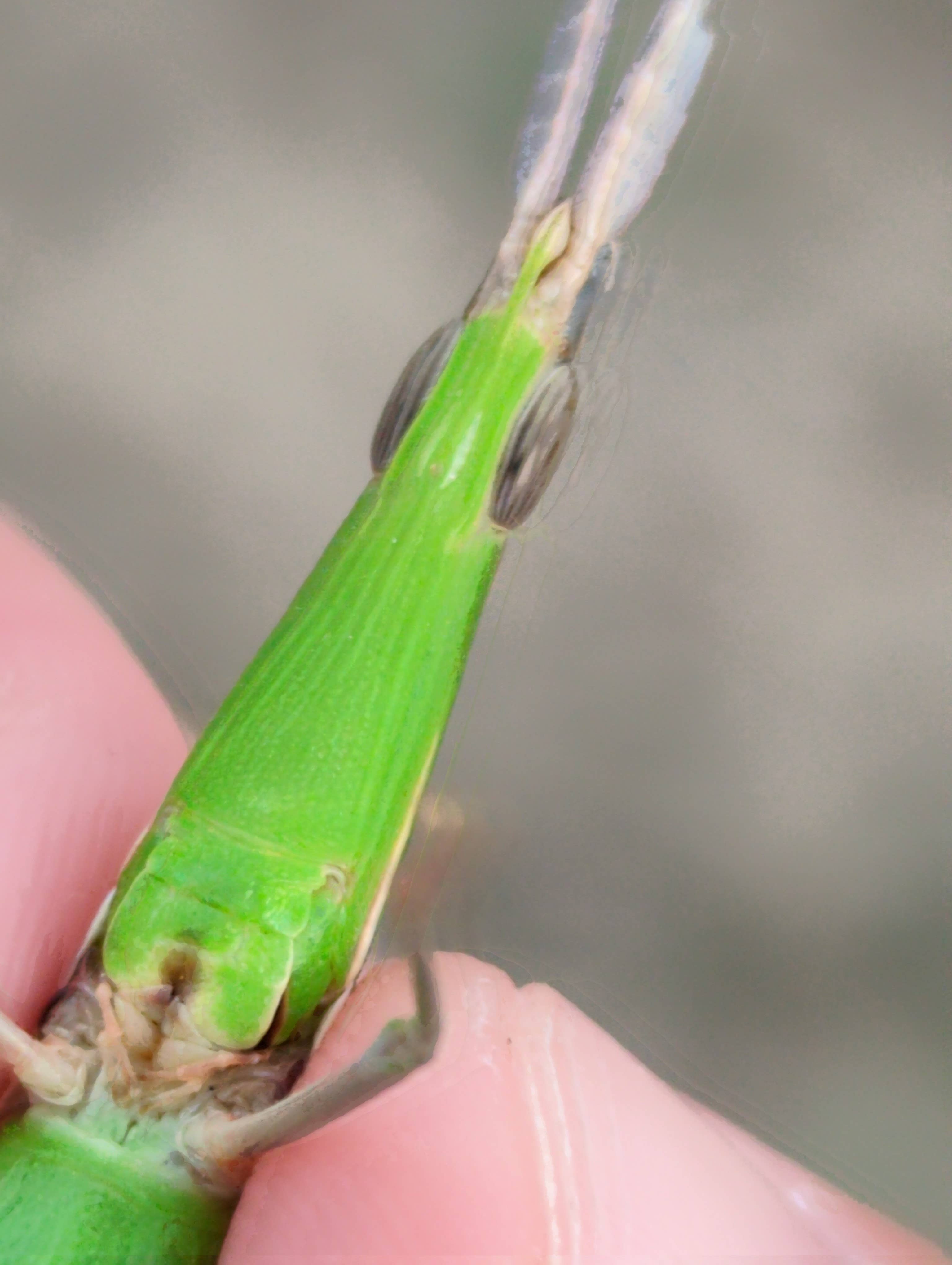
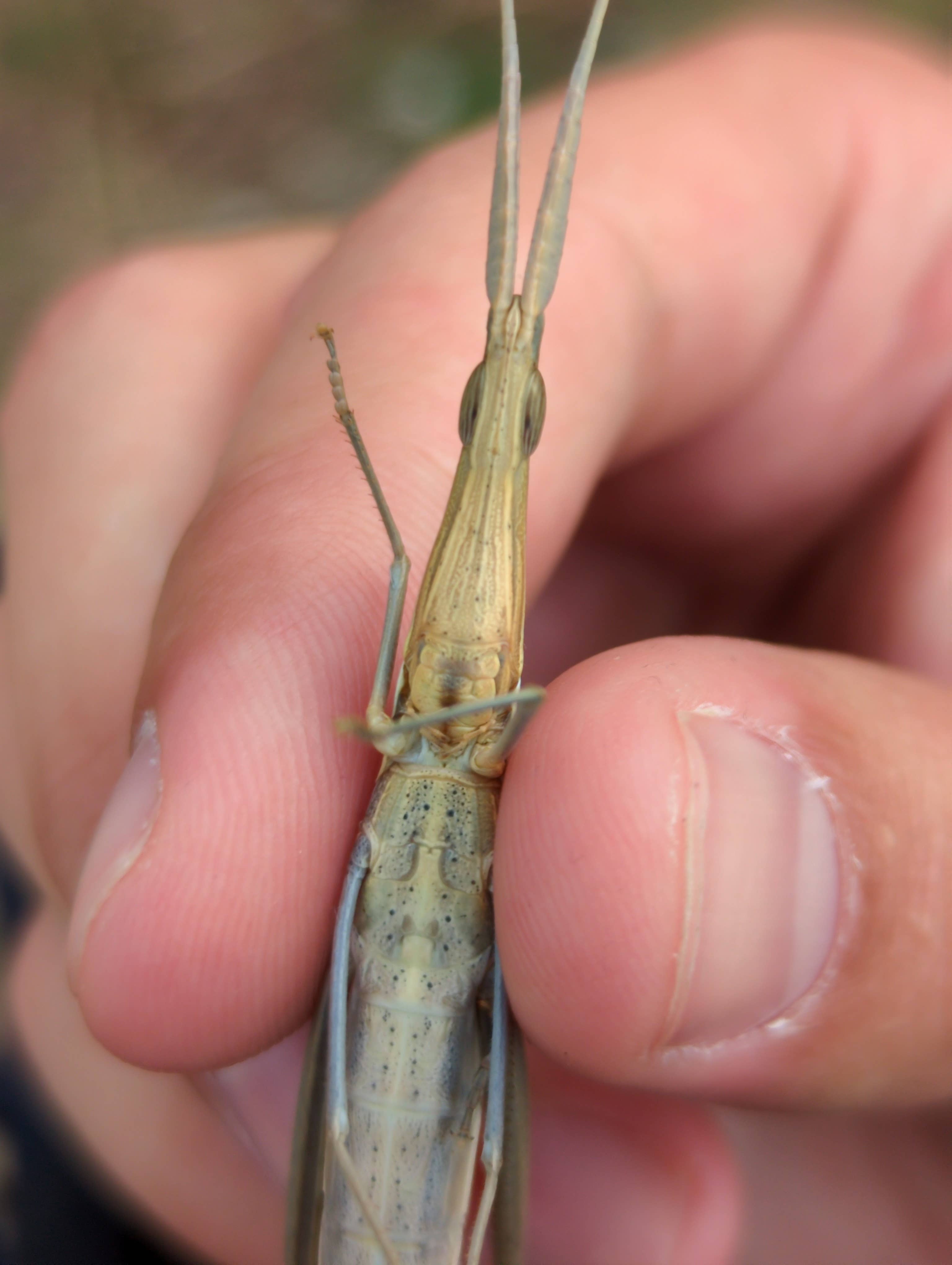
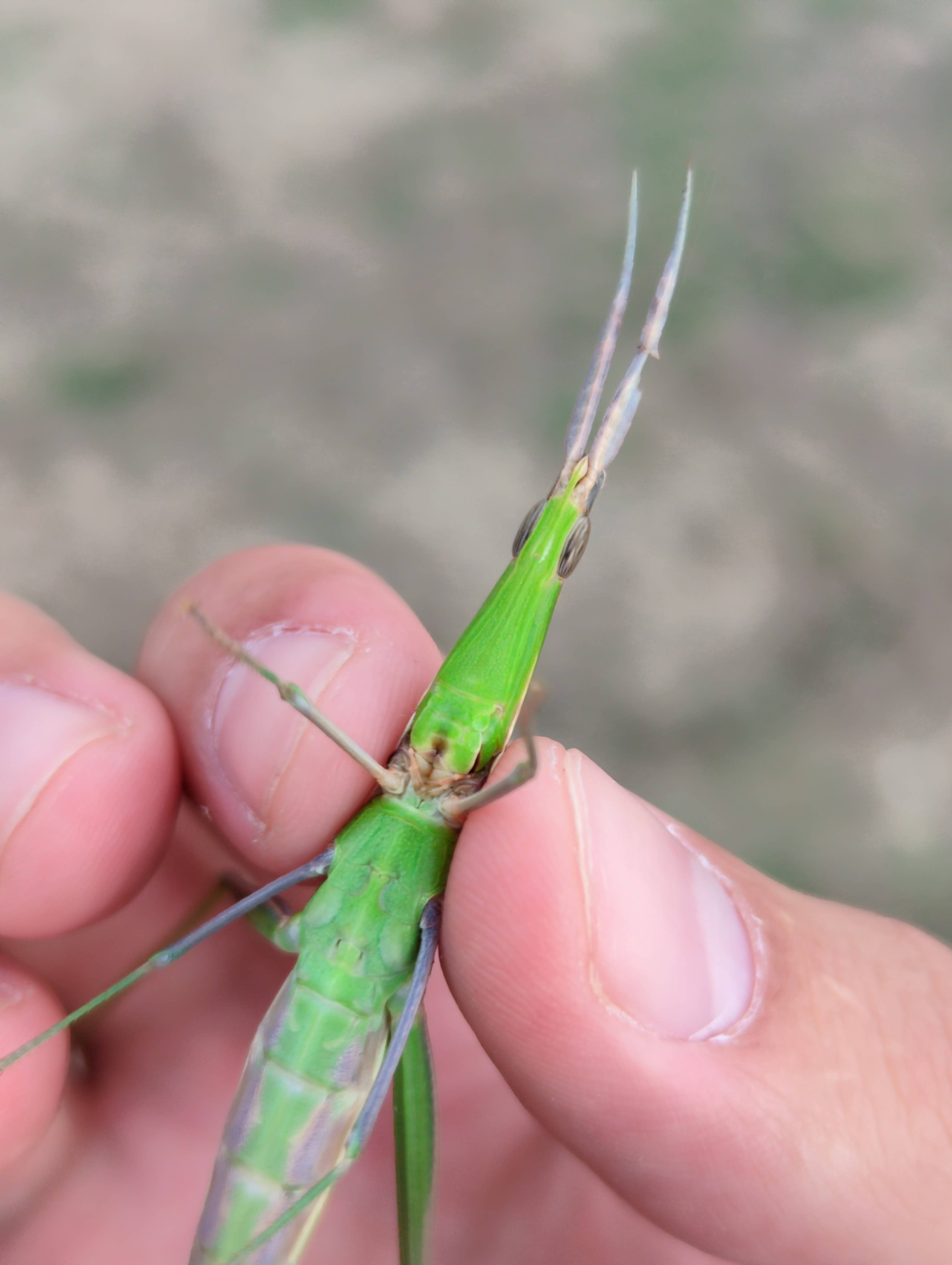
Holding them lightly, I stared into their little faces. Eyes far from their mouths. Bodies rigid and long like pencils.
Staring into their eyes I saw little kind creatures. Ones living lives together traveling out in seas of grass. Eating together, hiding from giant monsters together.
I felt overwhelmed looking into their eyes. To a little soul living an honest life, a human like me is basically a demon. Despite that, I felt a great part of me in them. I honestly can't really explain it.
Being there with these gentle hearted creatures just made me feel grateful. I wished I could've told those little hoppers how much they meant to me. But their brains are full of grass and that's what's so great about them.
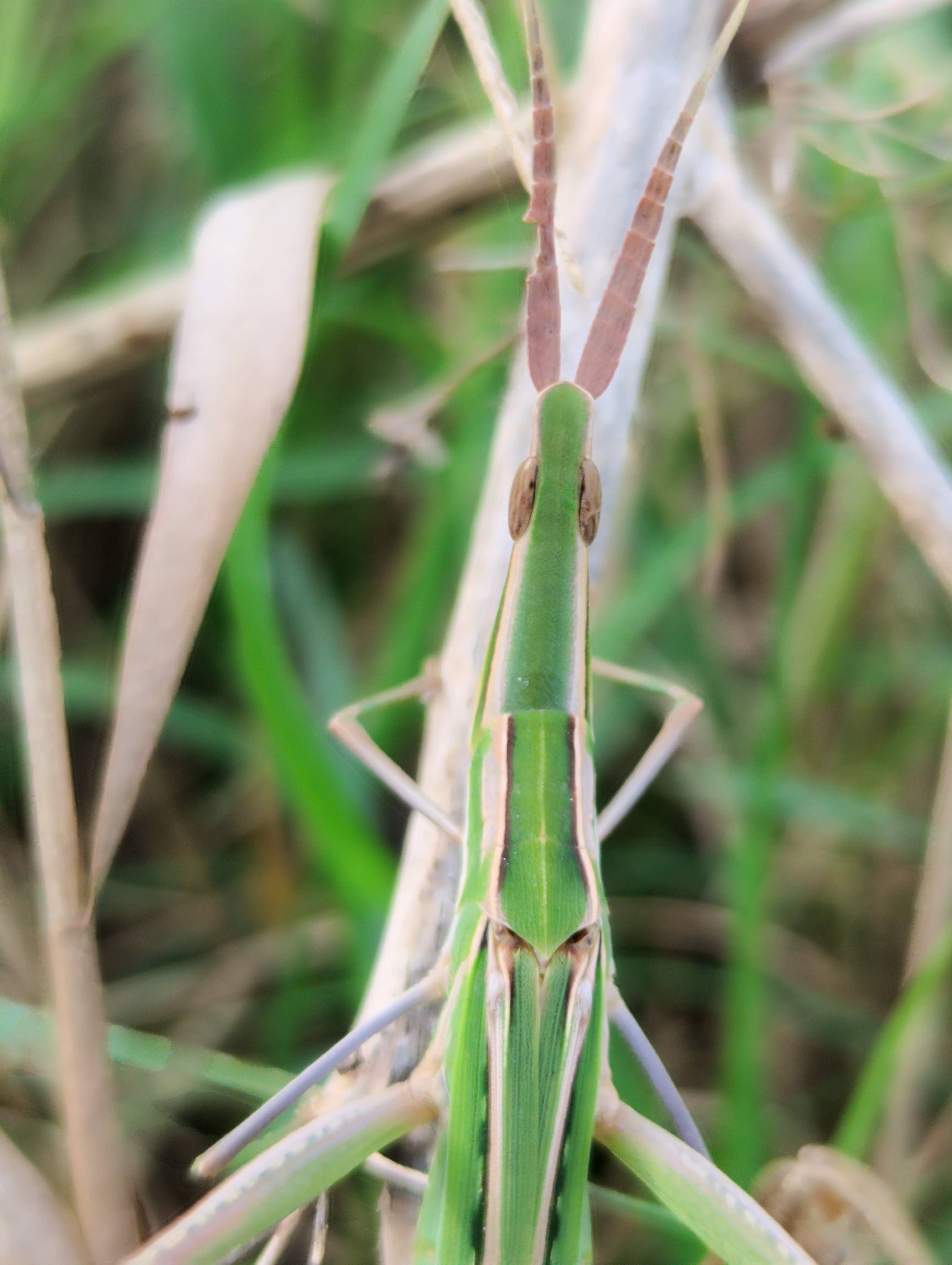
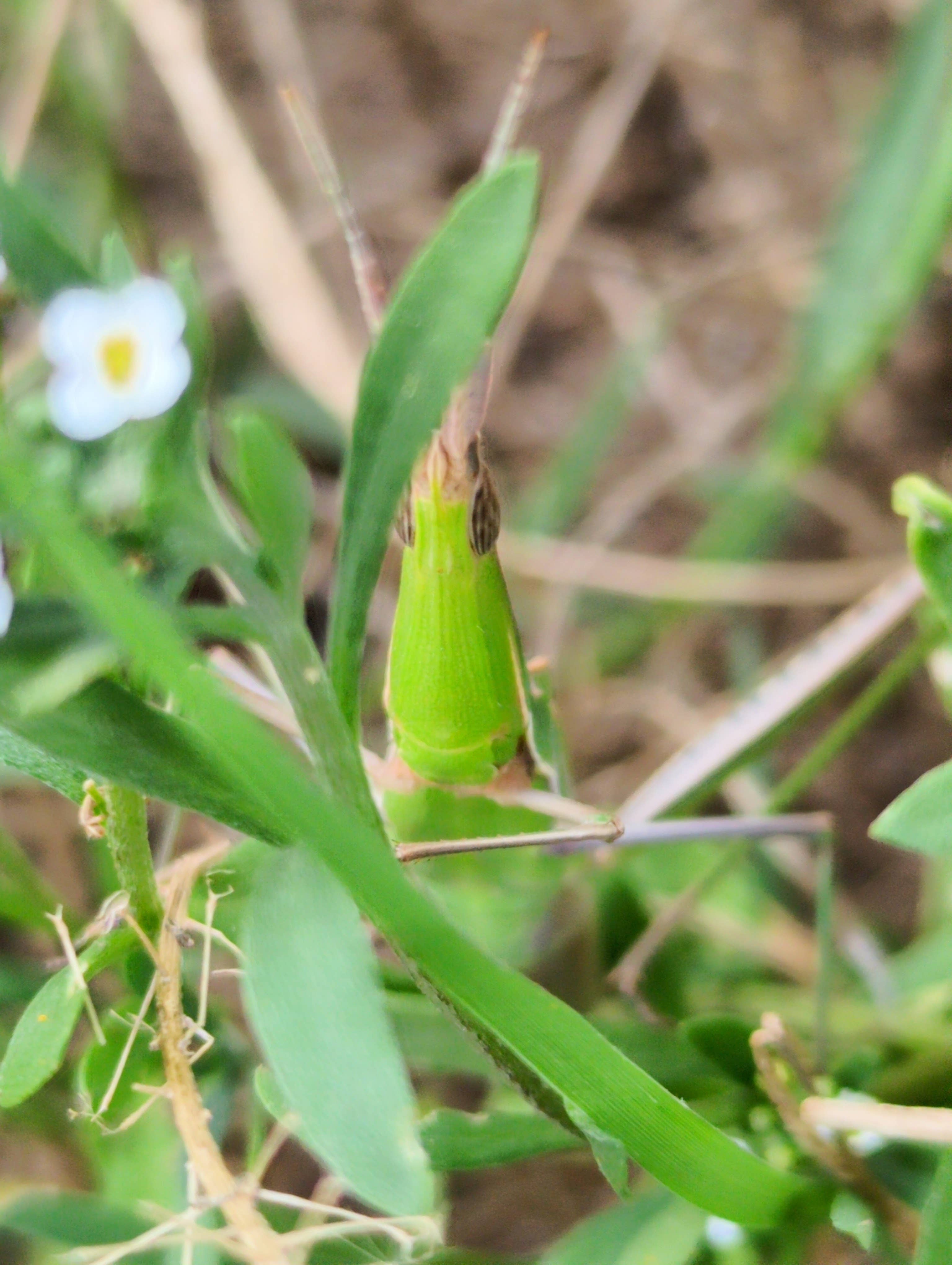
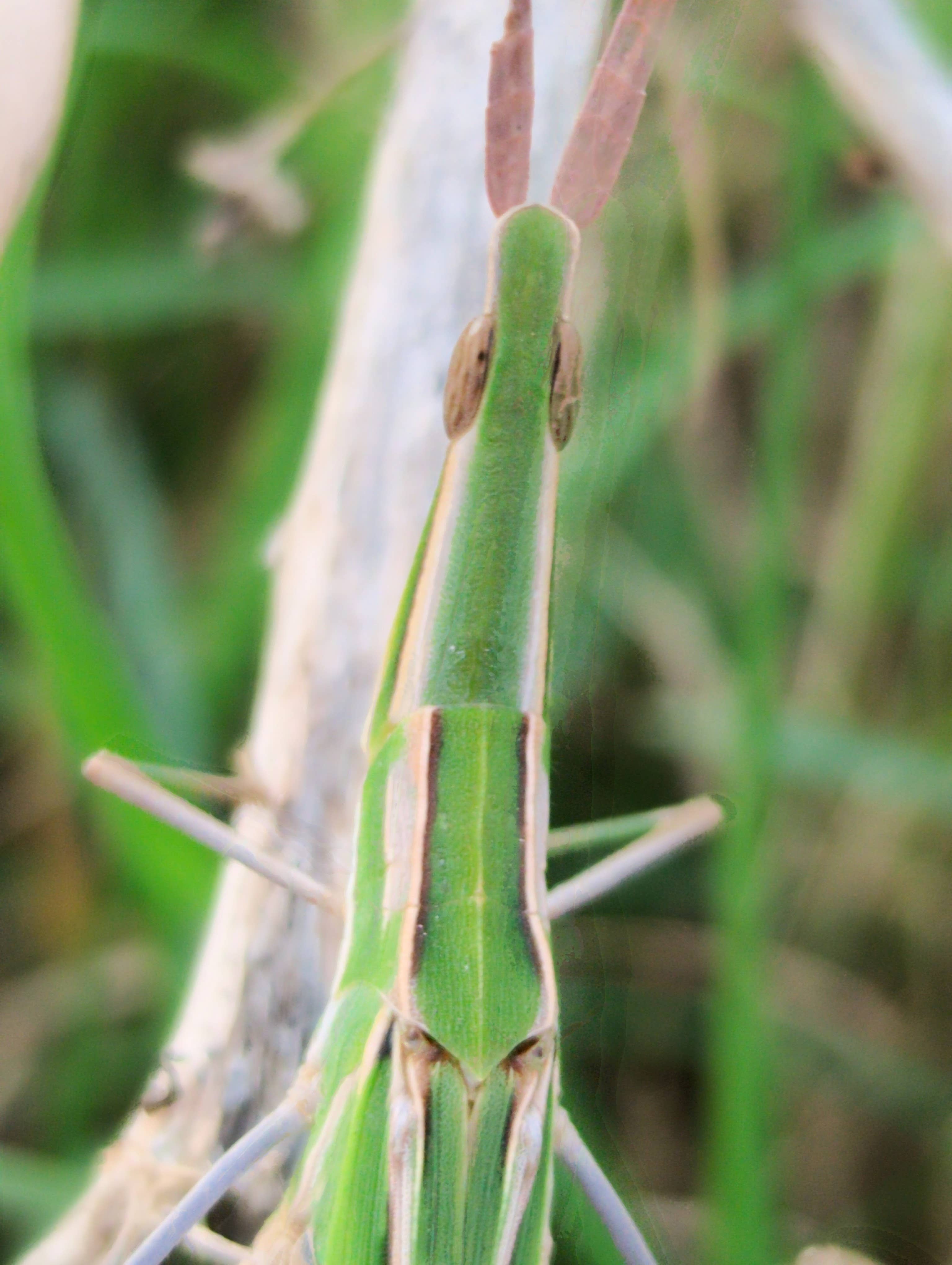
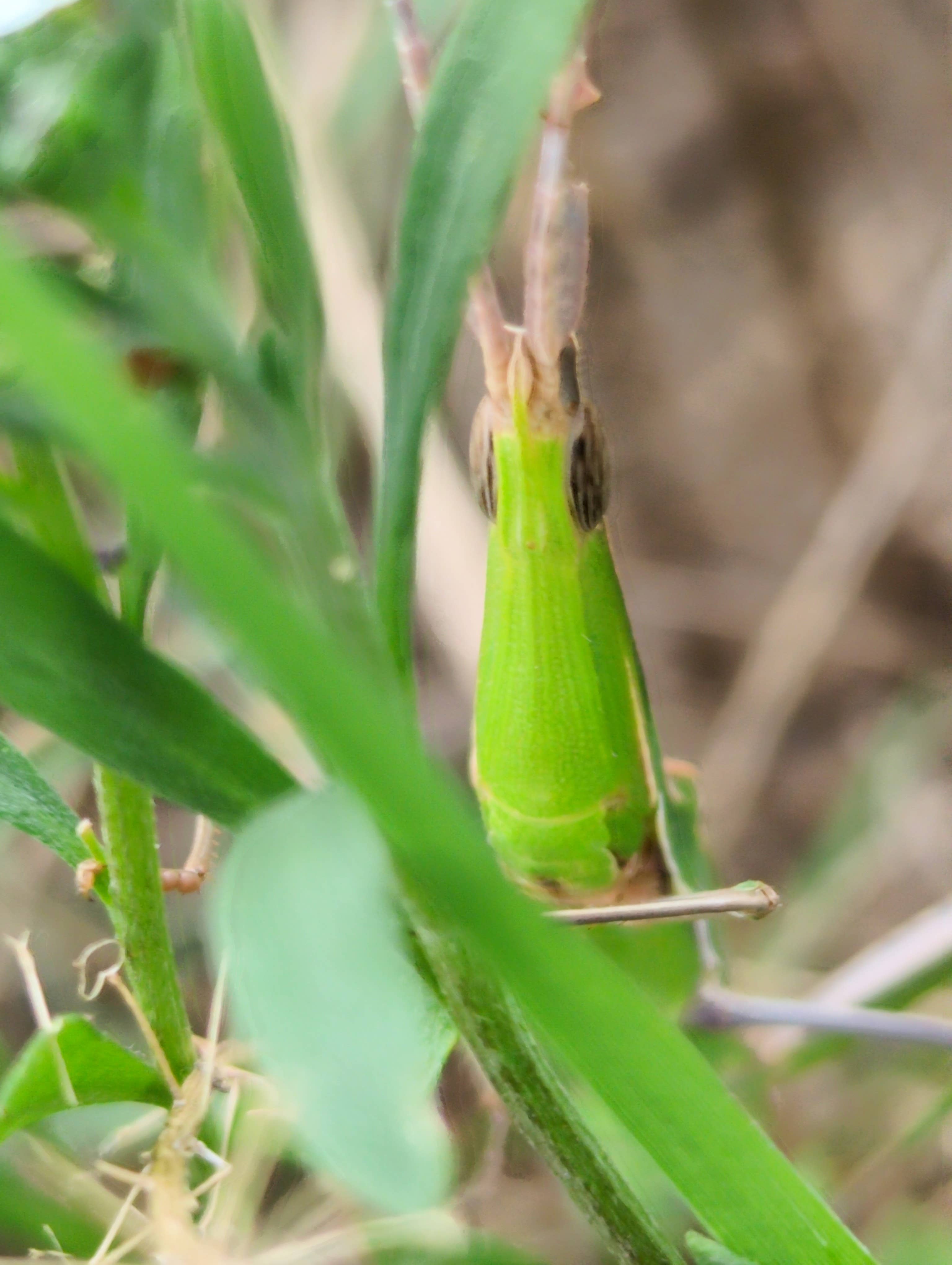
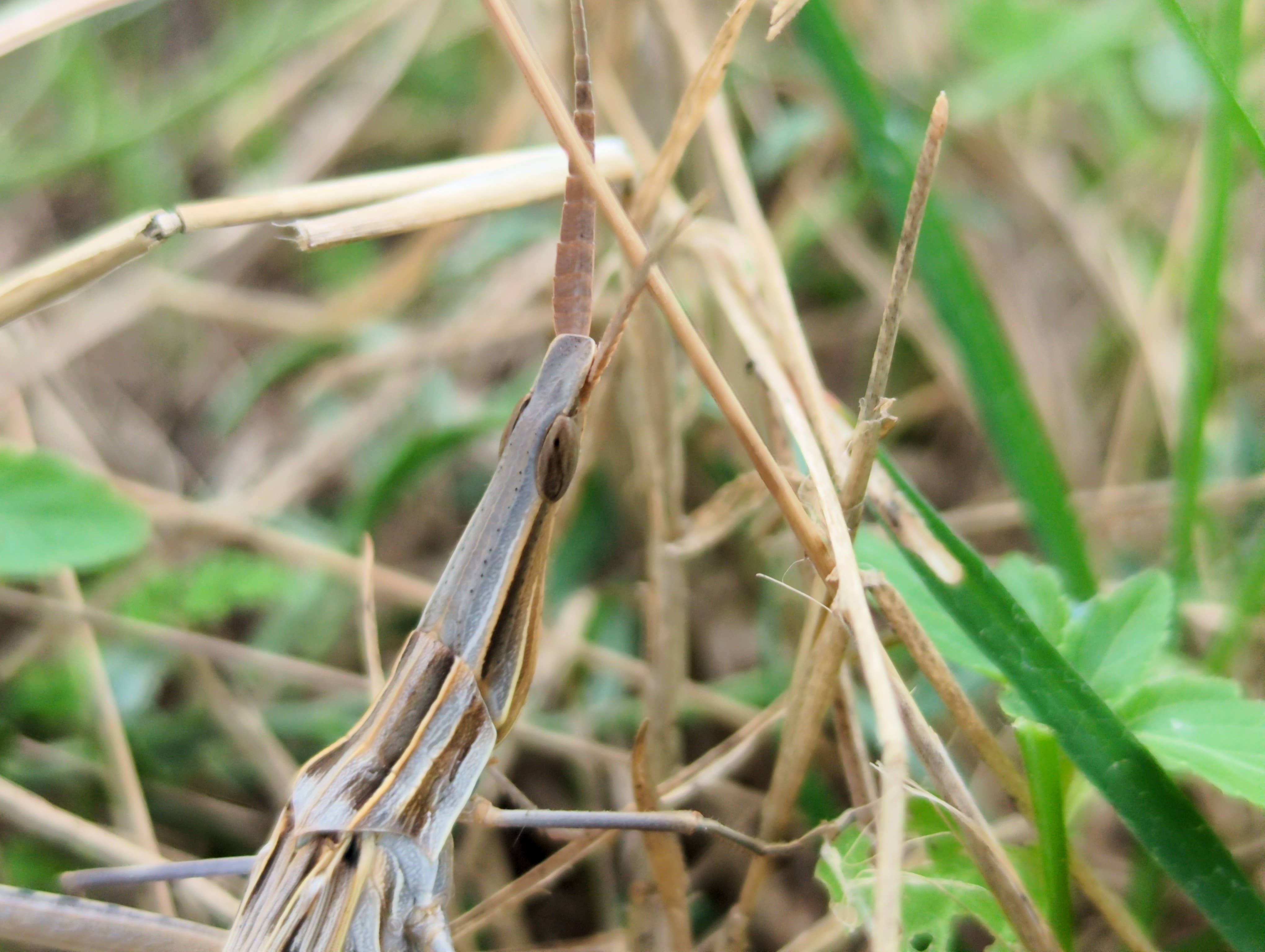
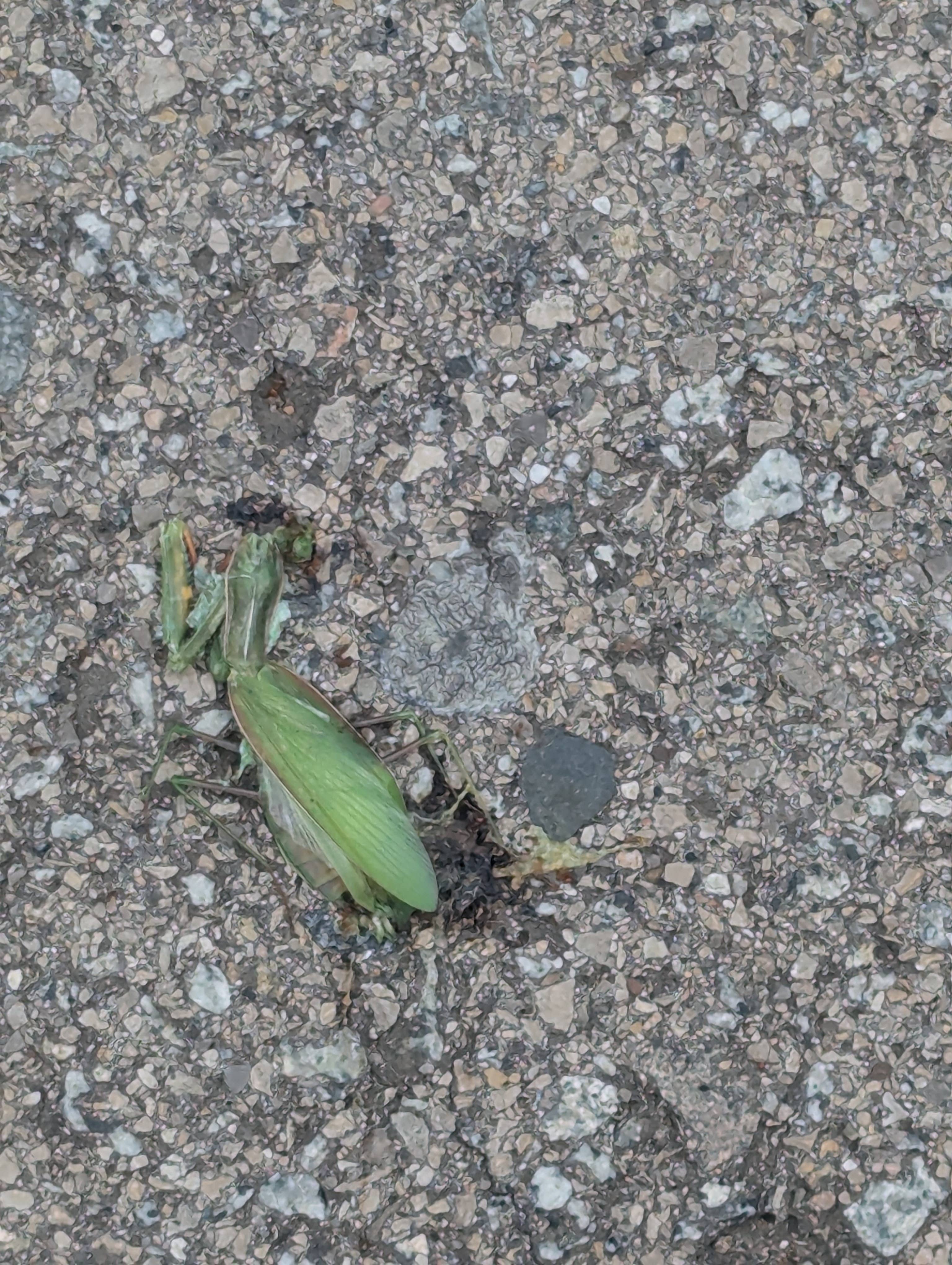
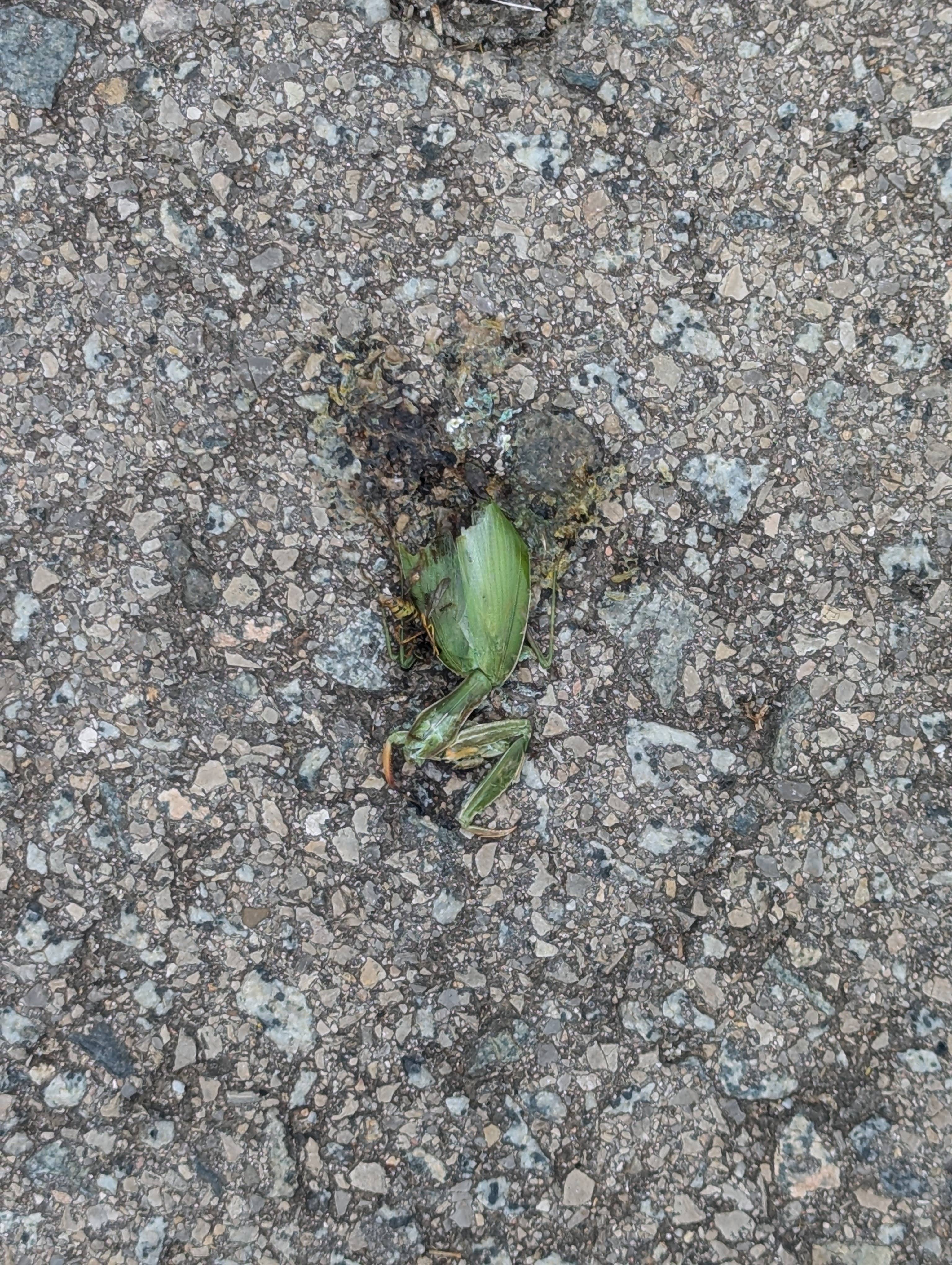
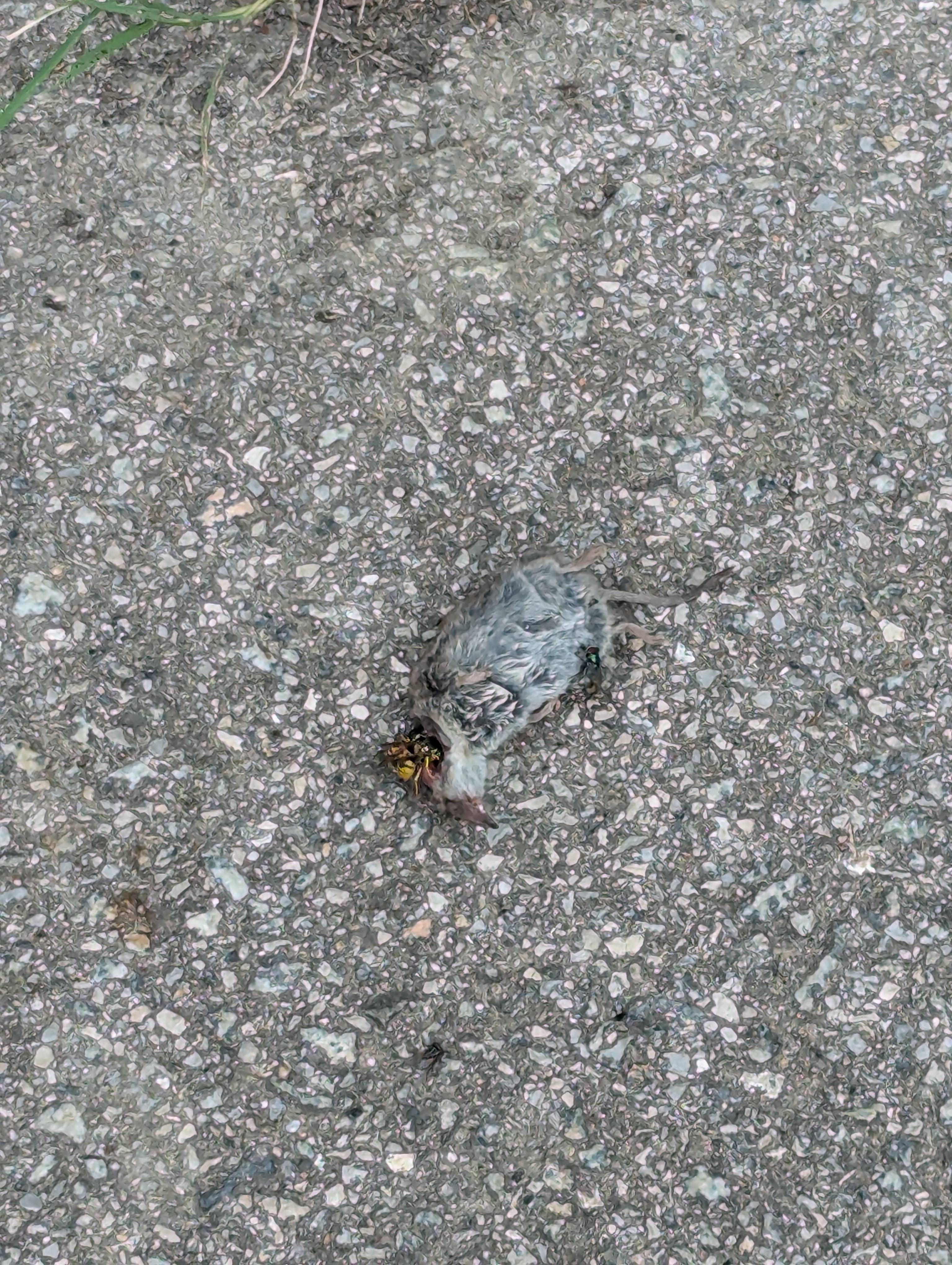
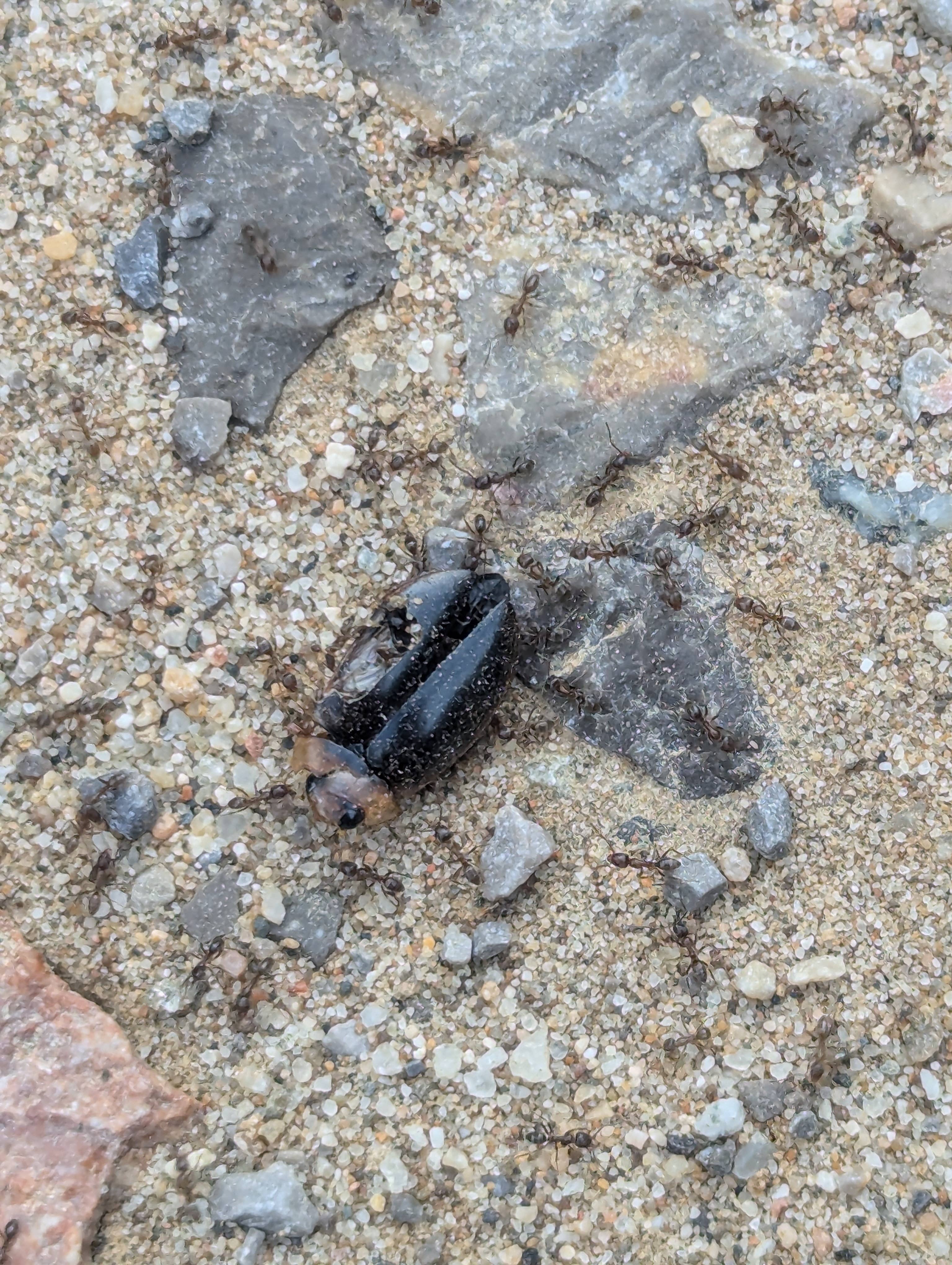
Goodbye Spain.

kikonazo churruca
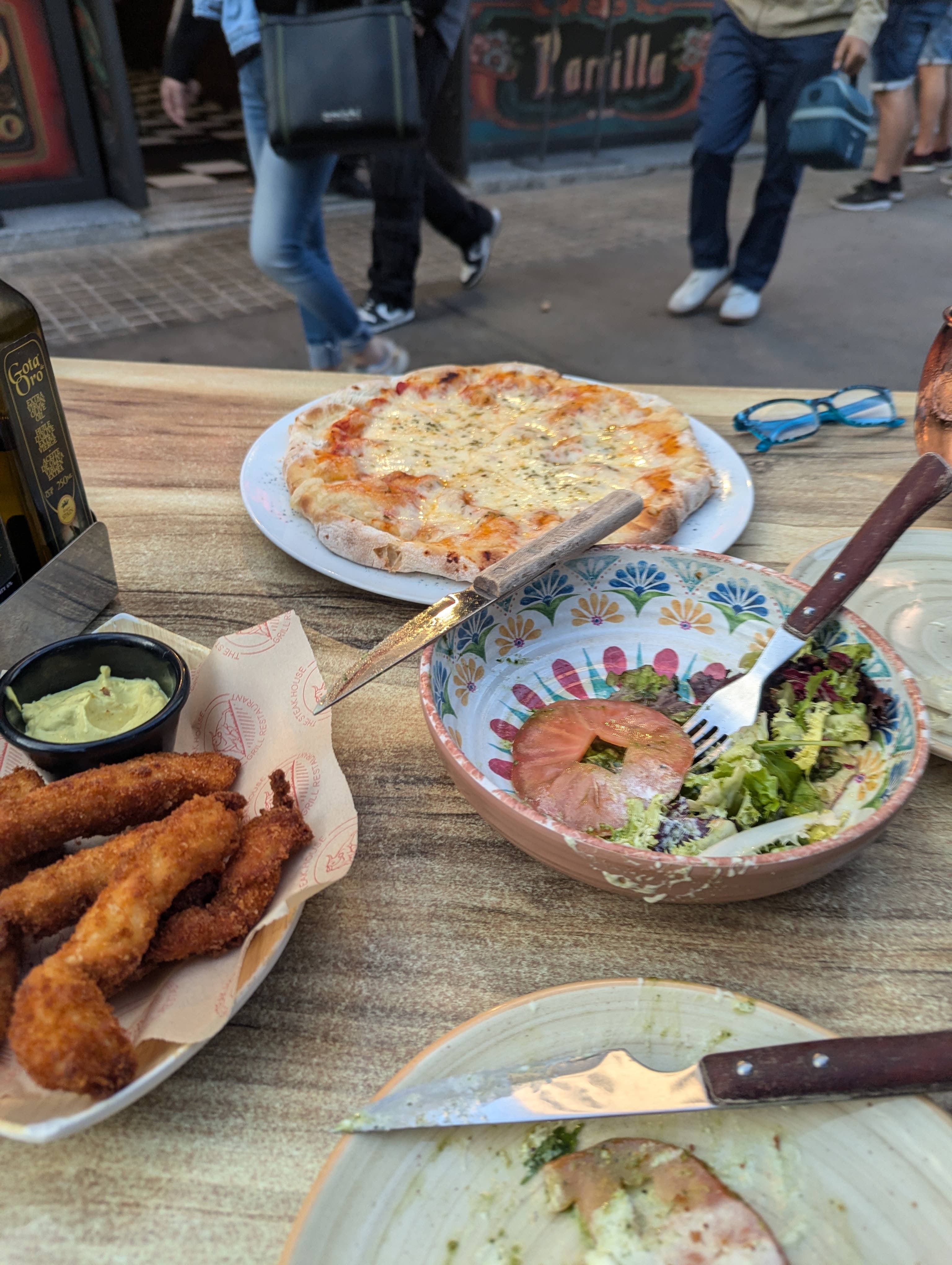
that pizza was ass
Oct 4
Aaron's Birthday
I dont have any pictures from this day????? I guess I was "living in the moment"??
Oct 5
Santa Cruz
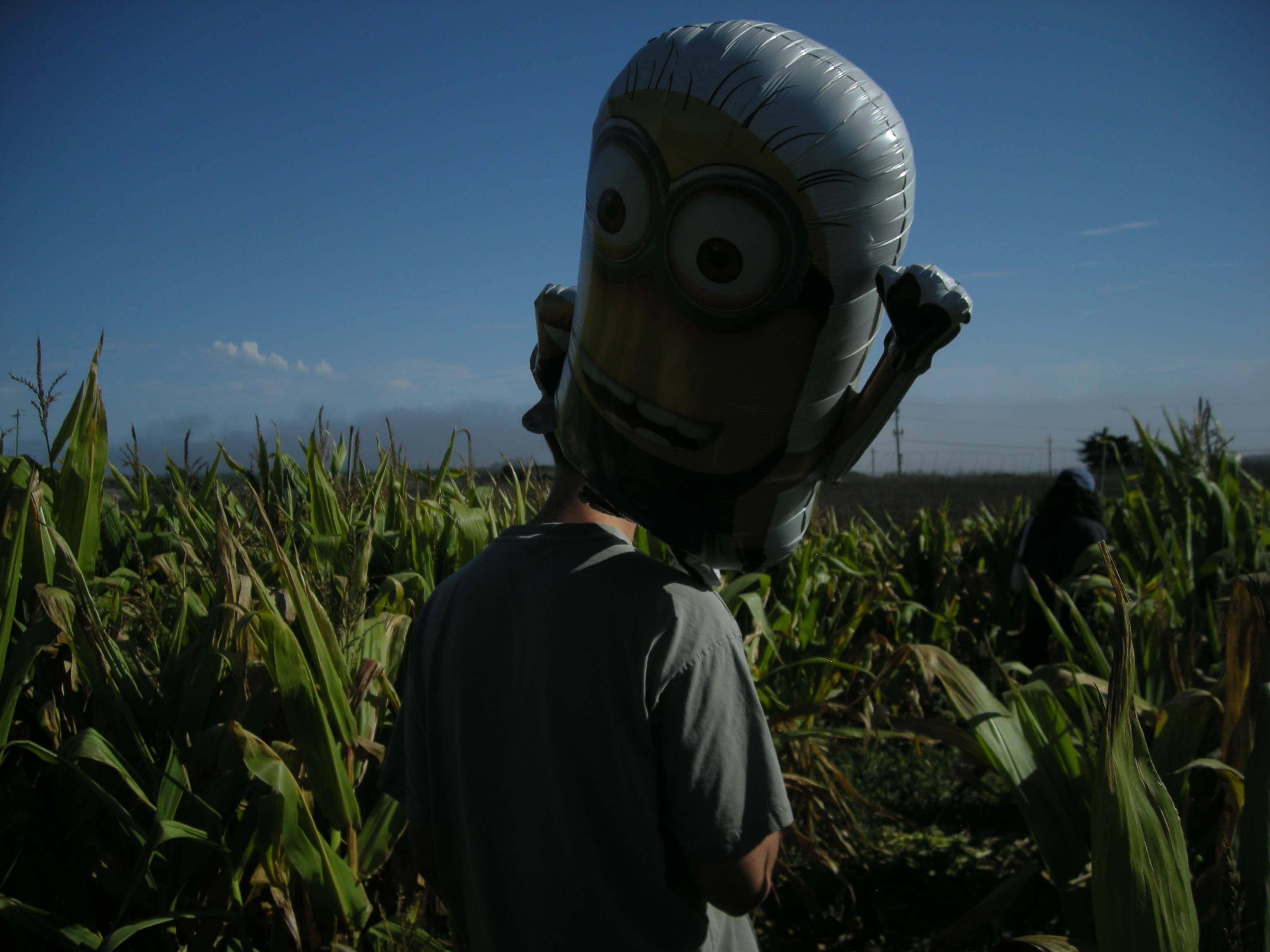
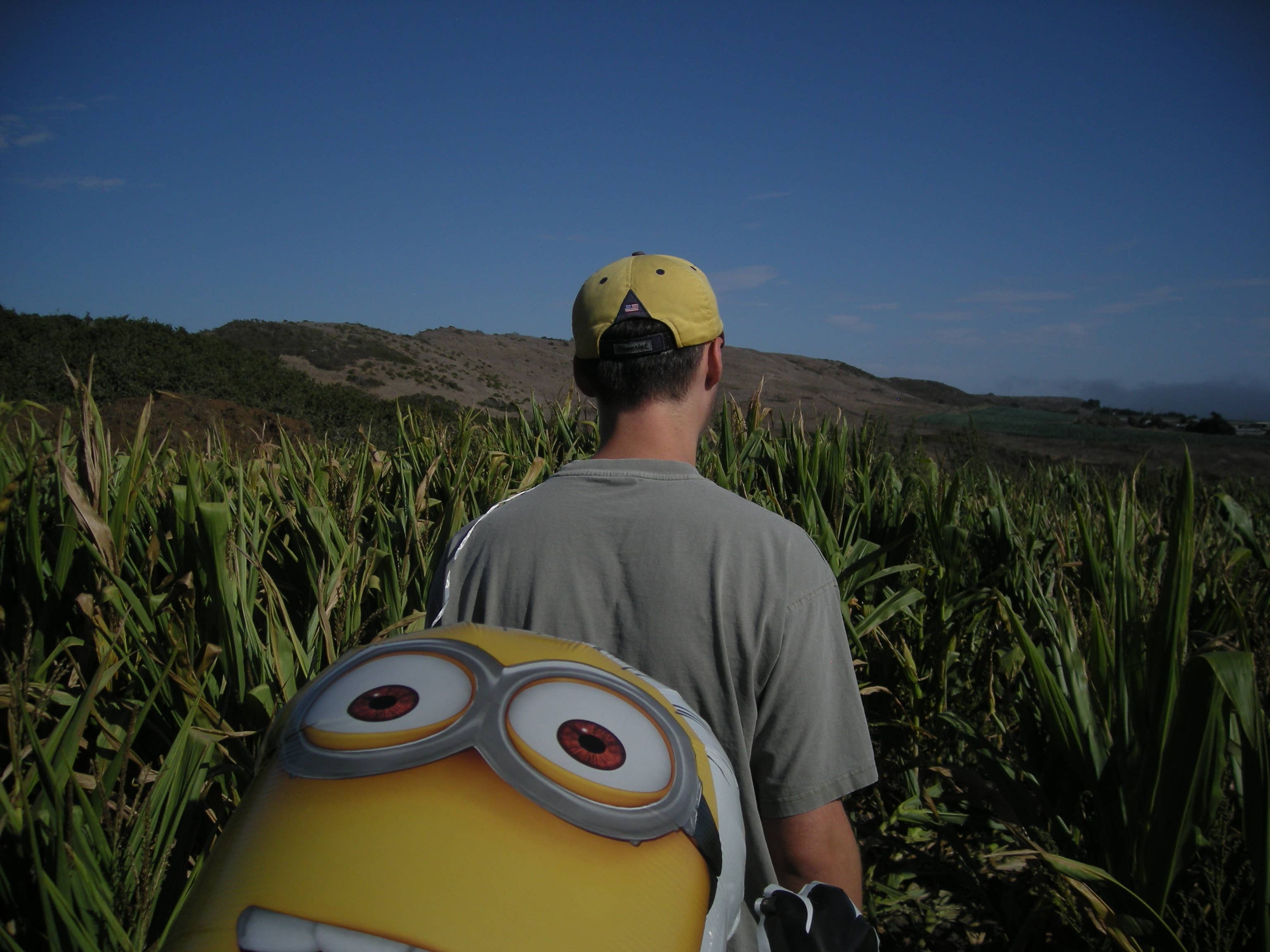
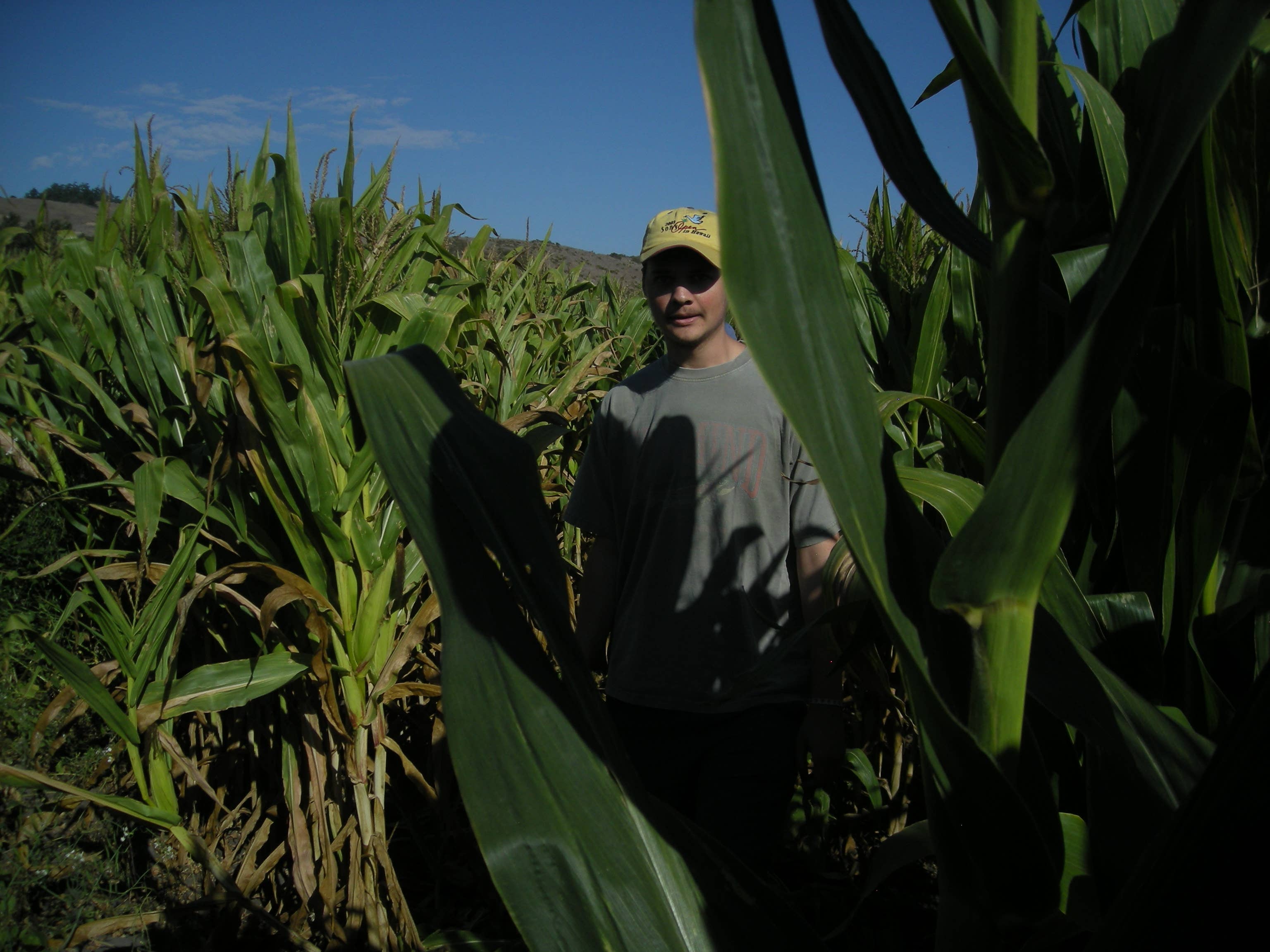
We went to the Rodoni Farms Pumpkin Patch. It's the first one you see driving up Highway one from Santa Cruz. Nice pumpkins! We came for the corn maze. The maze was way easier than we expected. It was basically a trail through a corn field left by a drunken tractor driver.
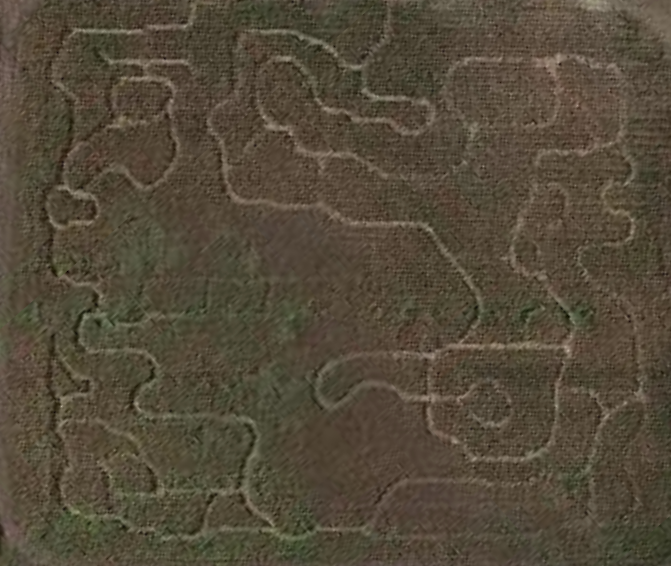
took us like 15 minutes
Adrien 360
(unrelated to the rest of the plot)
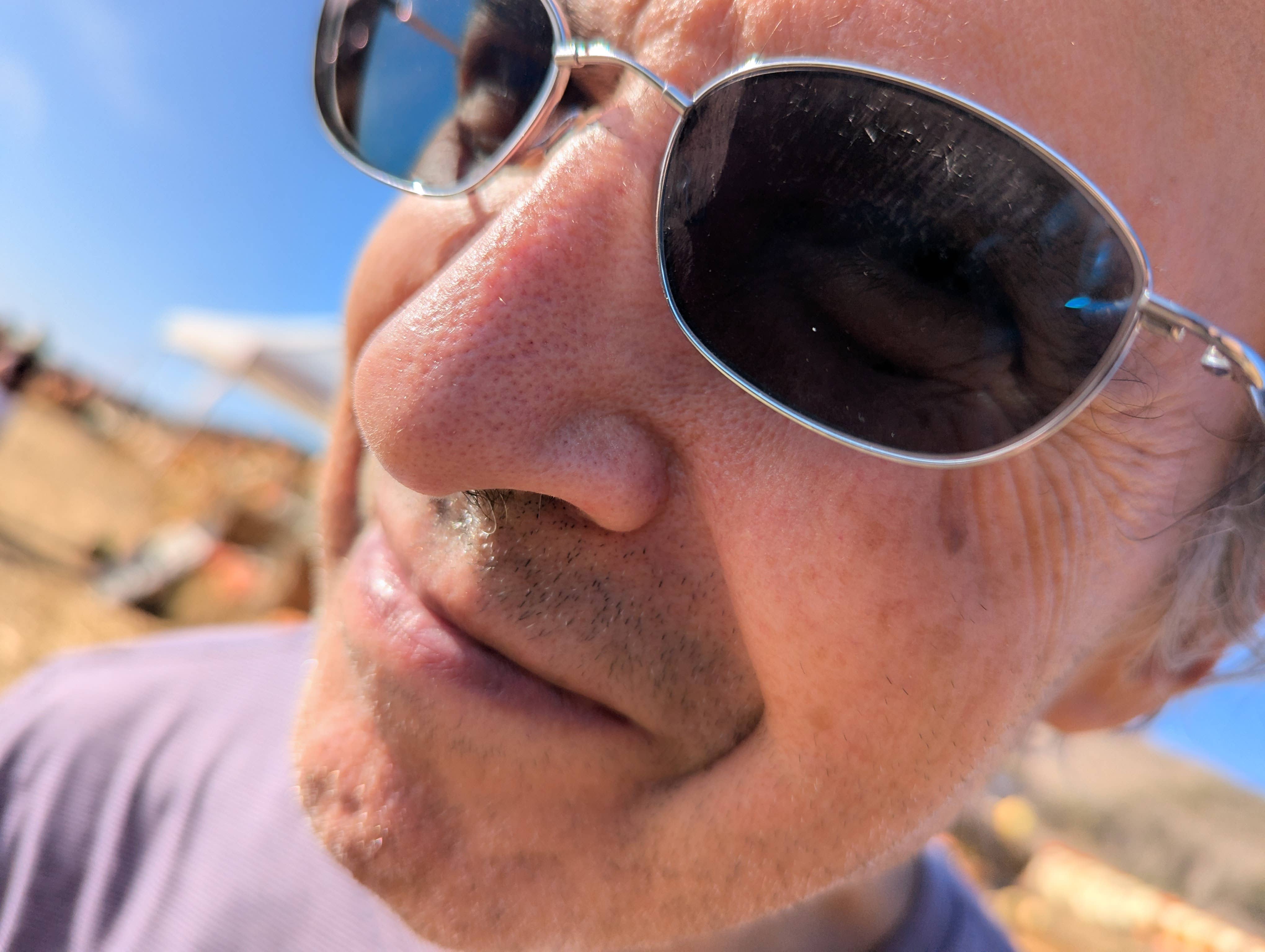
Joshua at pumpkin patch
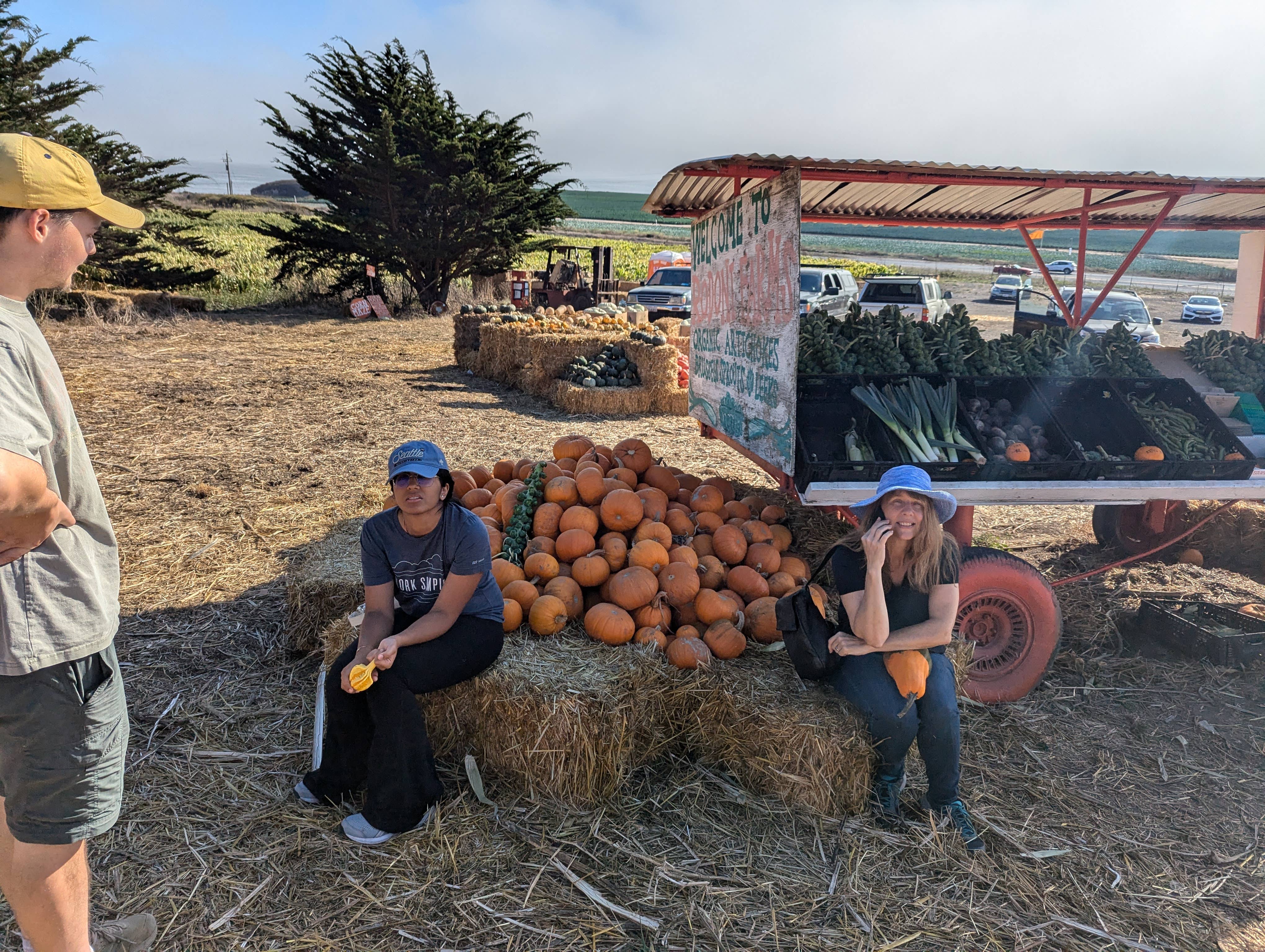
ignore Saanvi hating me, my mom found a cool pumpkin
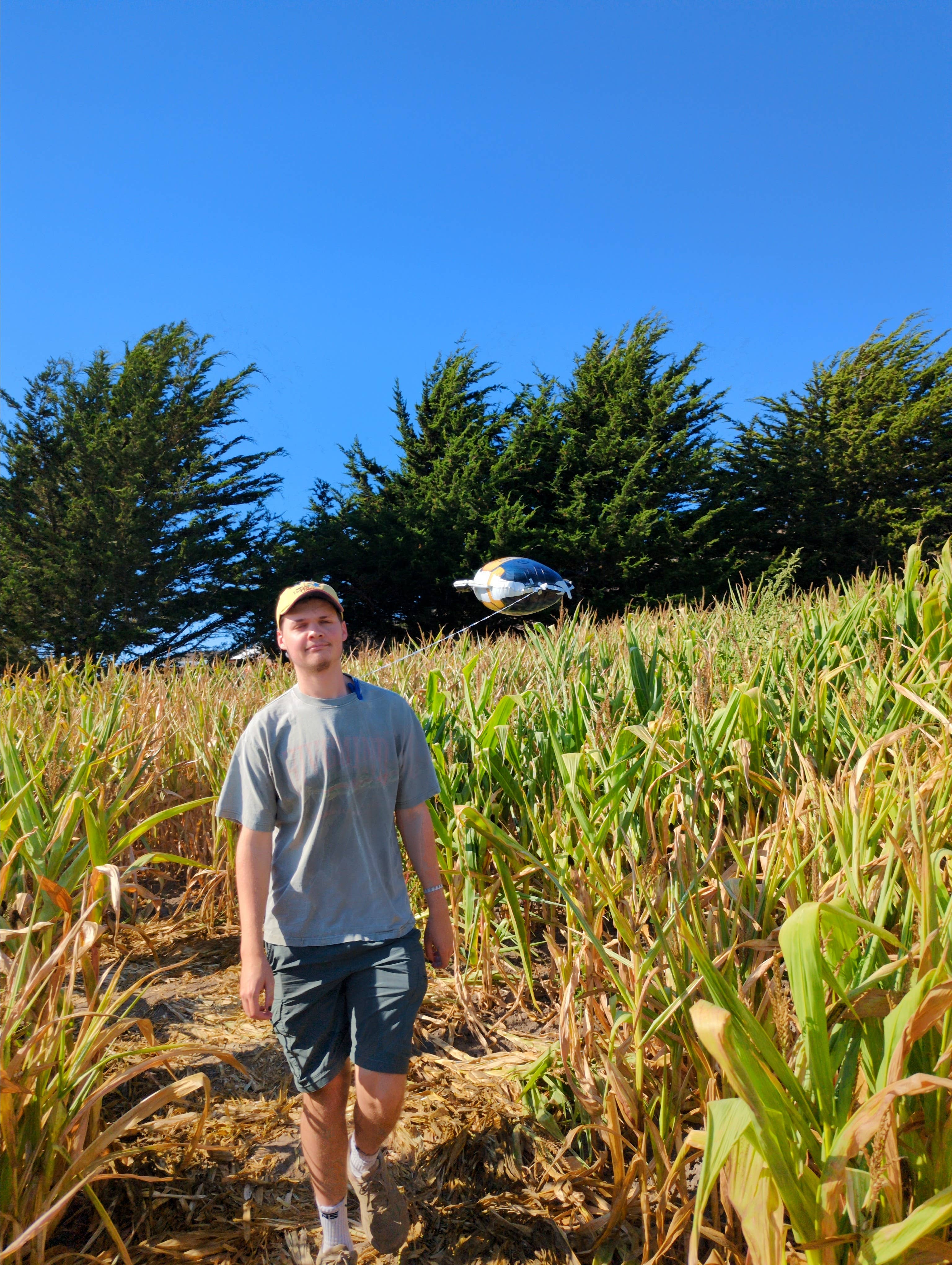
the corn maze begins
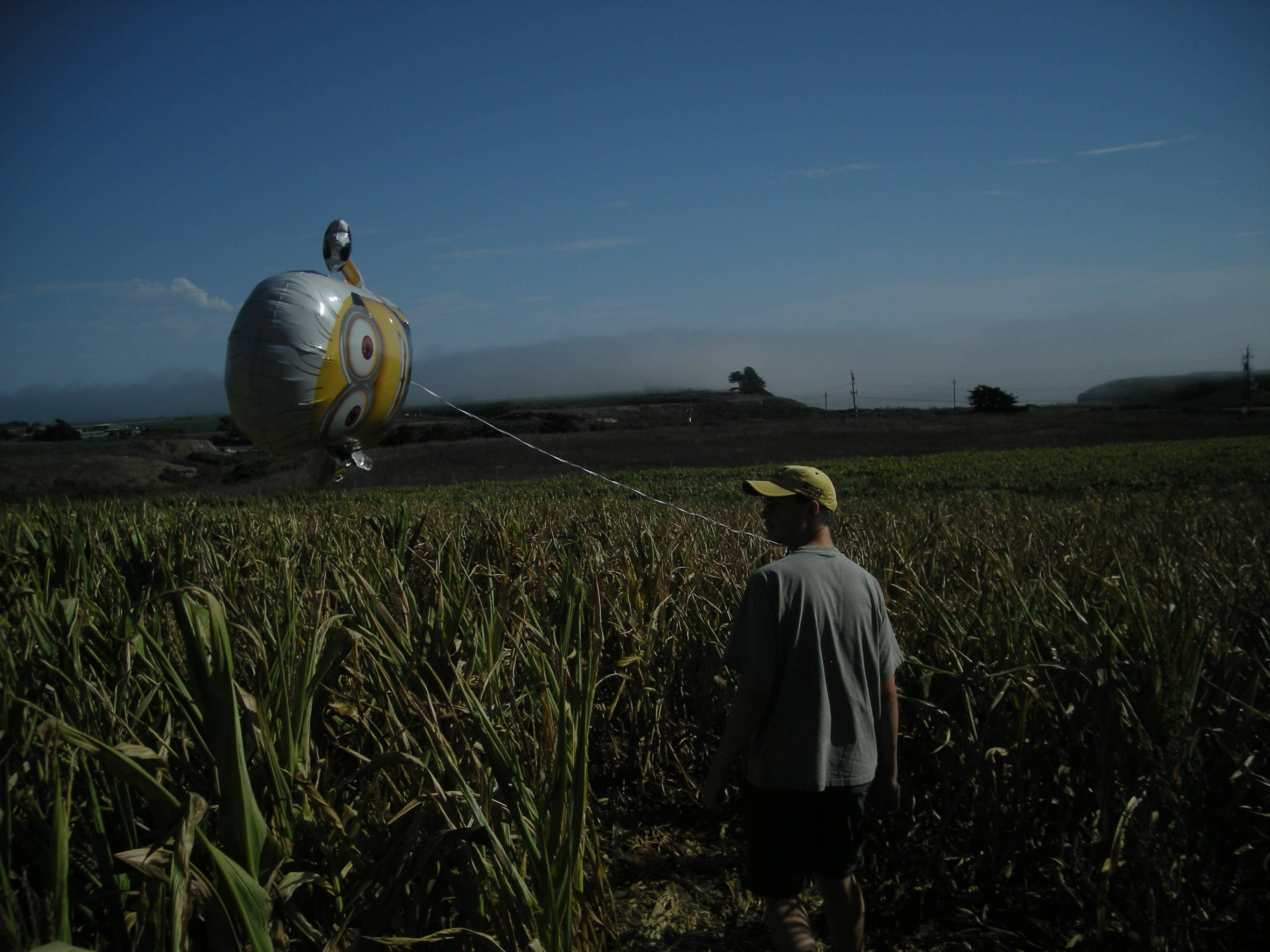
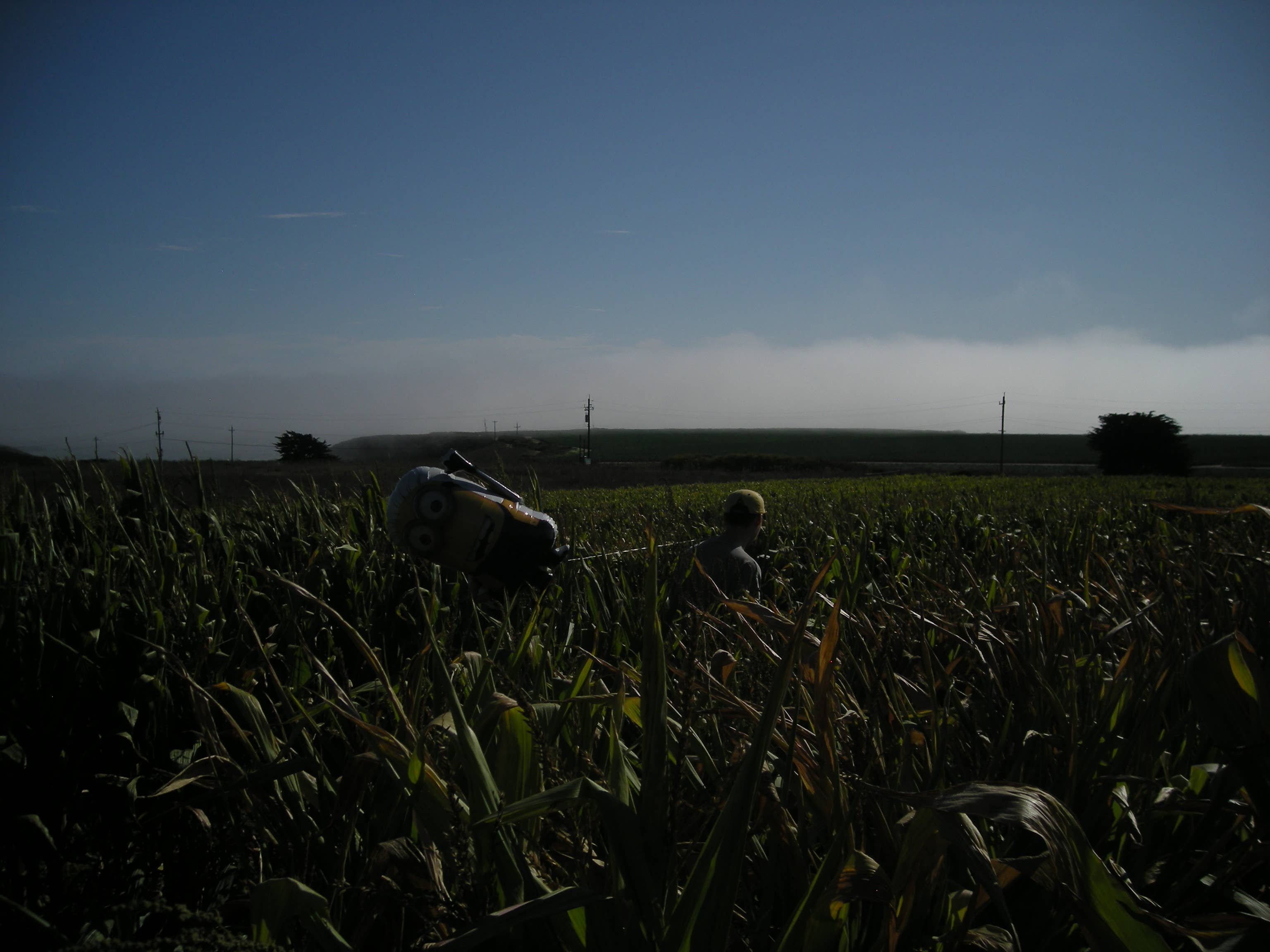
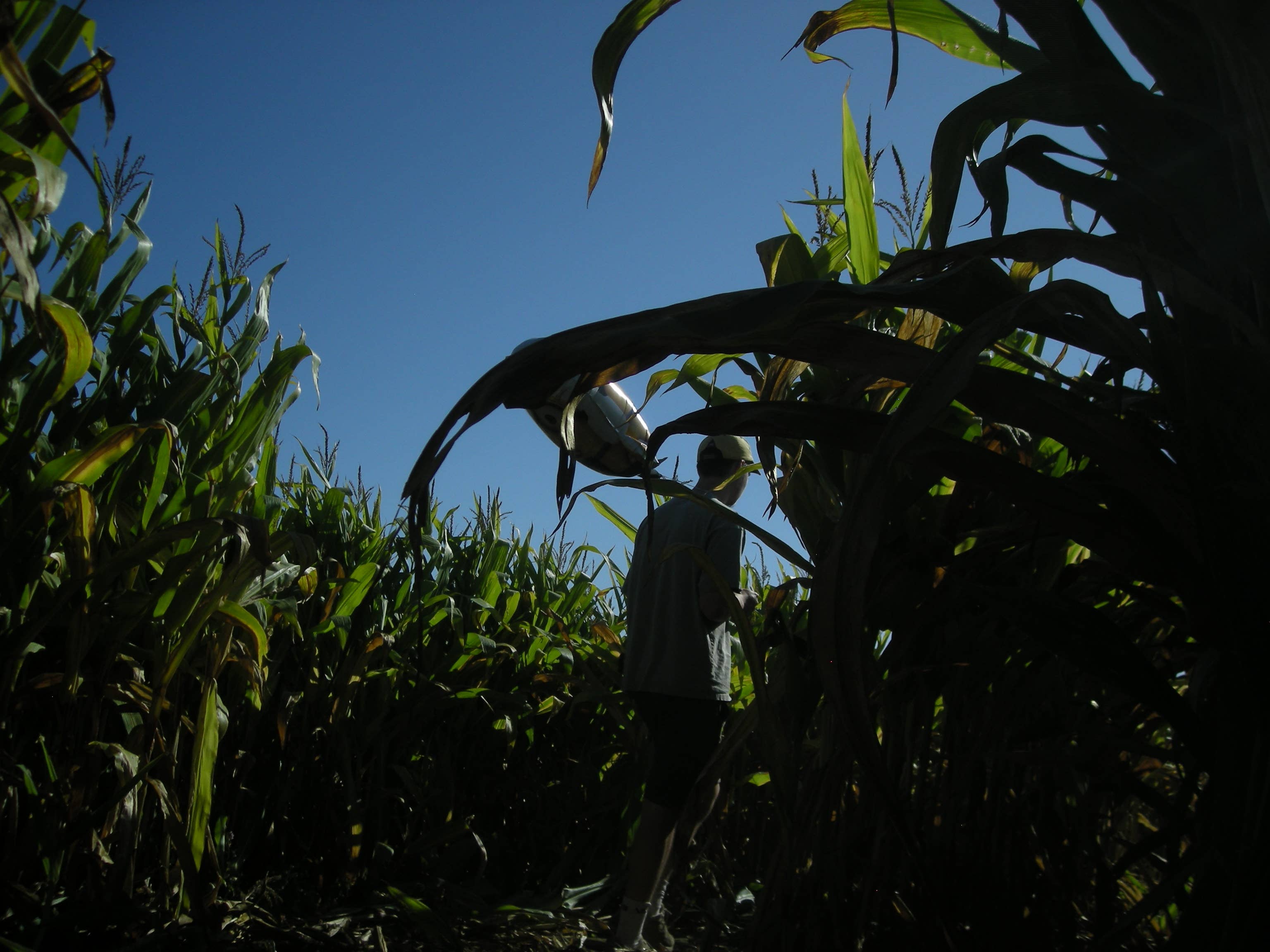
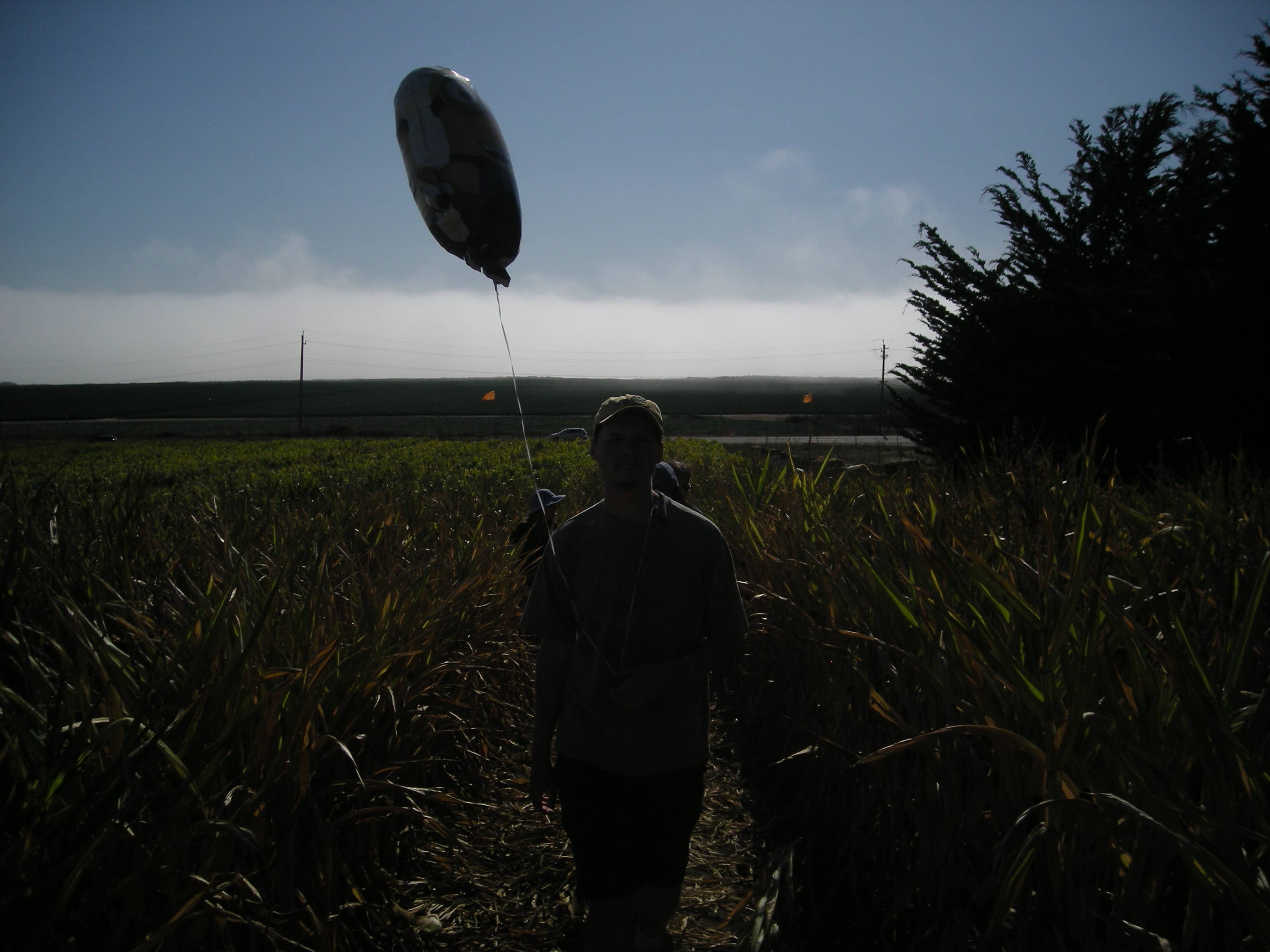
Aaron let me borrow his camera for a photo shoot:
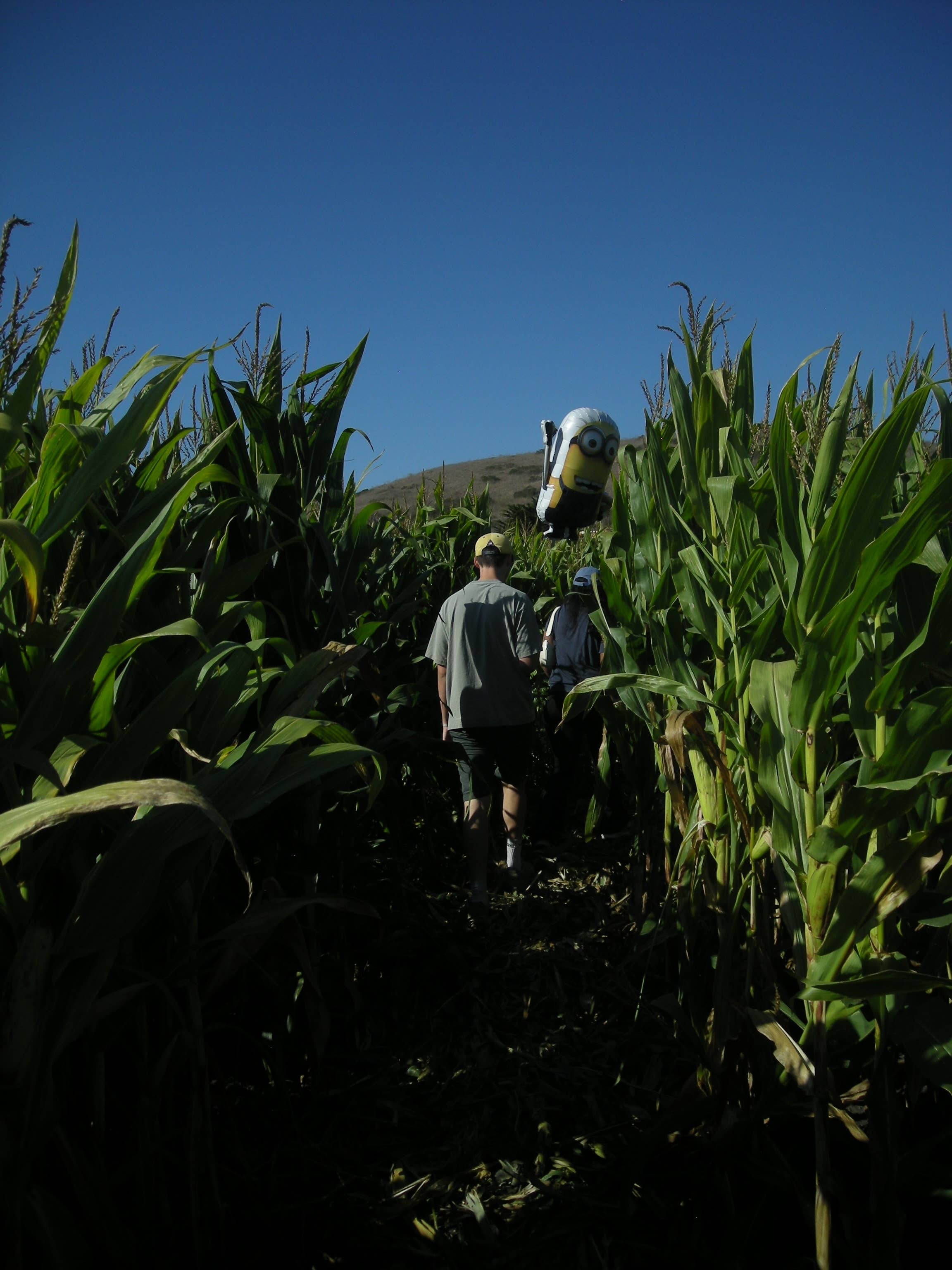
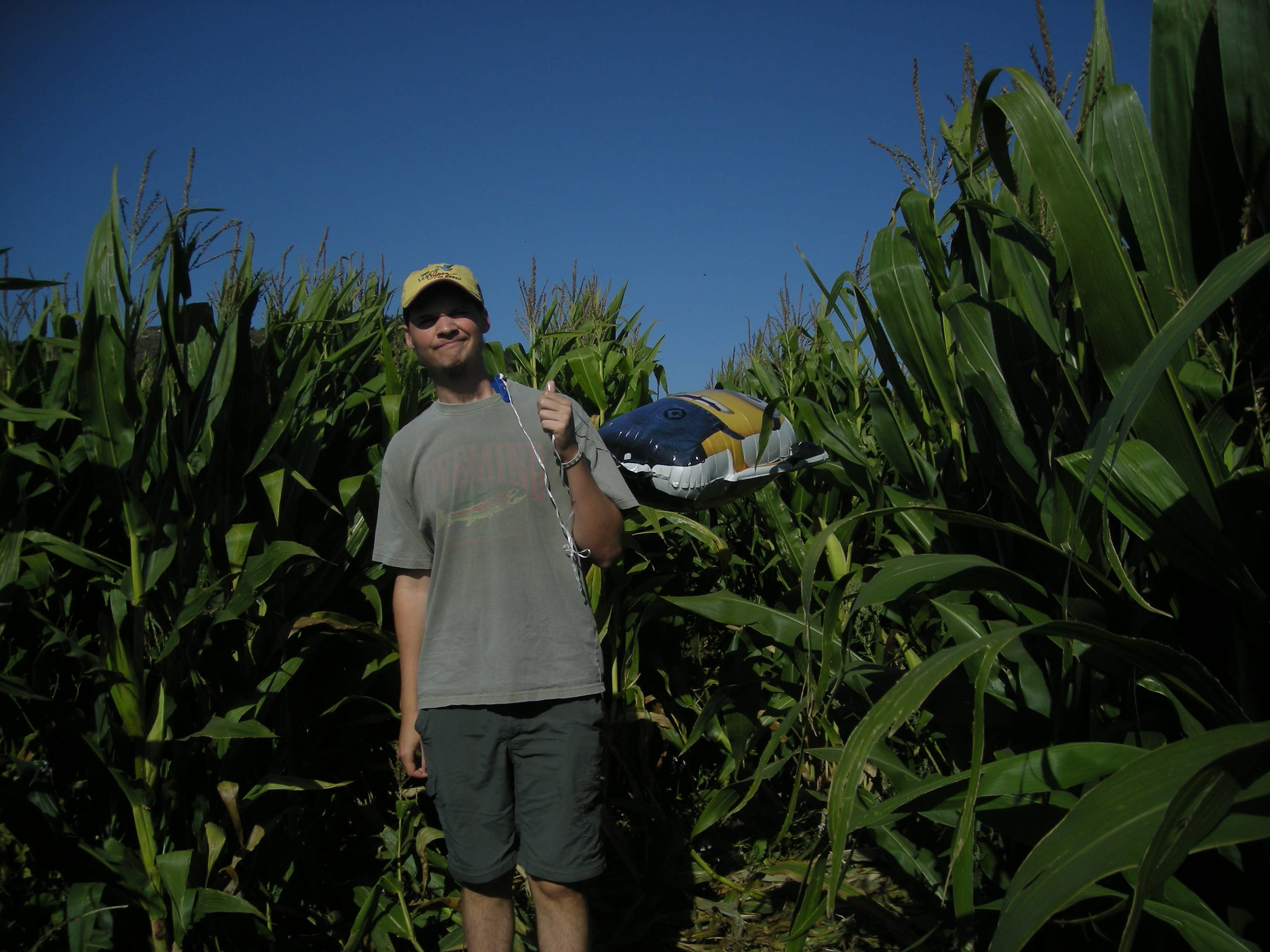
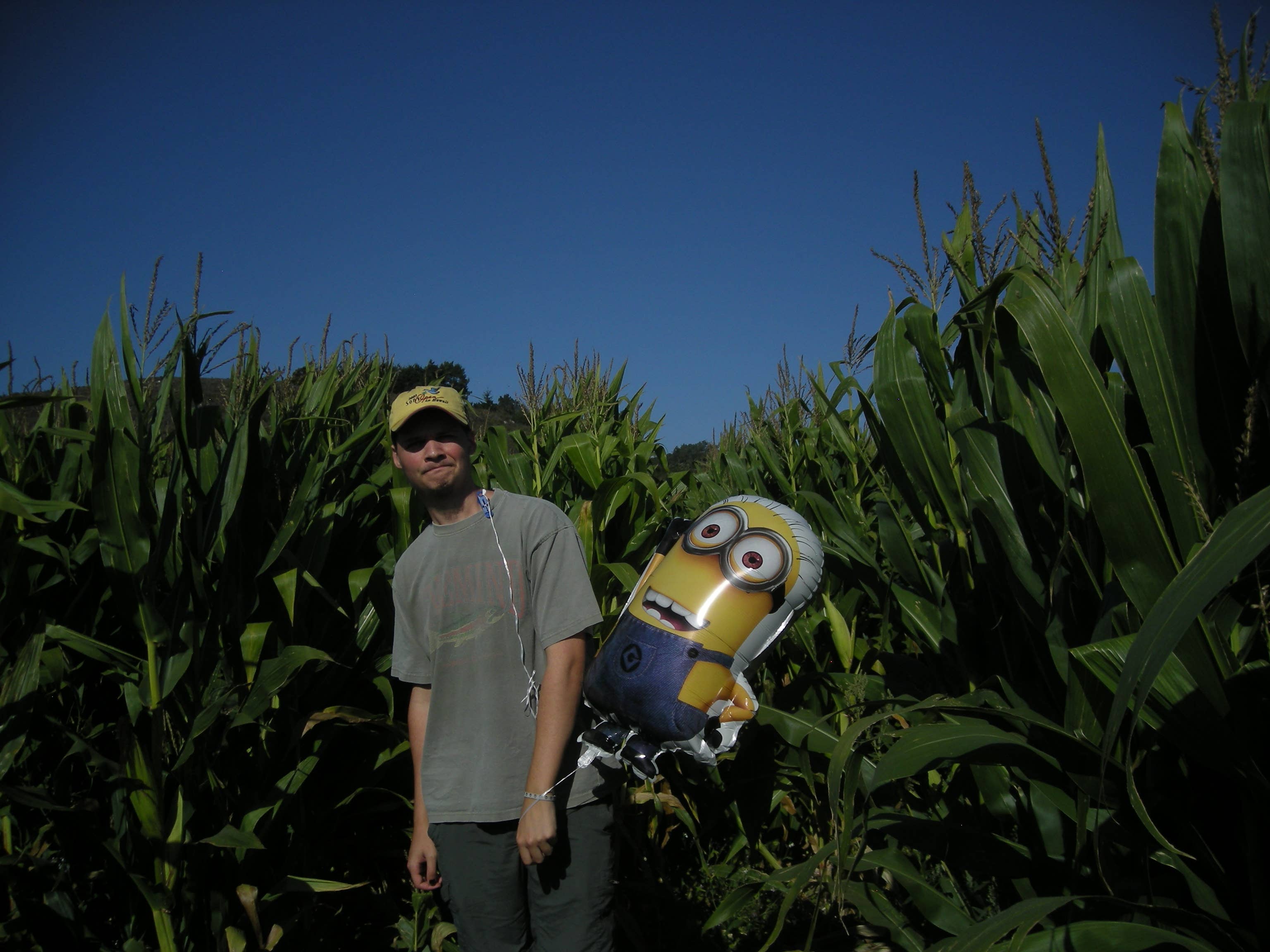
Oct 12
Oso Flaco Lake, SLO County
Some time before this, I stalked beach arthropod species in SLO on iNaturalist. I noticed a few species with common names, which is unusual for cryptic beach species. Both names referencing Oso Flaco. The Oso Flaco Flightless Moth and the Oso Flaco Robber Fly. For me, not much is cooler than a cryptic species with an extremely limited range, only being endemic to a single lake area in this case. Despite both of these species being out of season, I decided to look more into Oso Flaco Lake.
It turned out there was a legend attached to the lake, which gave it it's name. Oso means bear and flaco means skinny. Oso flaco = skinny bear. The legend is about a Spanish expedition of the area in the 1700's. It's said that the Spanish explorers found a skinny bear at that lake, and decided to shoot it and eat it. But unforntuately for the Spanish, the local Chumash people had poisoned the bear and all of the Spaniards that ate it died.
Since this small obscure lake had a surprising amount of interesting ecology and history, I decided to go and take a look... for myself... (▀̿Ĺ̯▀̿ ̿)
On the walk to the lake:
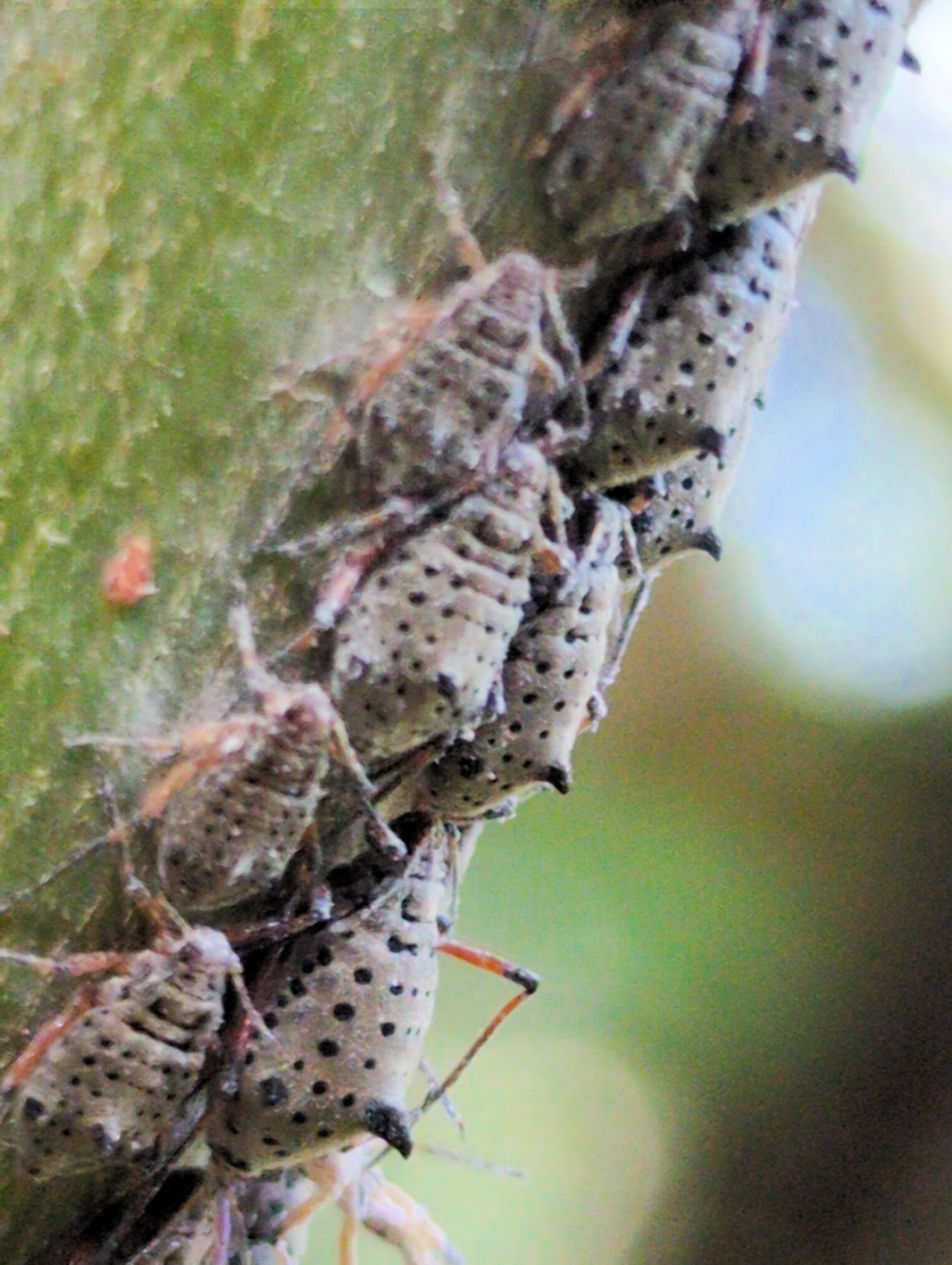
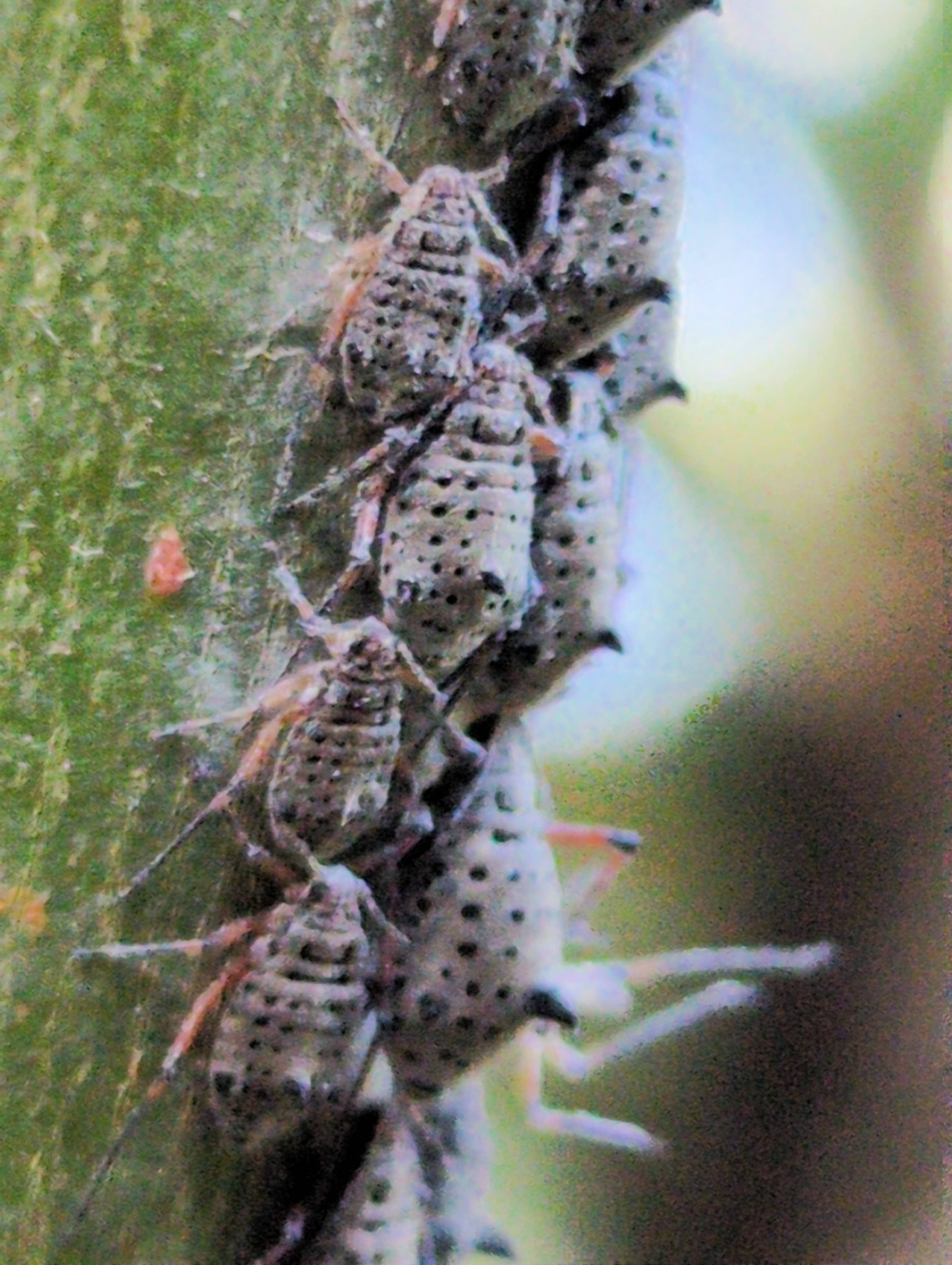
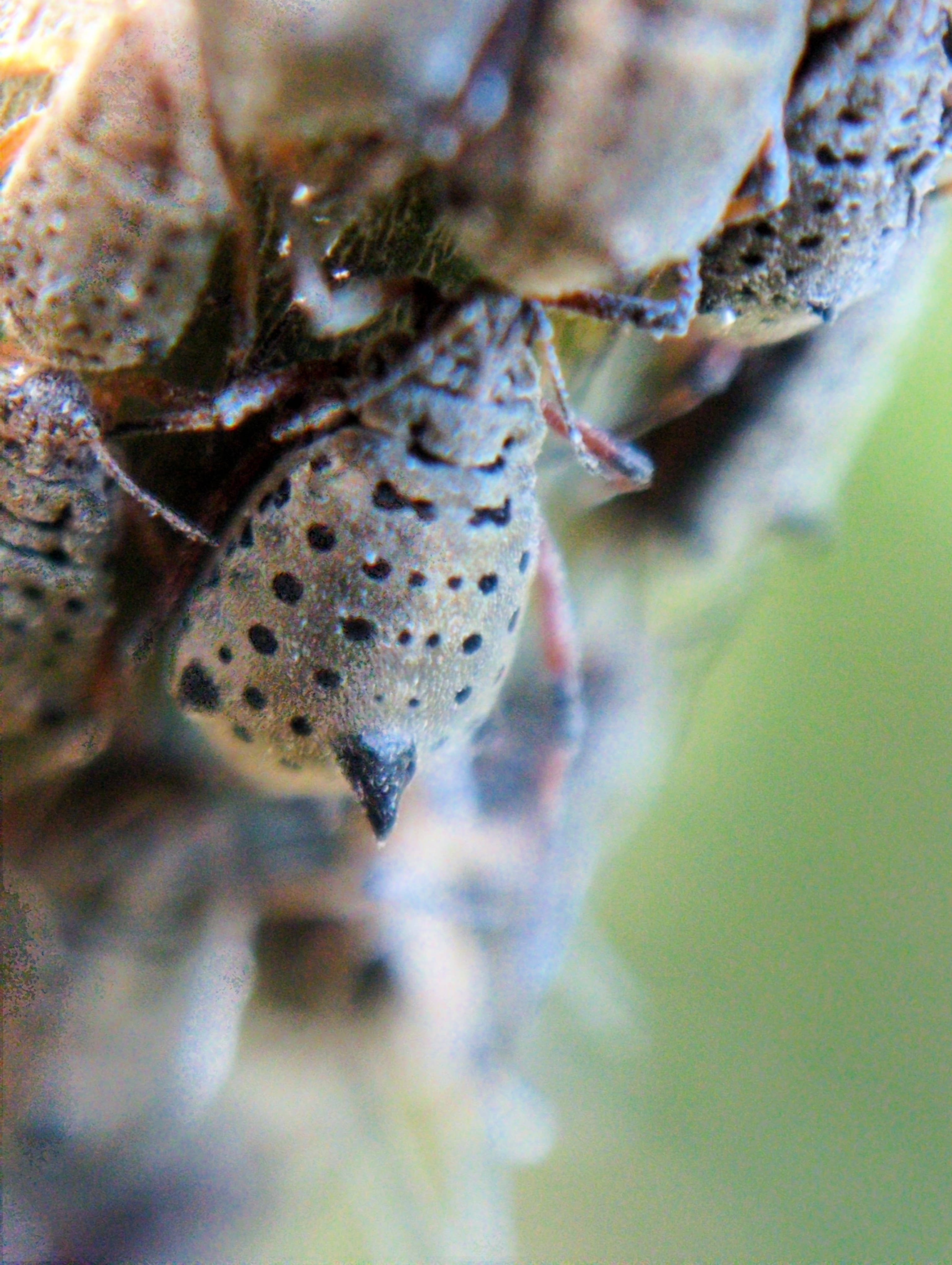
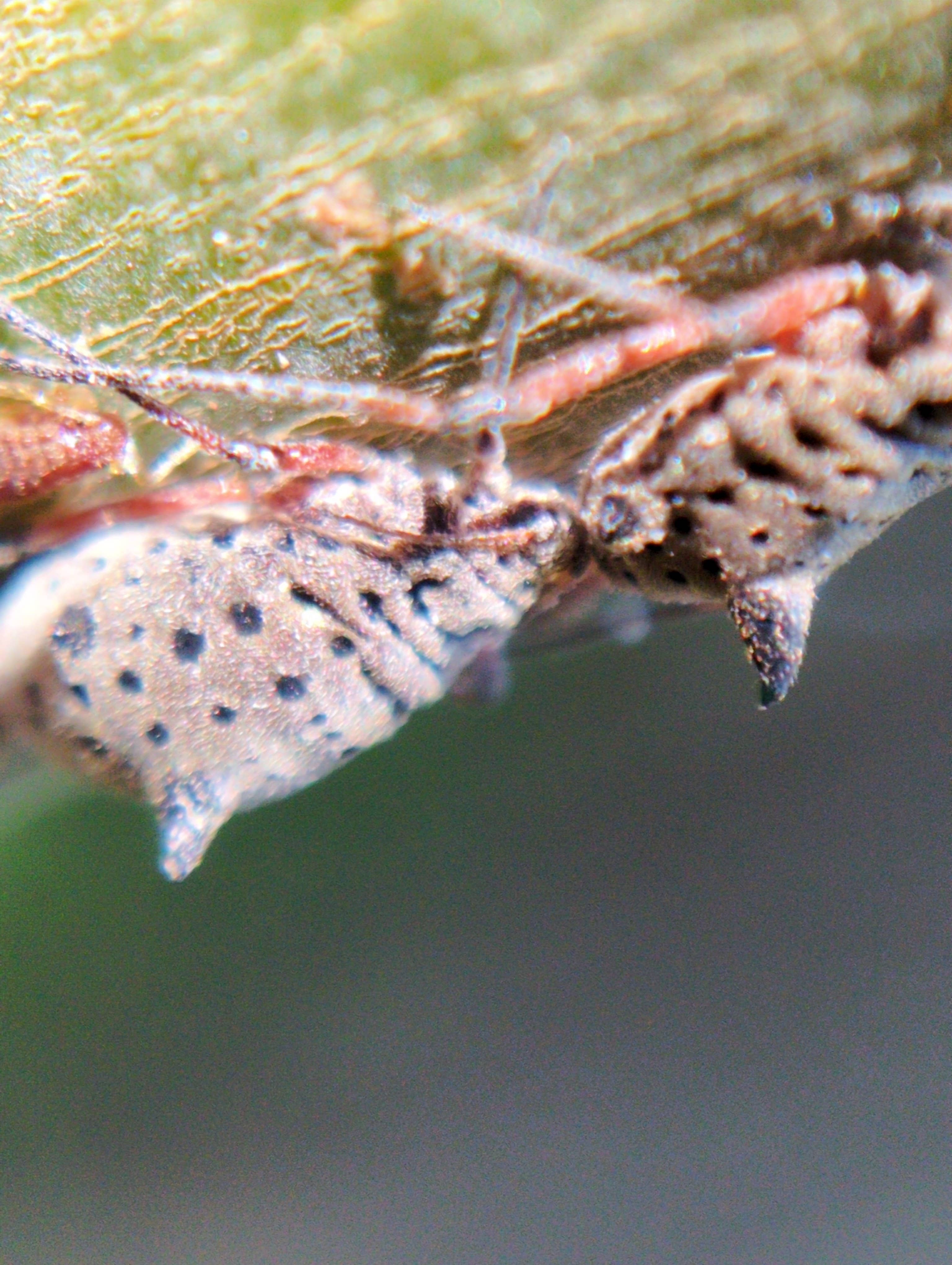
Giant Willow Aphid (Tuberolachnus salignus)
Tuberolachnus salignus is considered to be the world's largest aphid species. It is thought to have originated from Japan or Korea, but now can be found on aLL CoNTiNEnTs BEsIdES AnTaRCTIca. Obviously it feeds on the Willow plant (genus Salix), and is probably the sexiest (???) aphid I've ever seen.
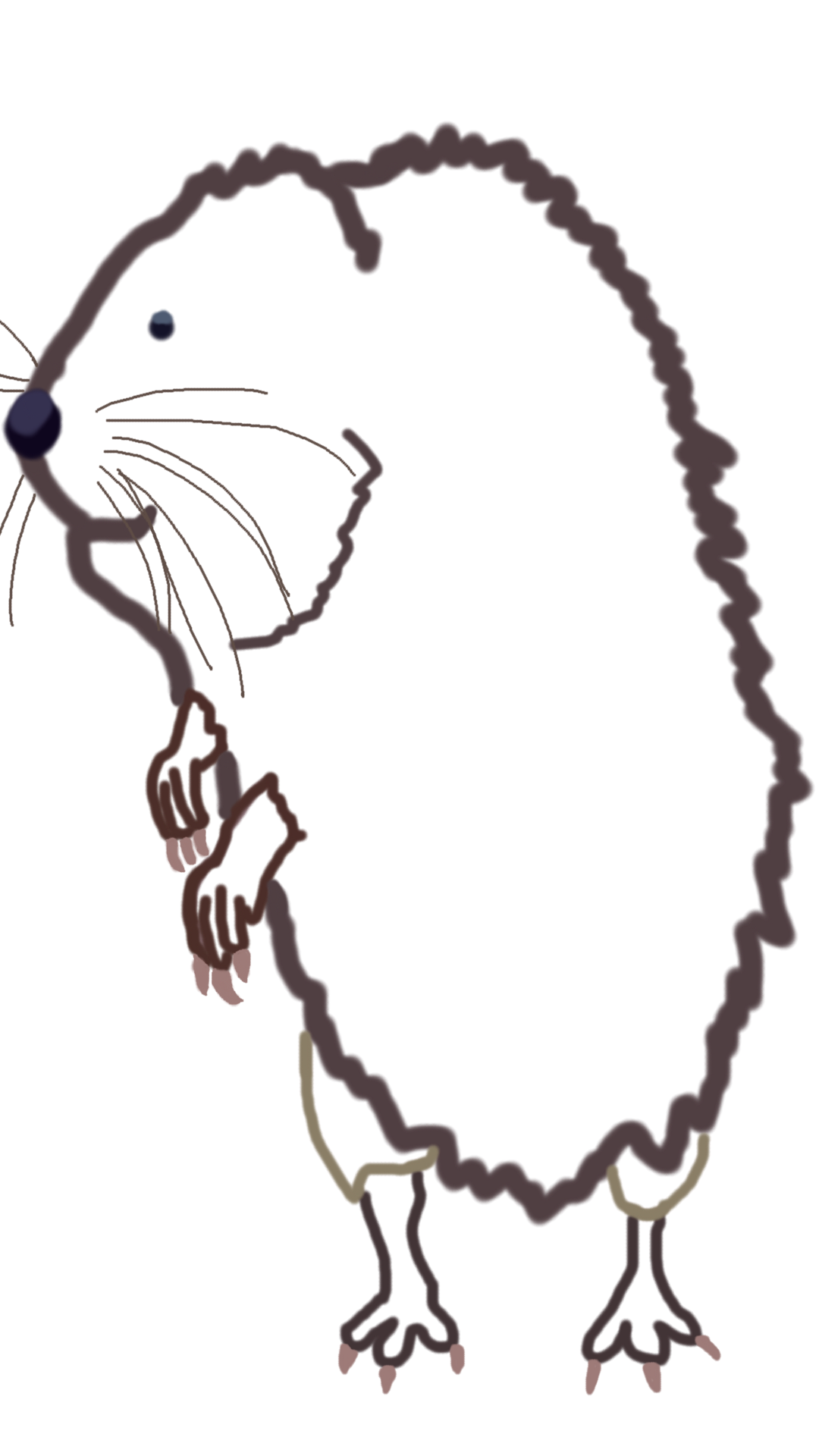
muskrat encounter
Somehow, I didn't get any pictures of the actual lake itself. So moving on to the sand dunes on the west side of the lake...
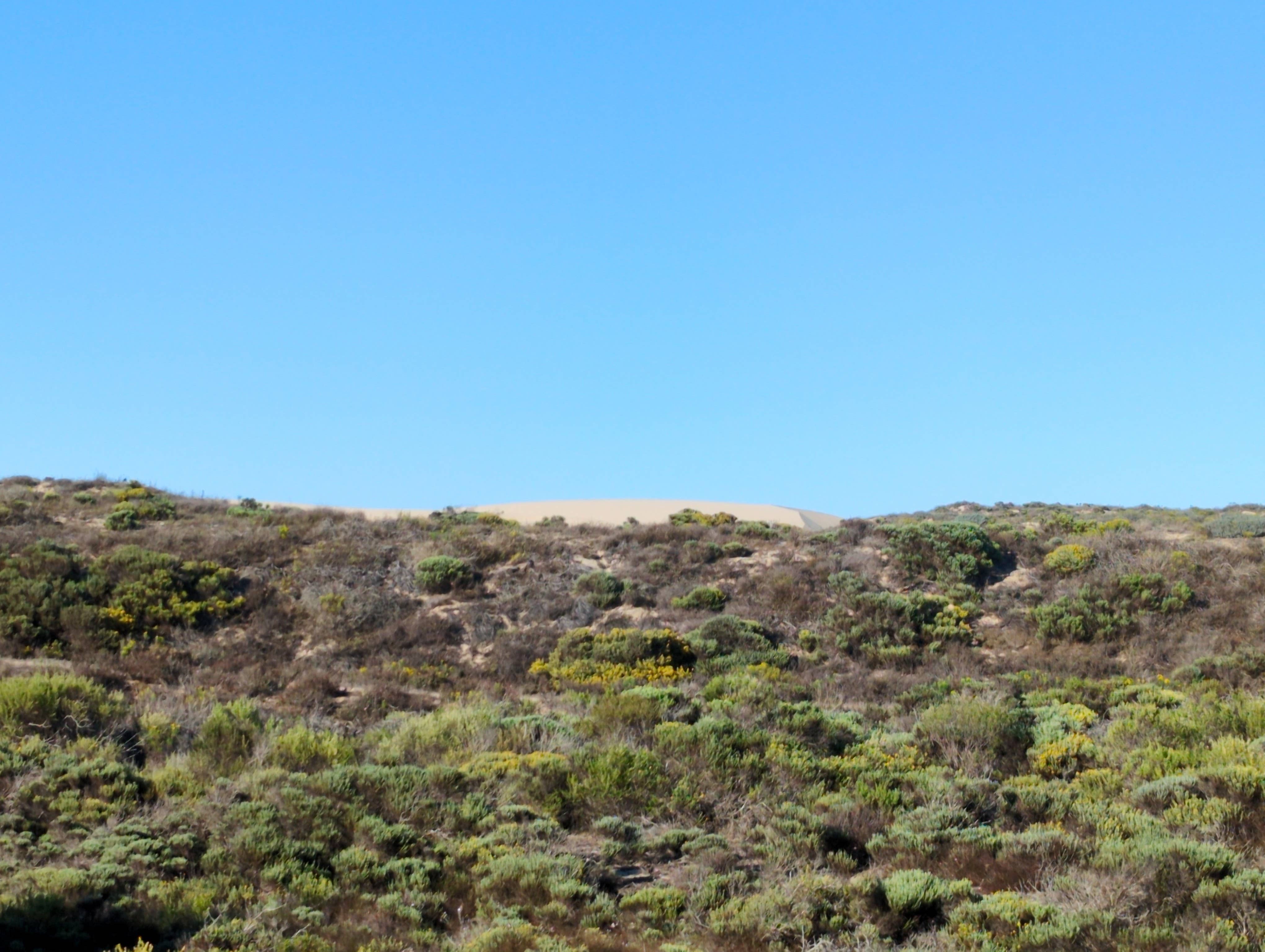
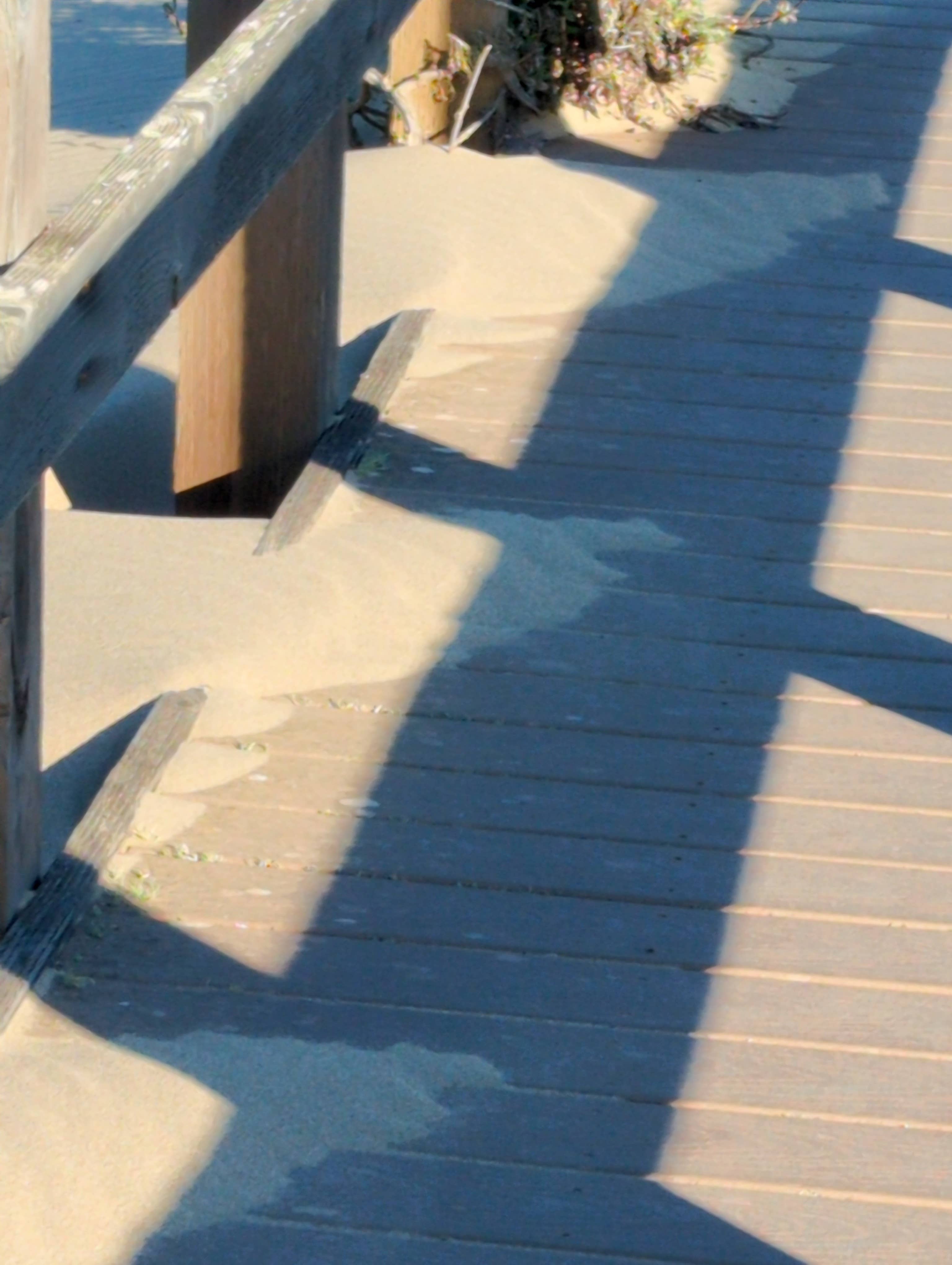
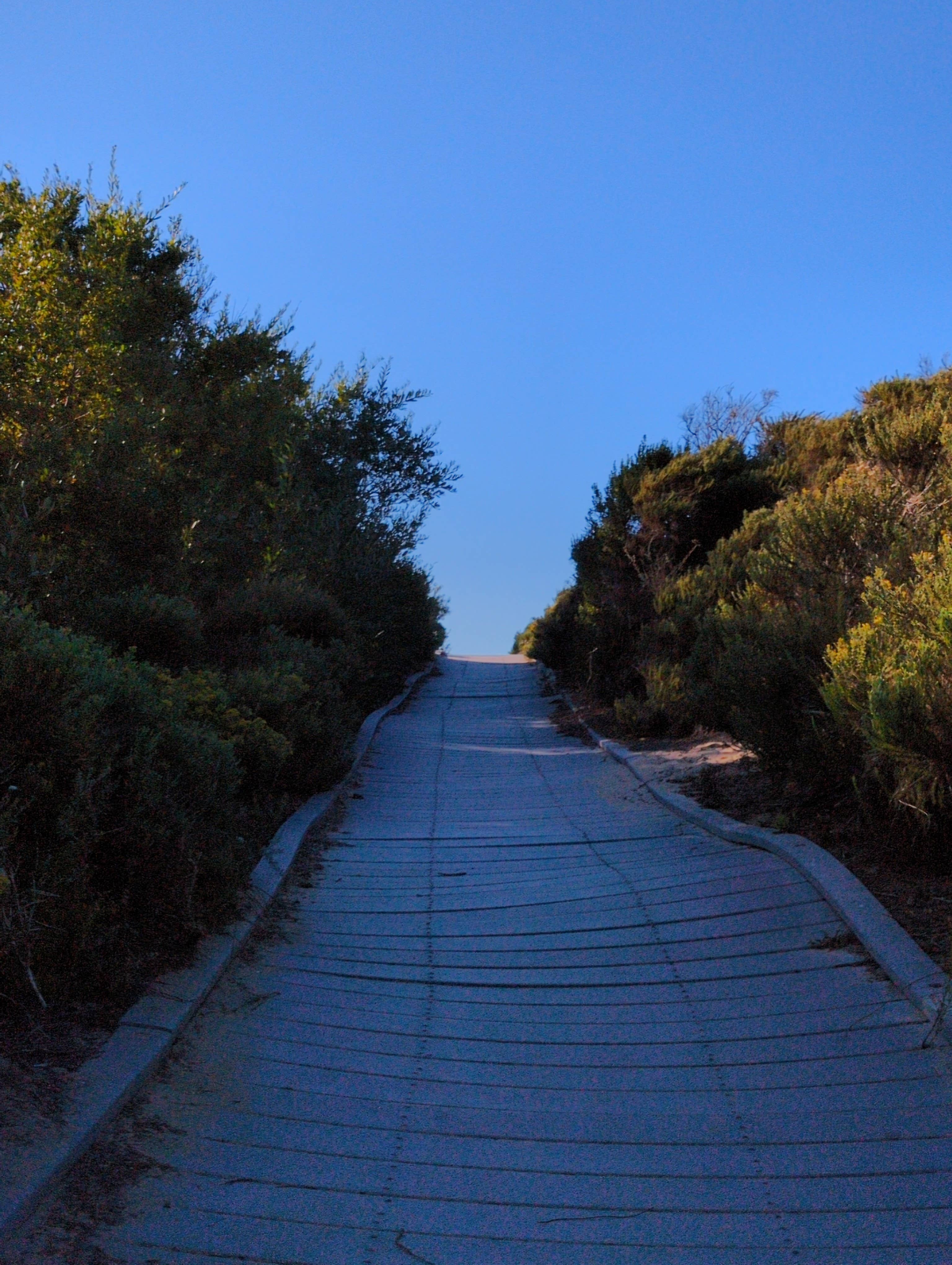
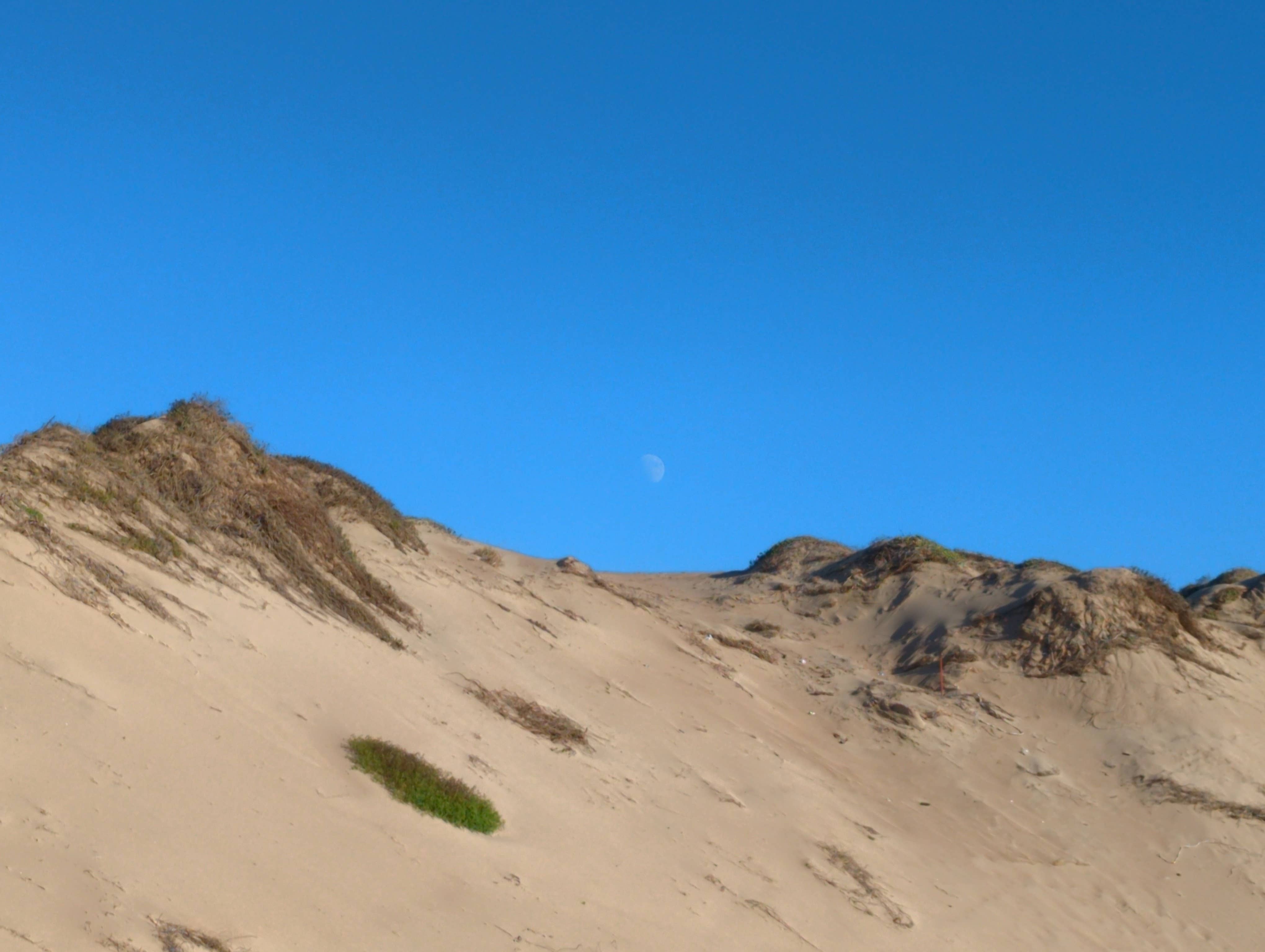
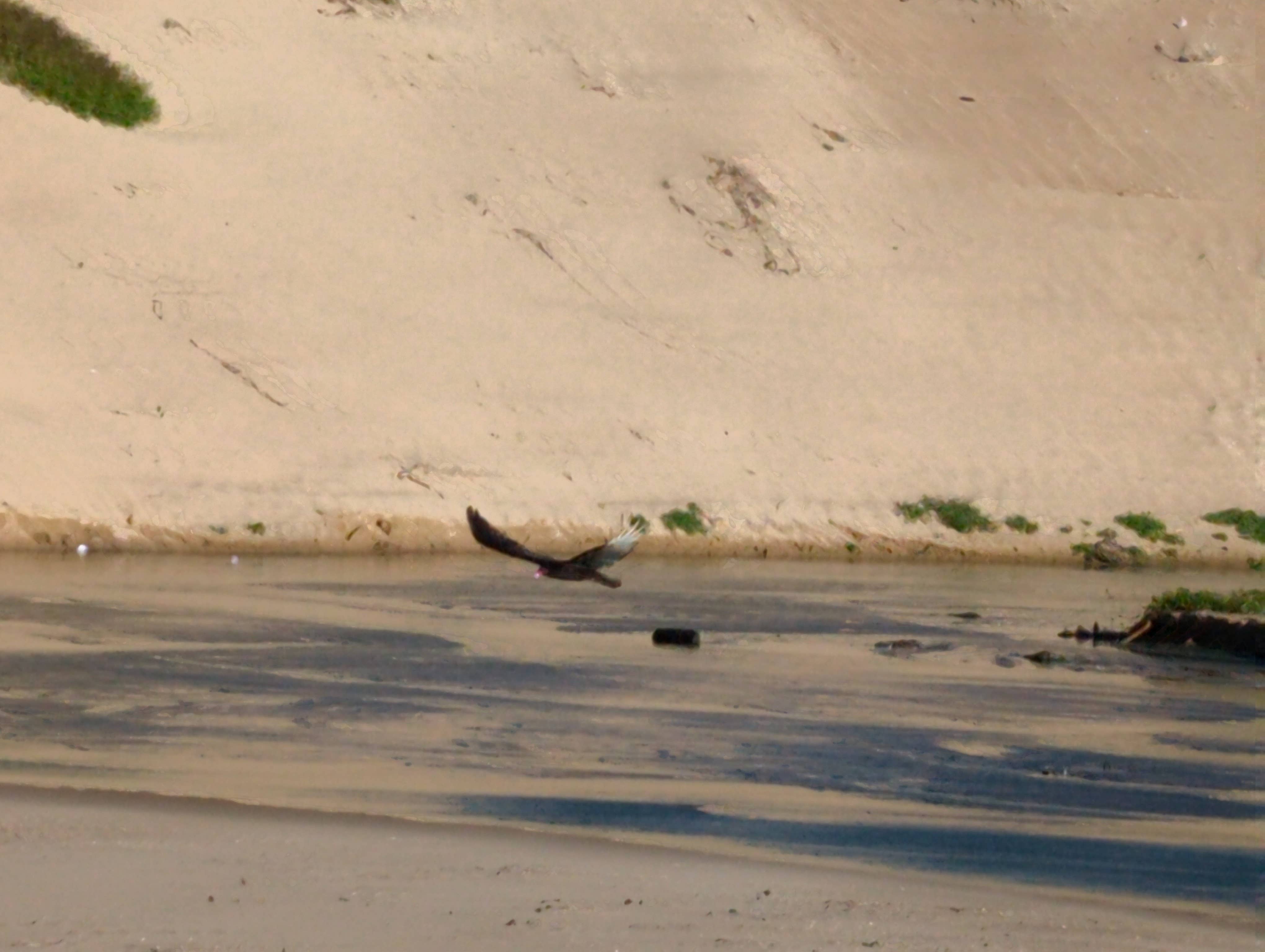
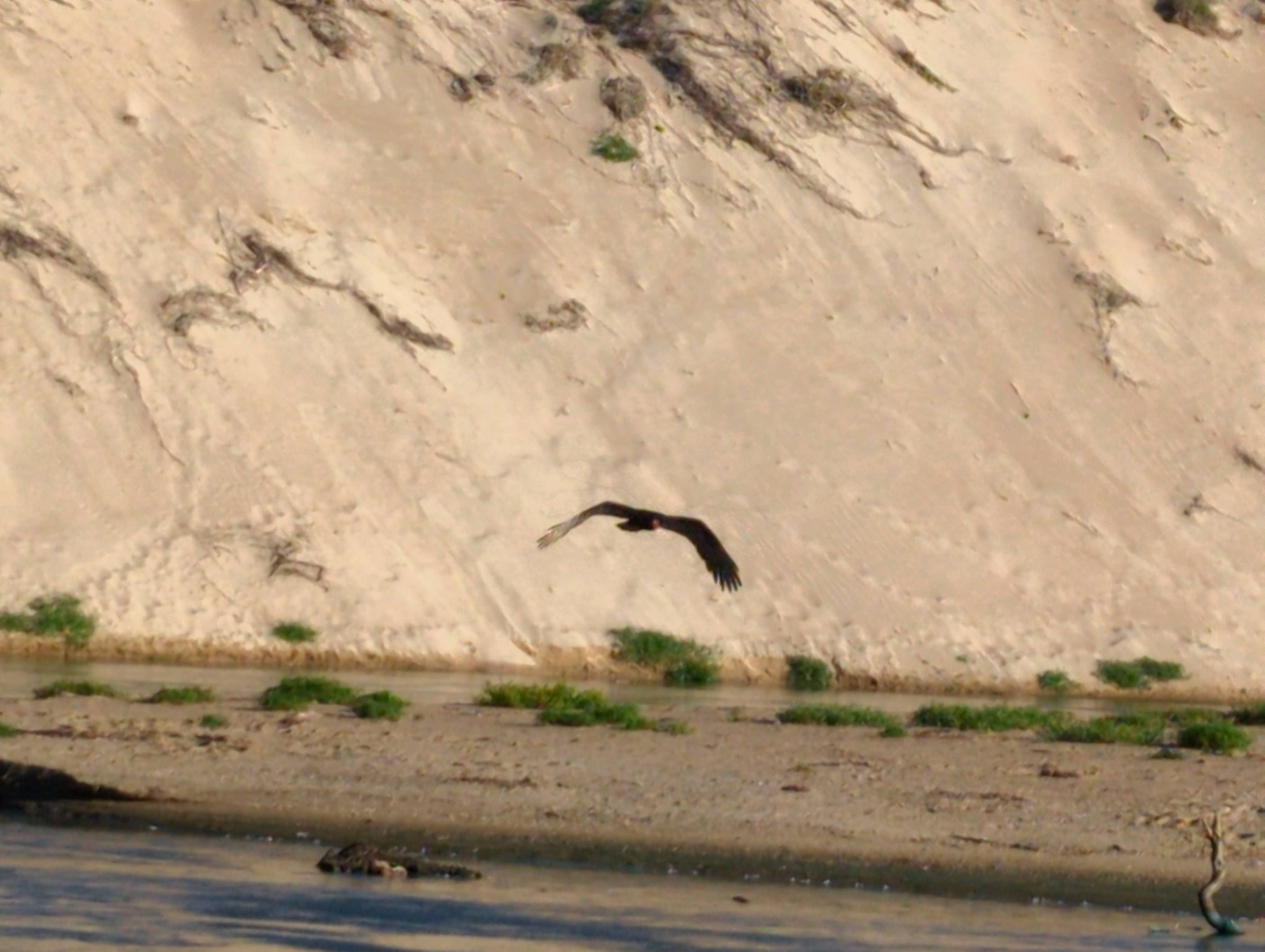
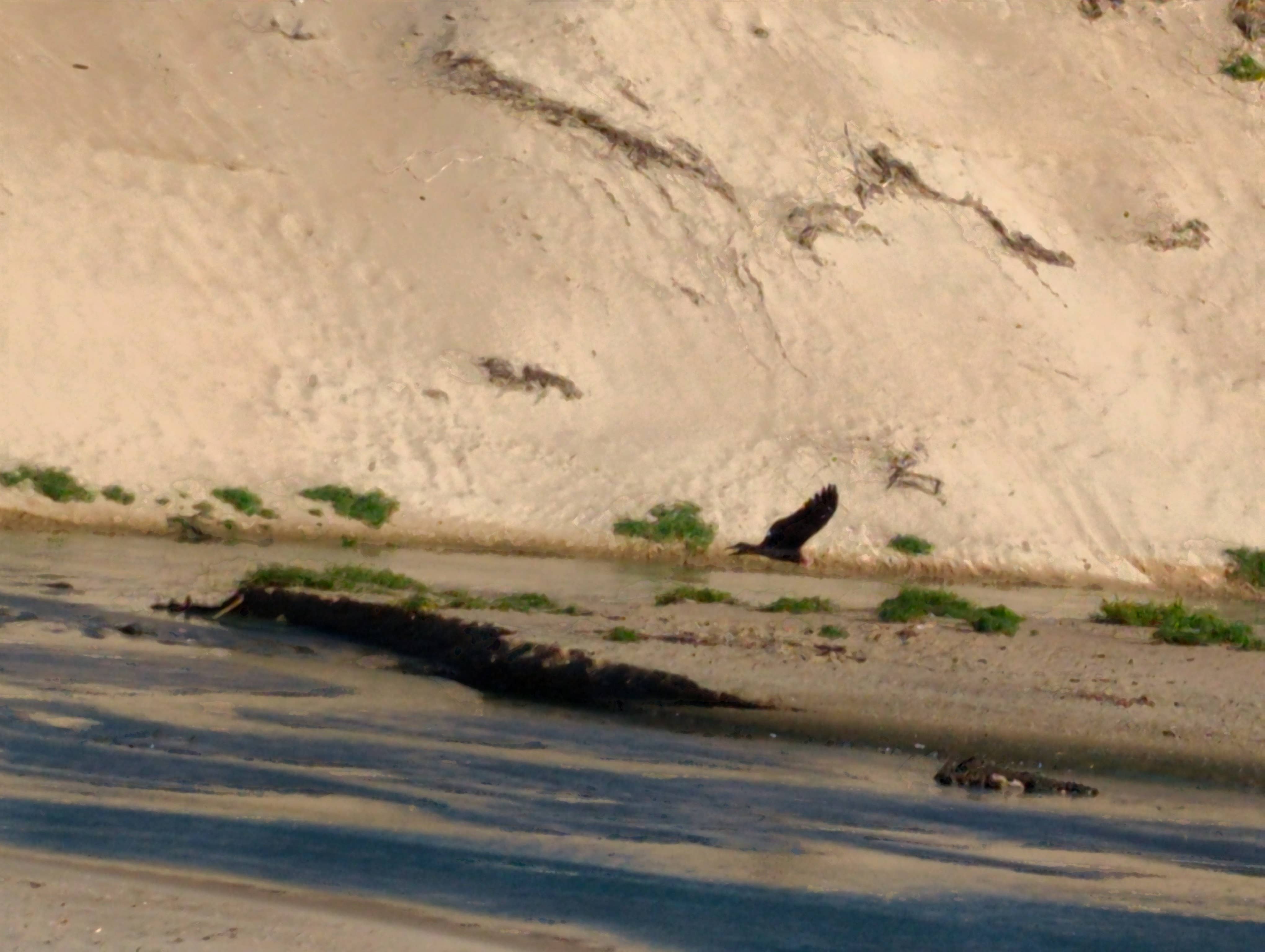
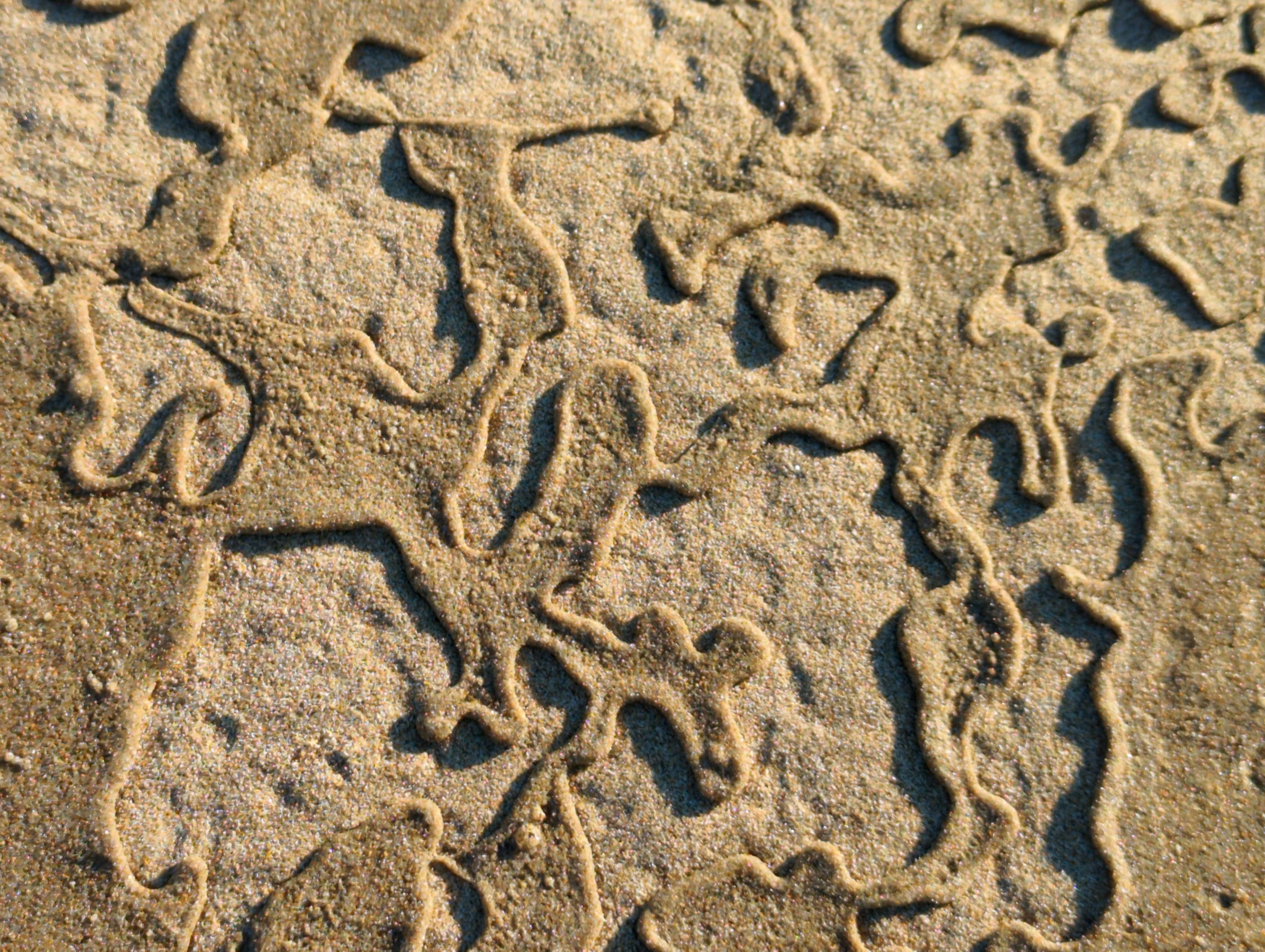
I arrived at a beach. Not a postcard California beach, but one of our wicked ones. Waves crashing and wind howling, salt and sand tore at me angrily.
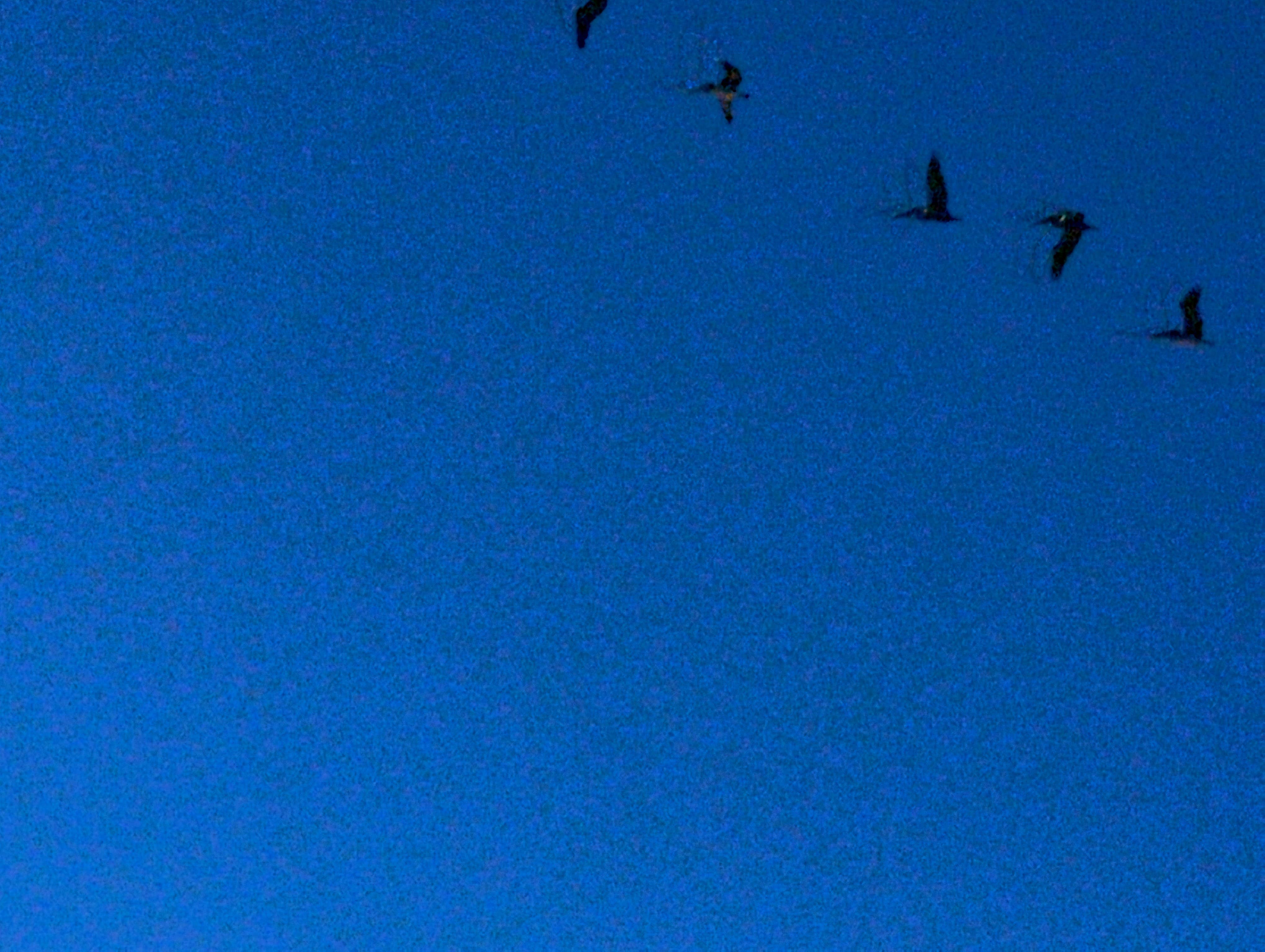
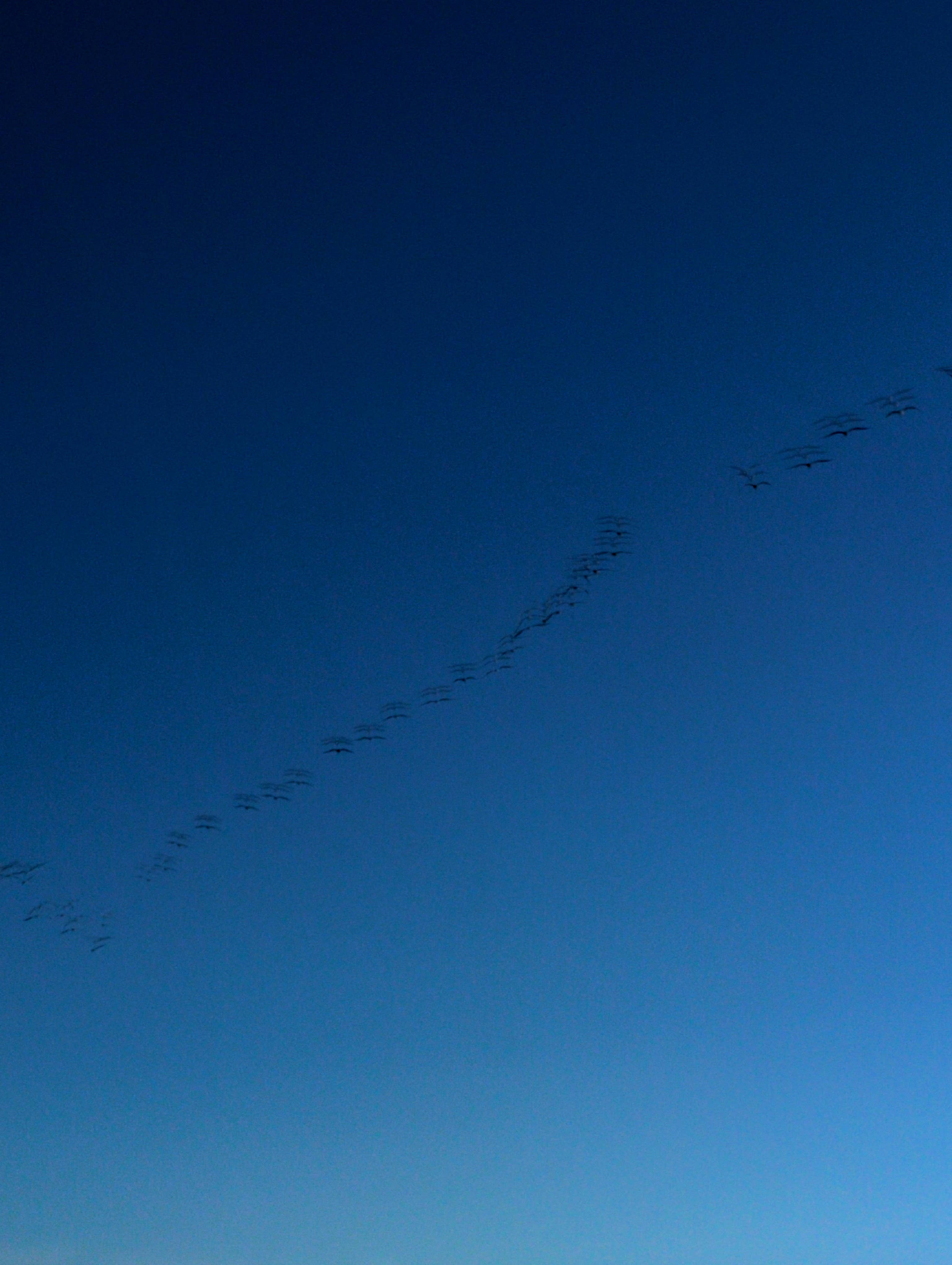
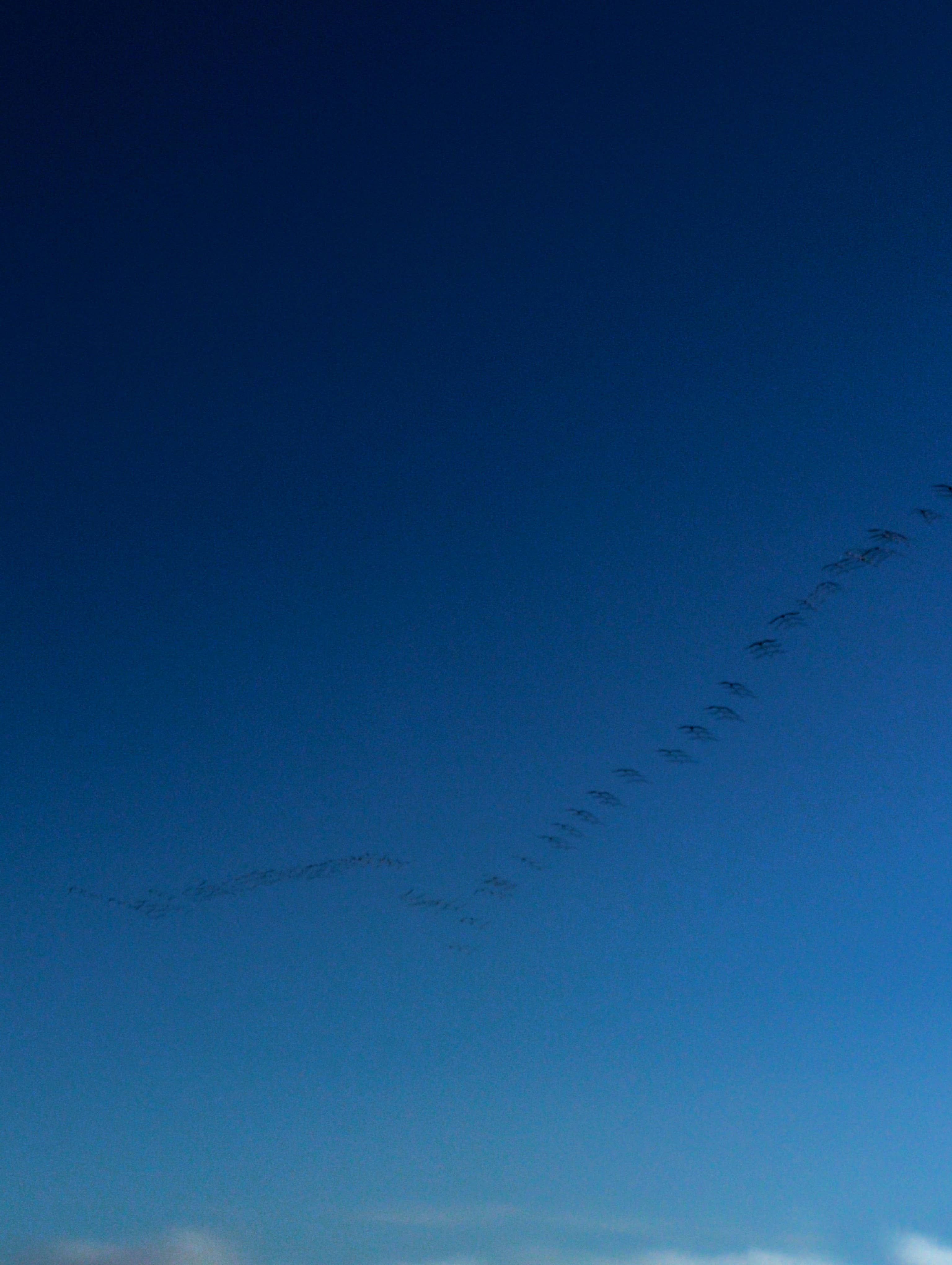
The beach was inhabited by hoodie wearing locals, a dead seal, gulls, and little beach hoppers eating washed up debris.
I used to be afraid of beach hoppers. I was scared of how they would hop randomly and frantically. The thought of one landing in my shoe spooked me. I didn't understand their anatomy, and because they were so unusual I found them ugly. Humans are designed to fear what they don't understand, and of course that means we end up hating what we don't understand.
Megalorchestia sp. (likely M. minor) eating (I don't know what it's eating)
So what are sand hoppers, beach fleas, etc? I'm going to learn right now as I write this. Well they're crustaceans (fleas are insects so these aren't related to fleas)... So crustaceans means they're related to crabs, lobsters, barnacles, isopods, etc... These have their own order level classification, like how beetles (Order Coleoptera) do. Beach hoppers fall under Order Amphipoda. Amphipods, are something ¯\(°_o)/¯... Amphipods generally are detrivores, are laterally compressed, have many segments, and have different kinds of legs. Of course the anatomy is a lot more specific than that. Click -> here for a diagram.
Now then what's a sand hopper. They're Terrestrial Amphipods (Superfamily Talitroidea). Most amphipods are found in marine or freshwater environments, but this group contains the amphipods who chose to walk on land. And then more specifically these are part of the Sandhoppers and Landhoppers group (Family Talitridae) which contains mainly beach fairing species.
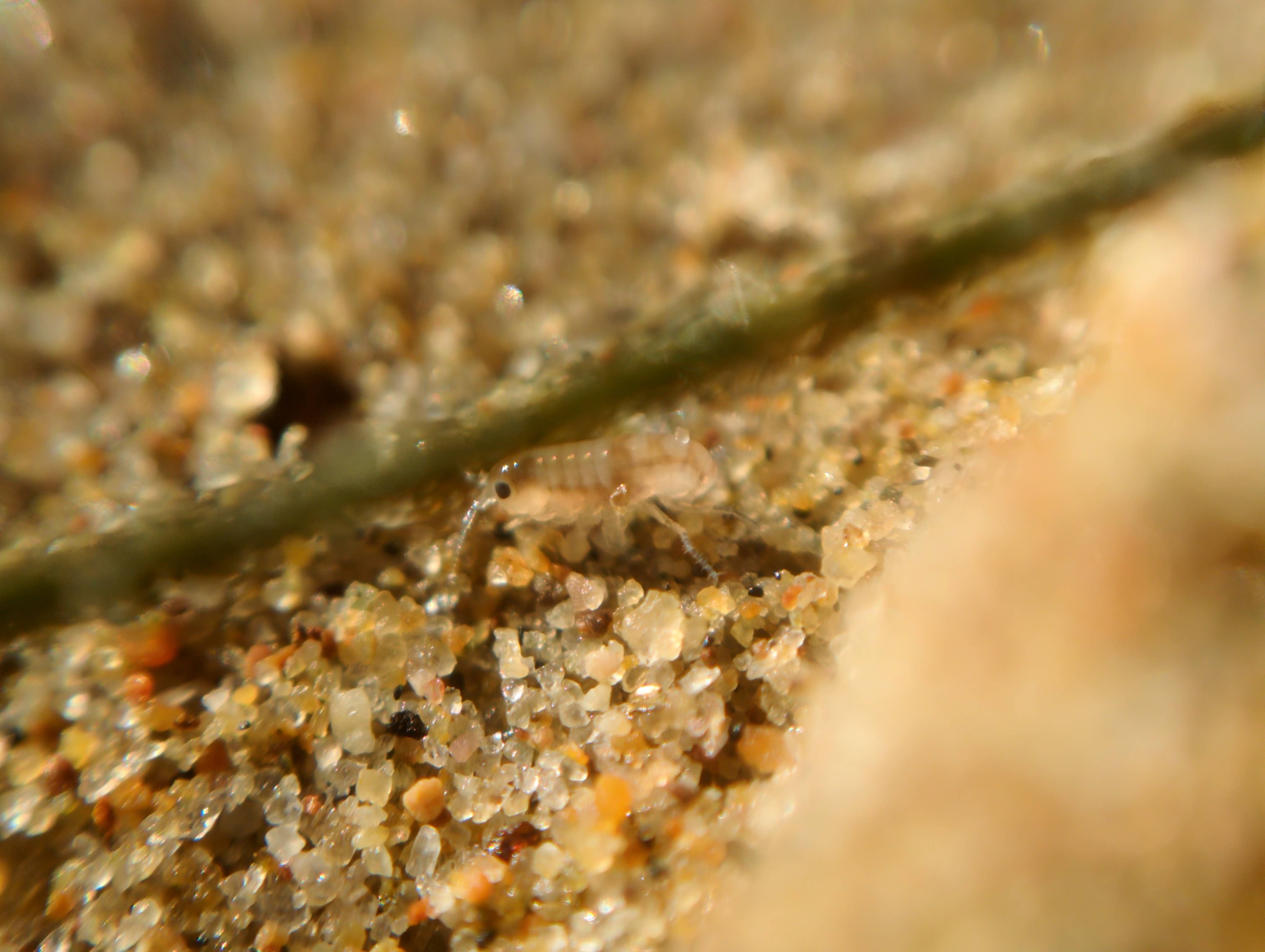
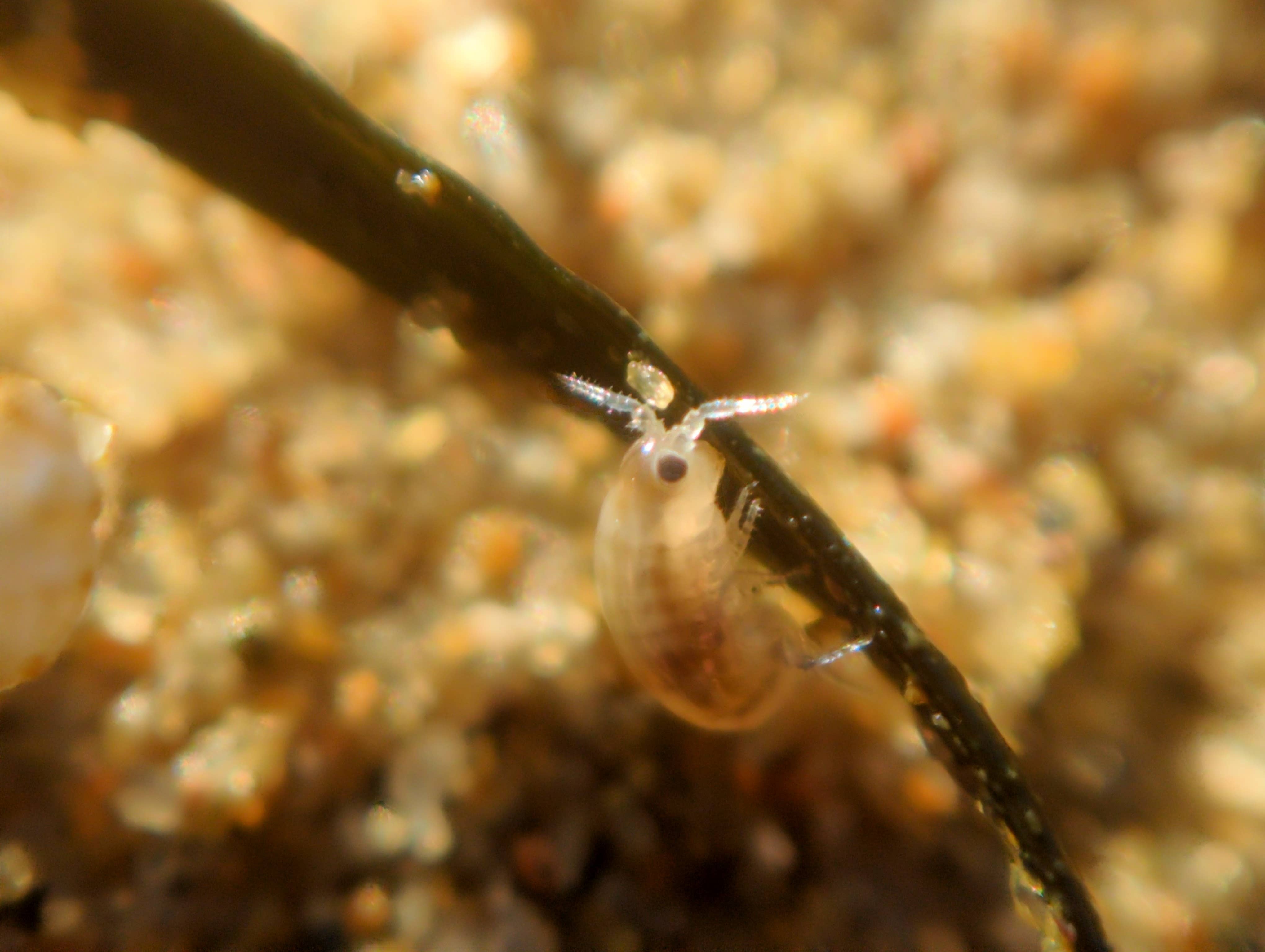
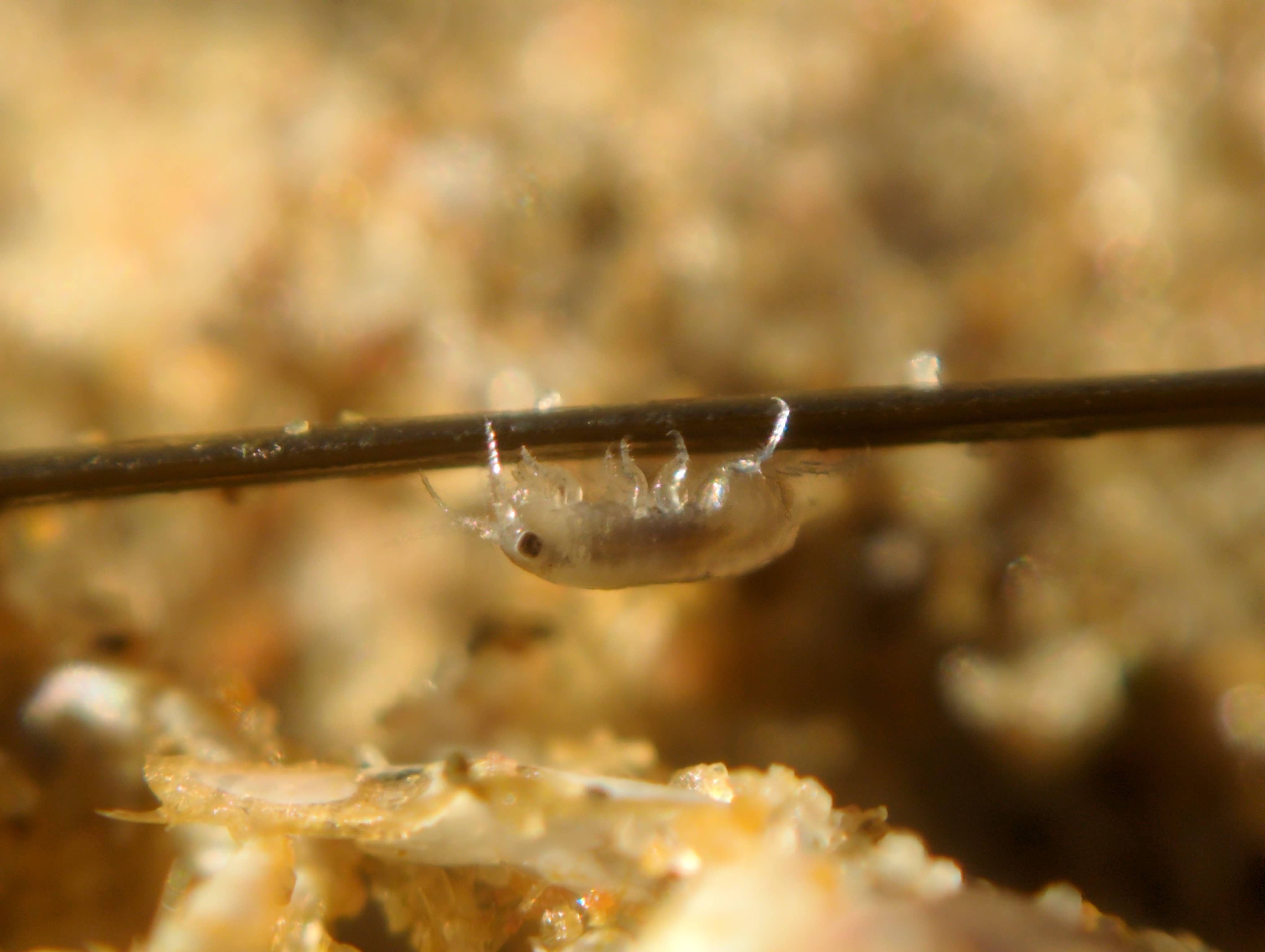
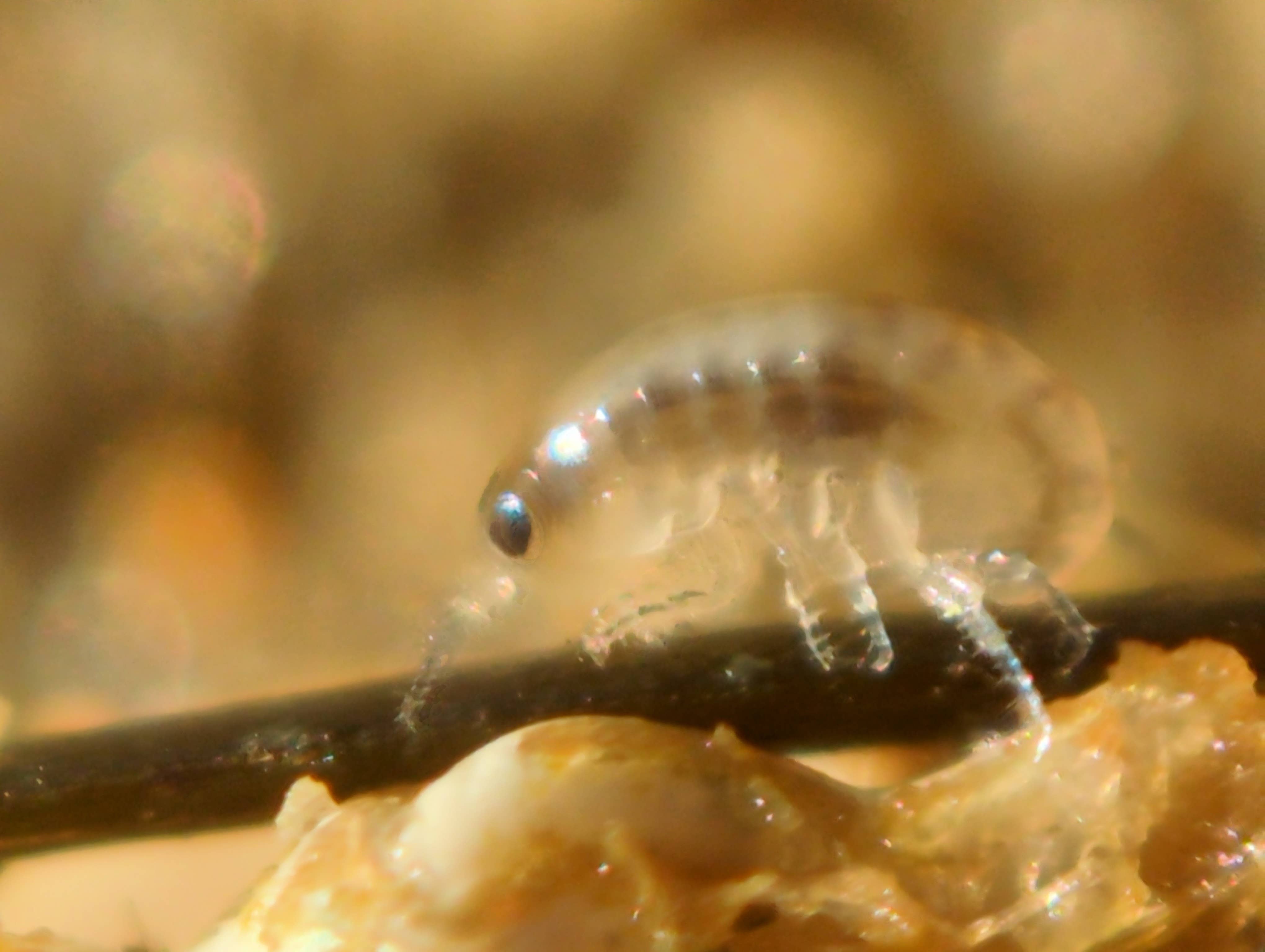
Megalorchestia sp. (confirmed M. minor top left)
The genus Megalorchestia is the most common genus of beach hopper on the western coast of North America. Despite this, Megalorchestia minor, a species I was finding on this beach, only has just over 100 observations on iNaturalist. So I'm happy I stopped and looked closer.
I had to leave though because the salty sea air was so intense my hands stung and were completely red. Everything on me was coated with ocean spray, even though I was a good 10-30ft from the water (I'm terrible at estimating distances).
mystery fly
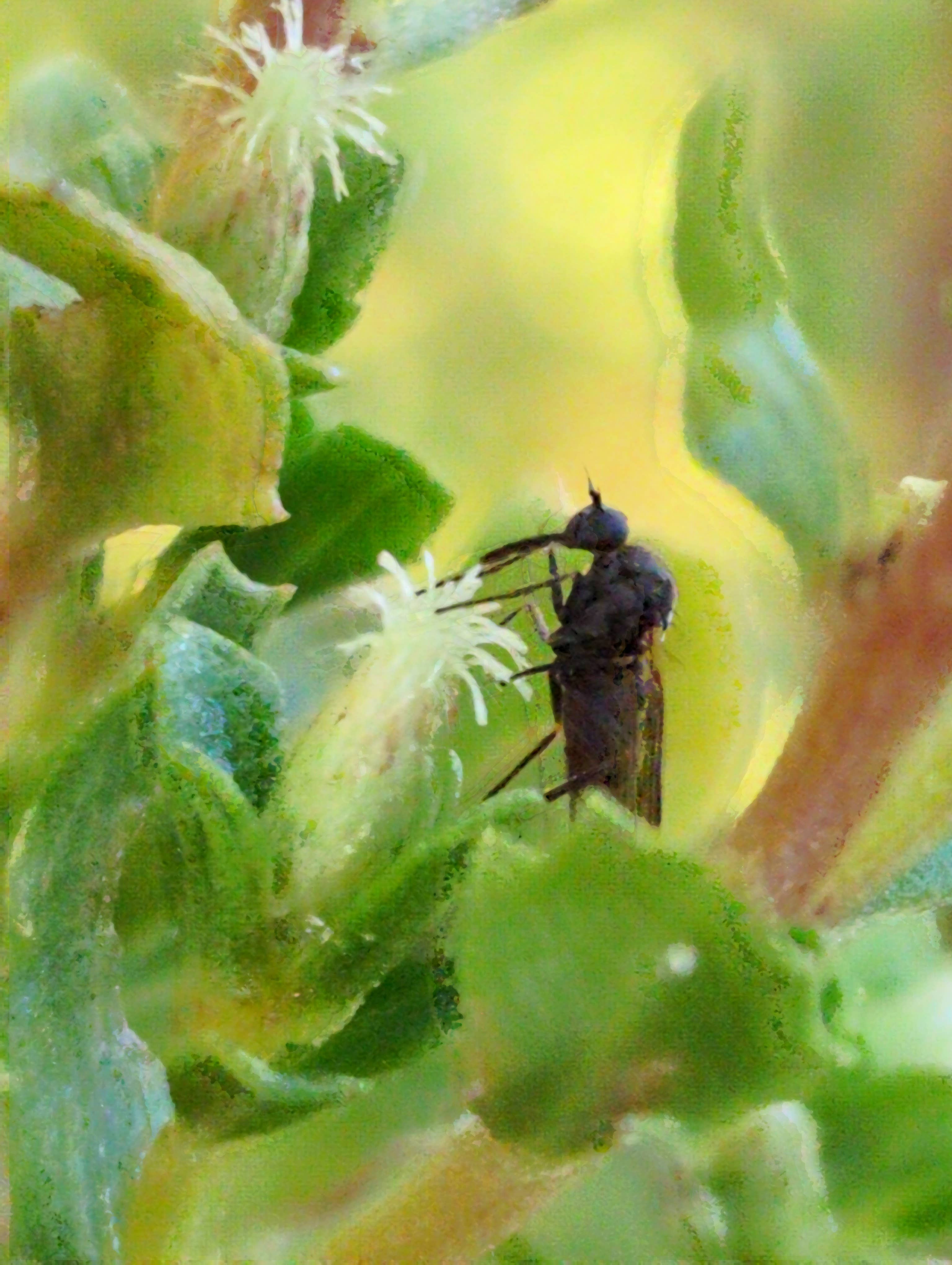
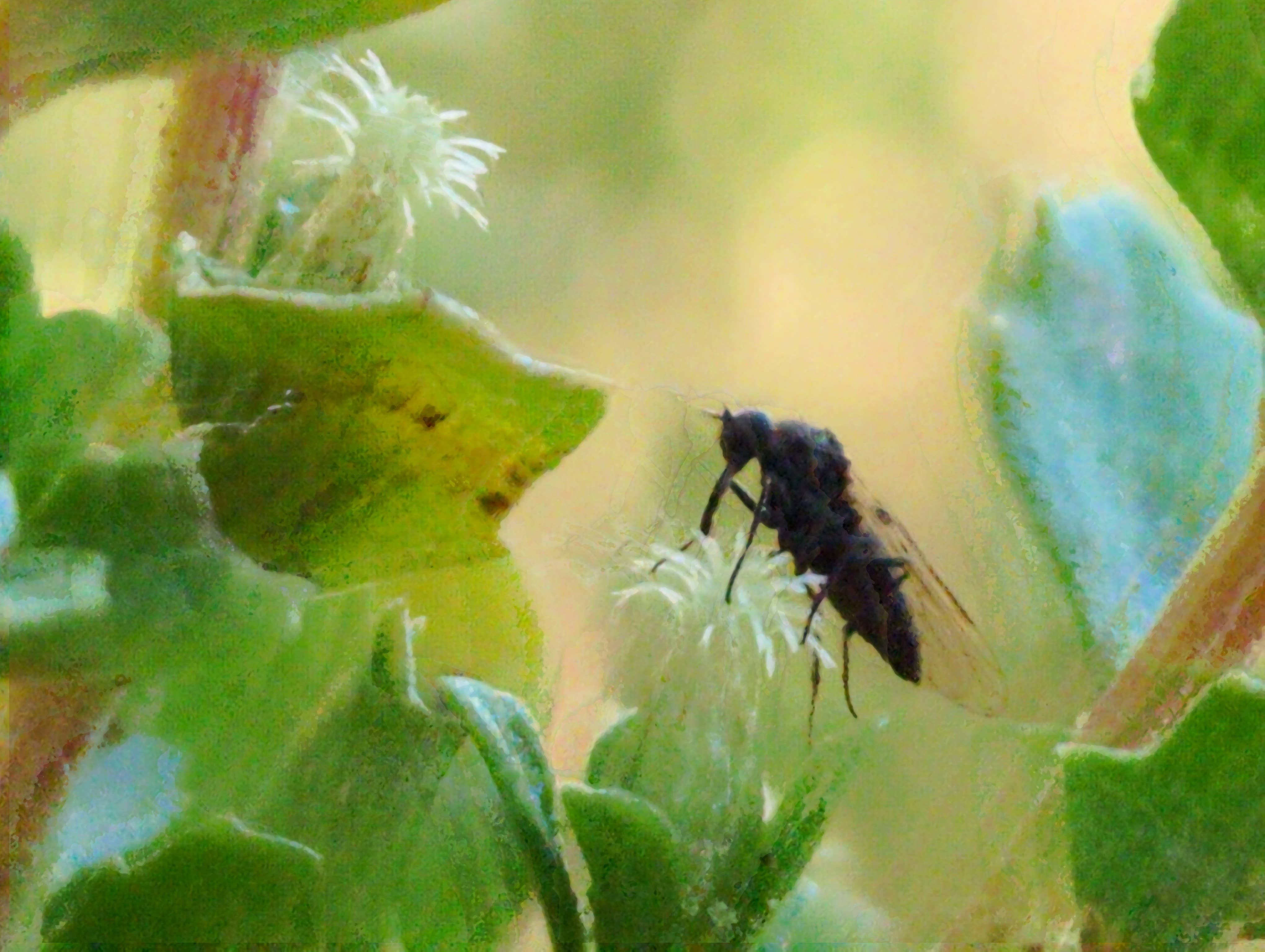
lichen sky
Oct 13
Morro Rock, SLO County
Before I ended up at Morro Rock, I tried to go fishing at Cayucos (about 10 minutes north). The waves were too intense and the water was murky so I didn't even try. It was worth the trip though, check out this view of Morro Rock. Everything is completely covered in thick fog.
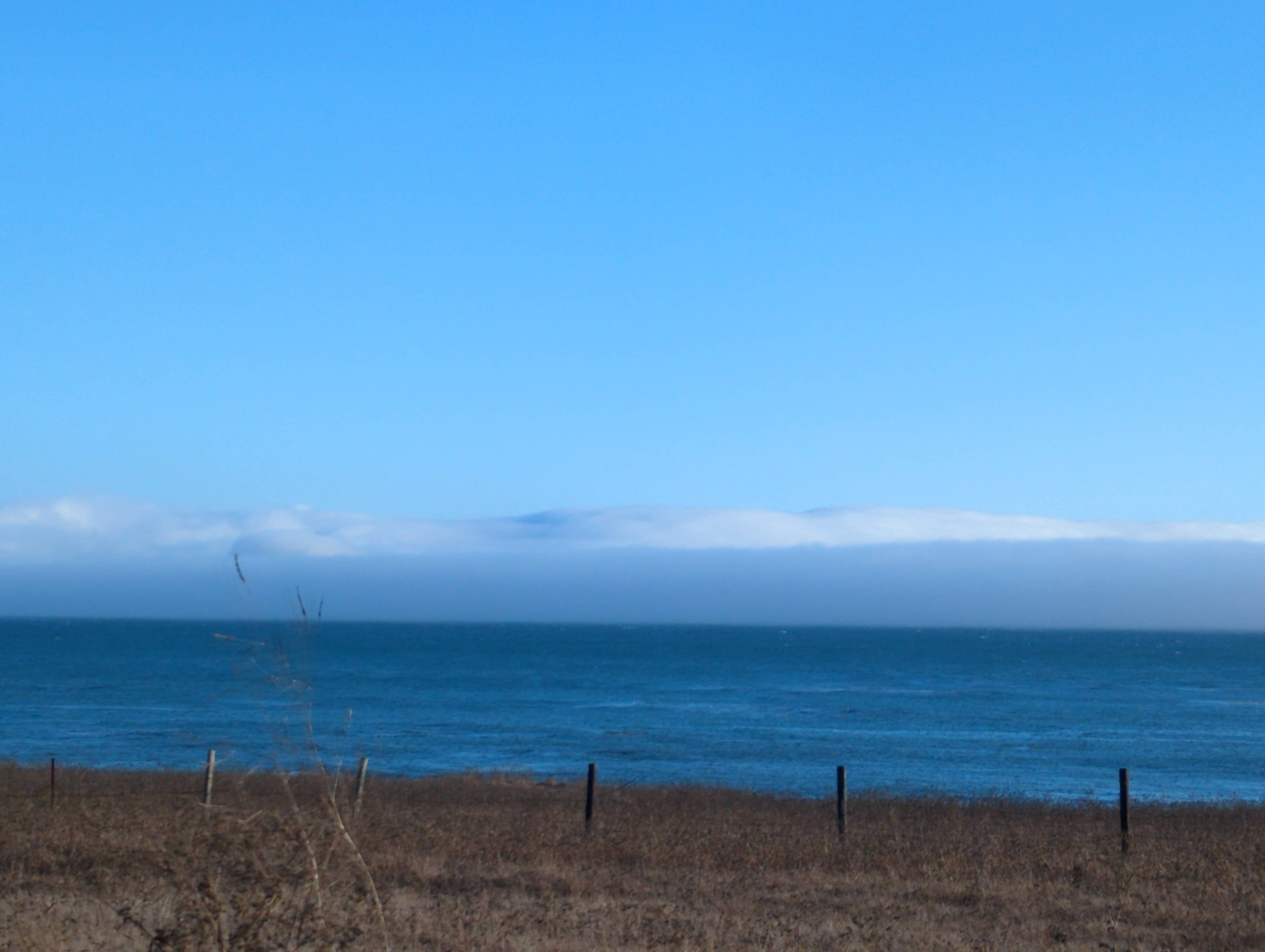
So next up I went and traversed the fog.
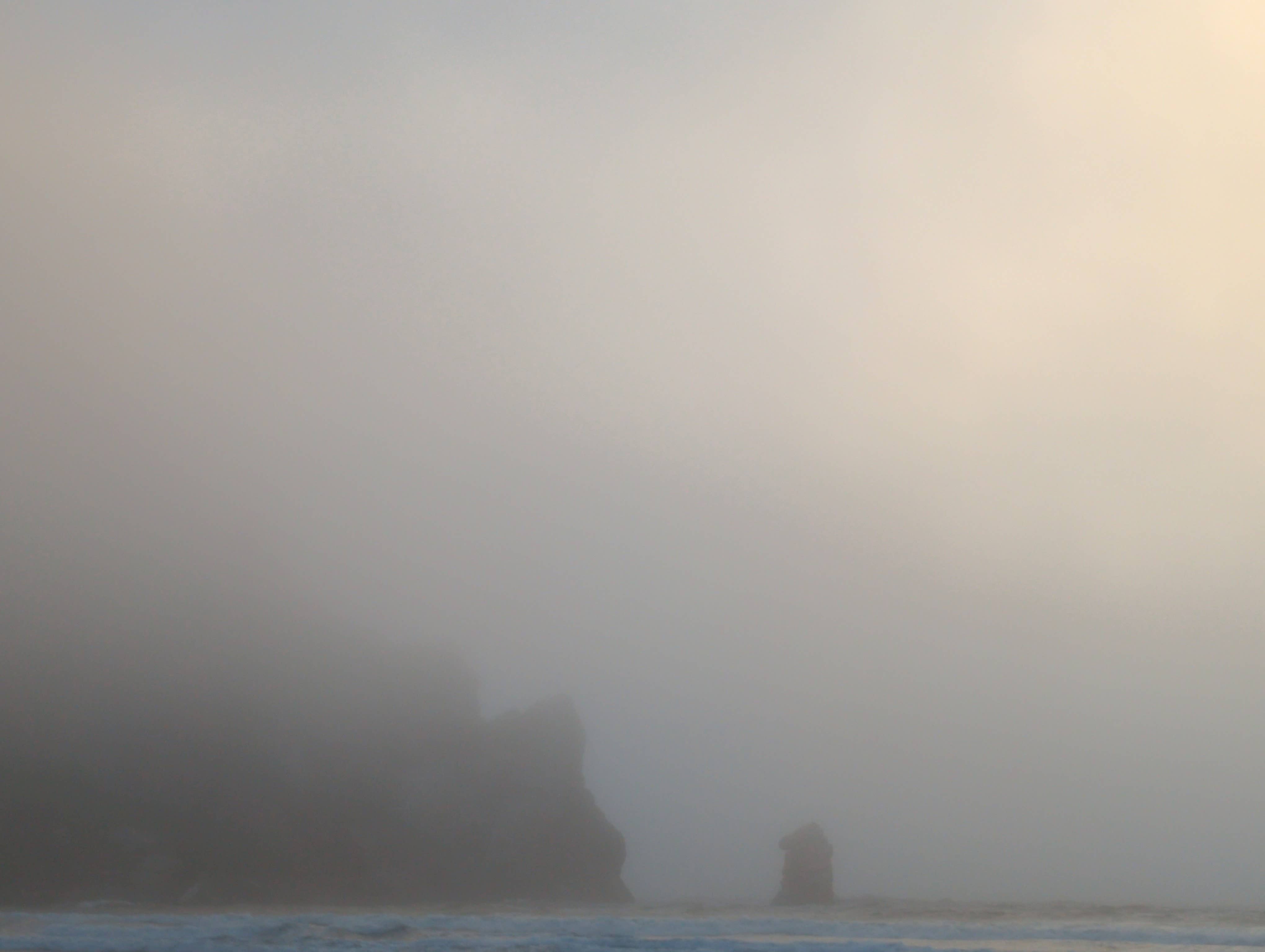

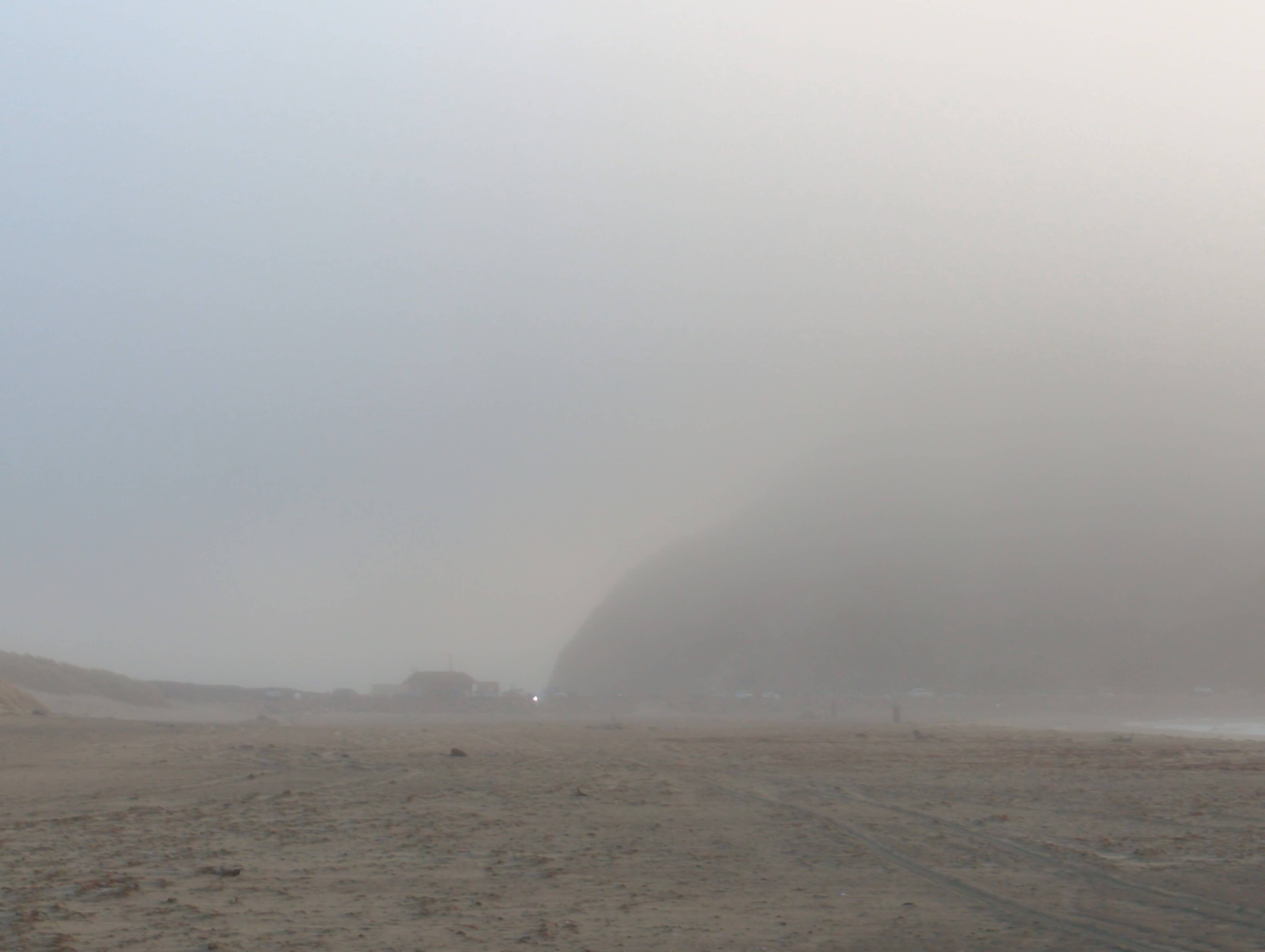
For those who are from Santa Cruz, SLO also has a Moss Landing power plant equivalent. This one has 3 towers though.





I don't have much to say here. I haven't been of sound mind lately due to my insomia, so it's hard for me to really take it all in when I'm outside. I know that what I'm looking at is amazing, it's just hard to feel it these days.
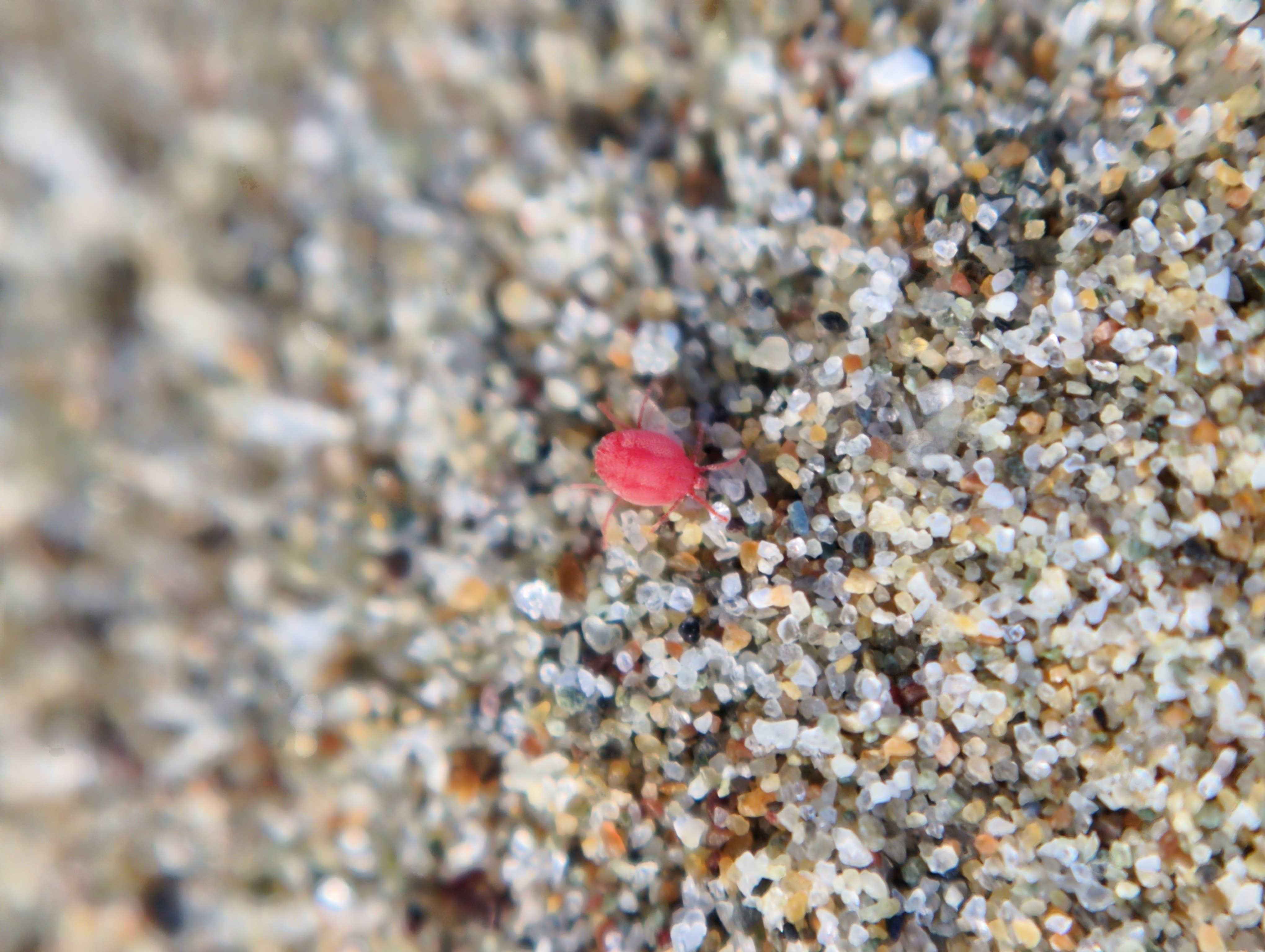
And now for... Beach bugs! Bugs are everywhere, get used to it. (▀̿Ĺ̯▀̿ ̿)
Mite (Order Trombidiformes)
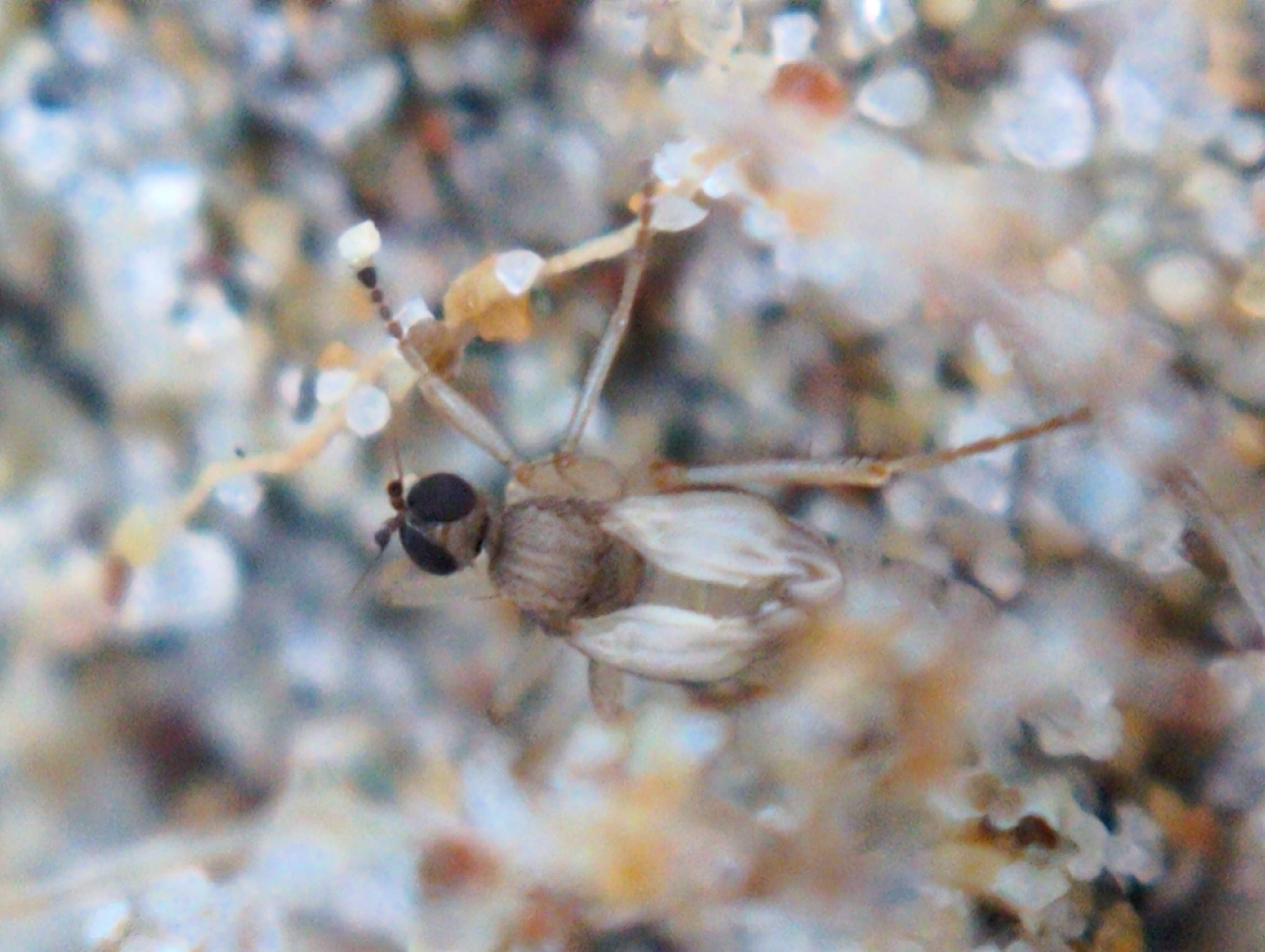
Fly (Genus Chersodromia) (Rare! Genus > 100 obs)
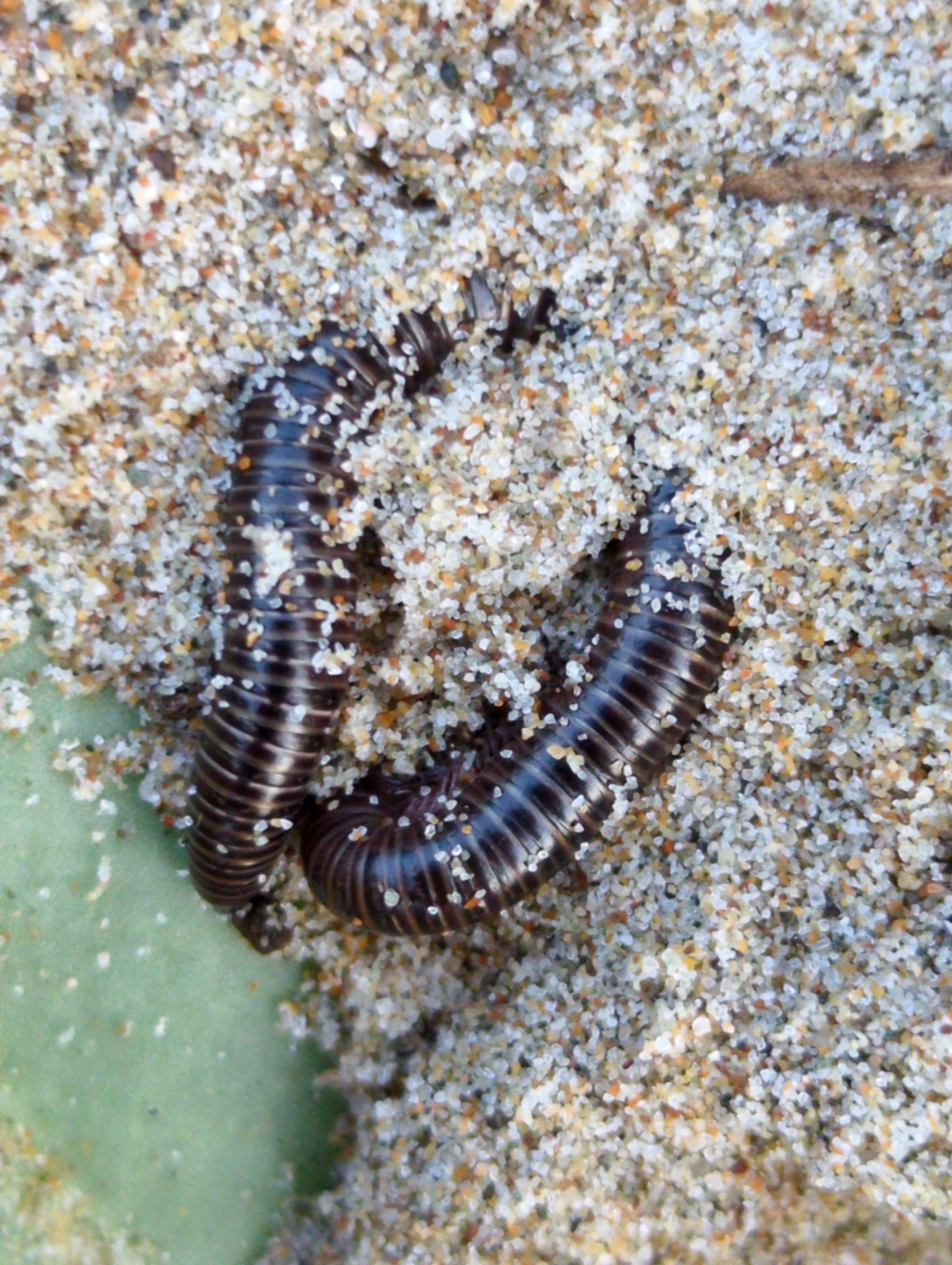
Round-backed Millipede (Superorder Juliformia)
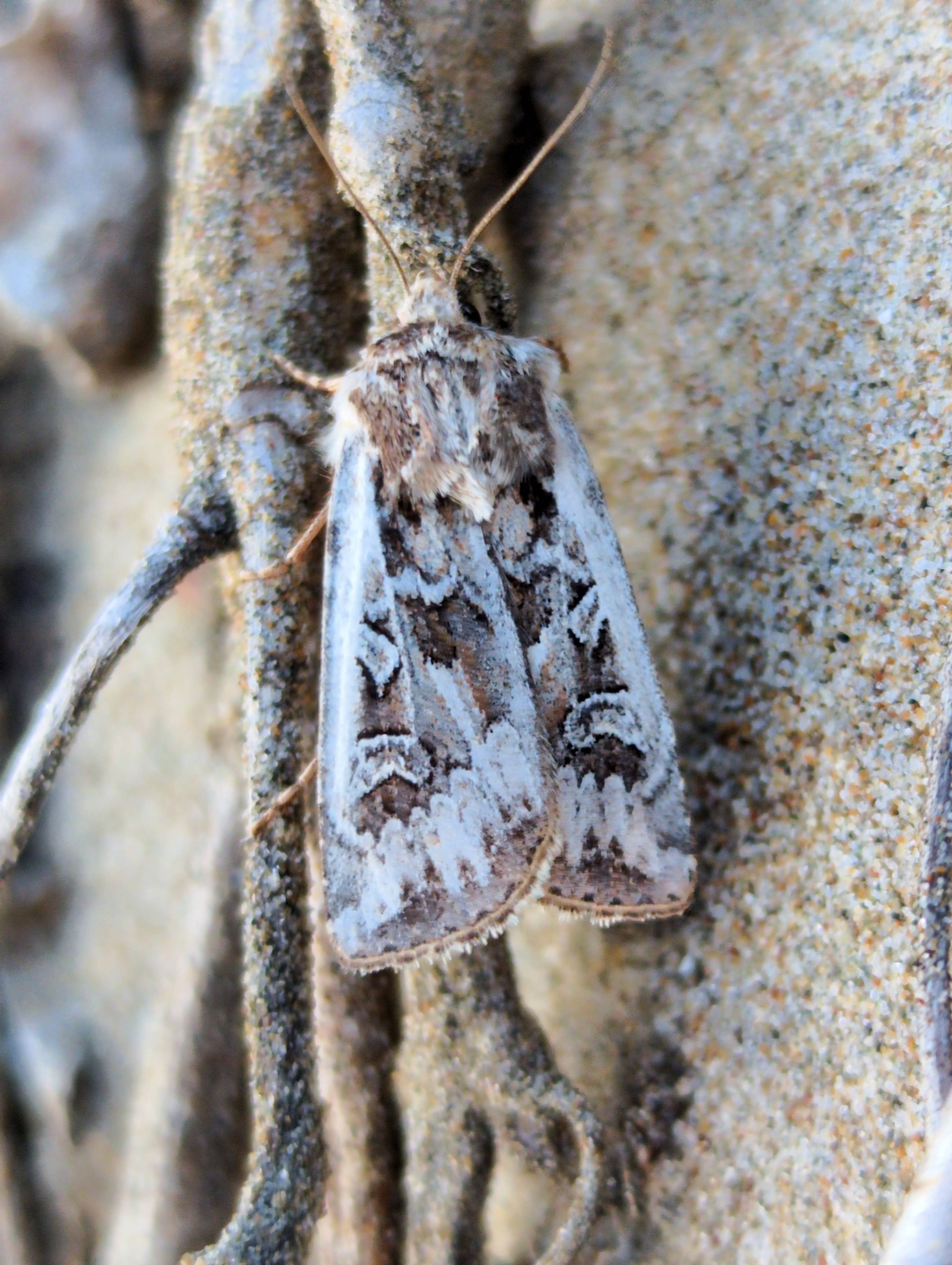
Miller Moth (Euxoa auxiliaris)
Oct 15
Cal Poly
Went looking for tarantulas, found a tree cricket instead. I'm not complaining.
Tree crickets make this high pitched continuous chirp (stridulation) ┏(‘▀_▀’)ノ♬♪ And while stridulating their wings form a heart shape above their bodies.
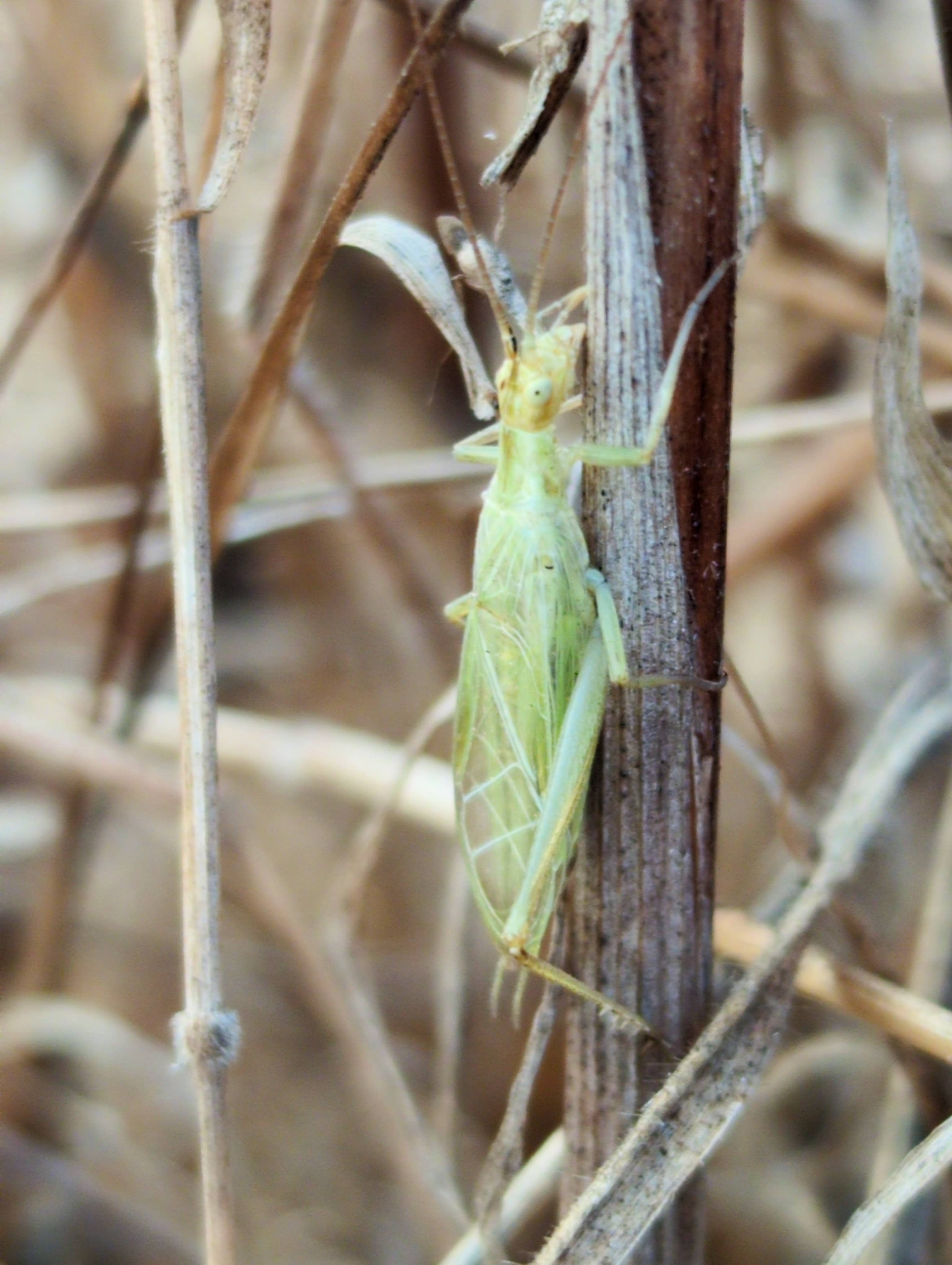
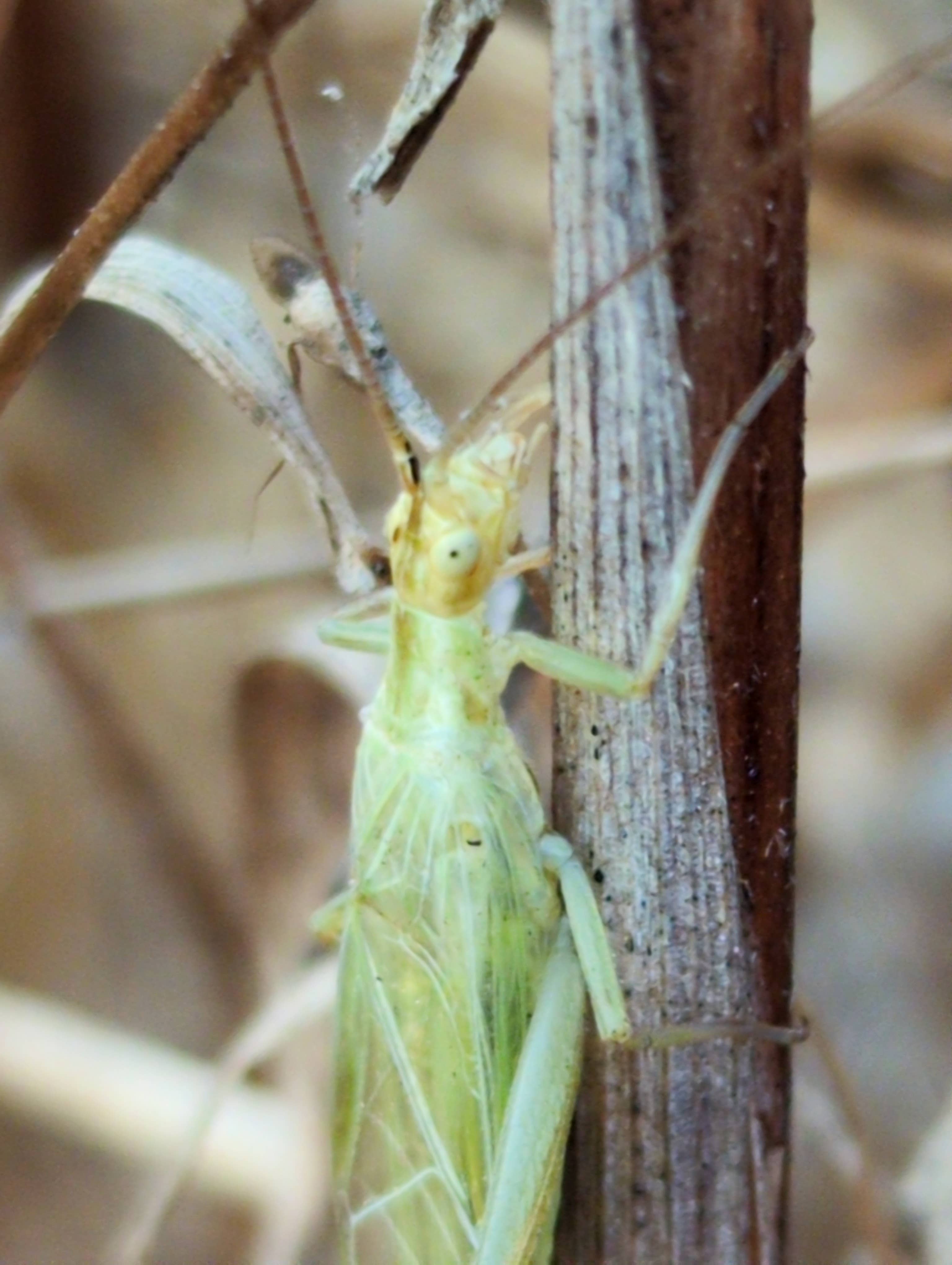
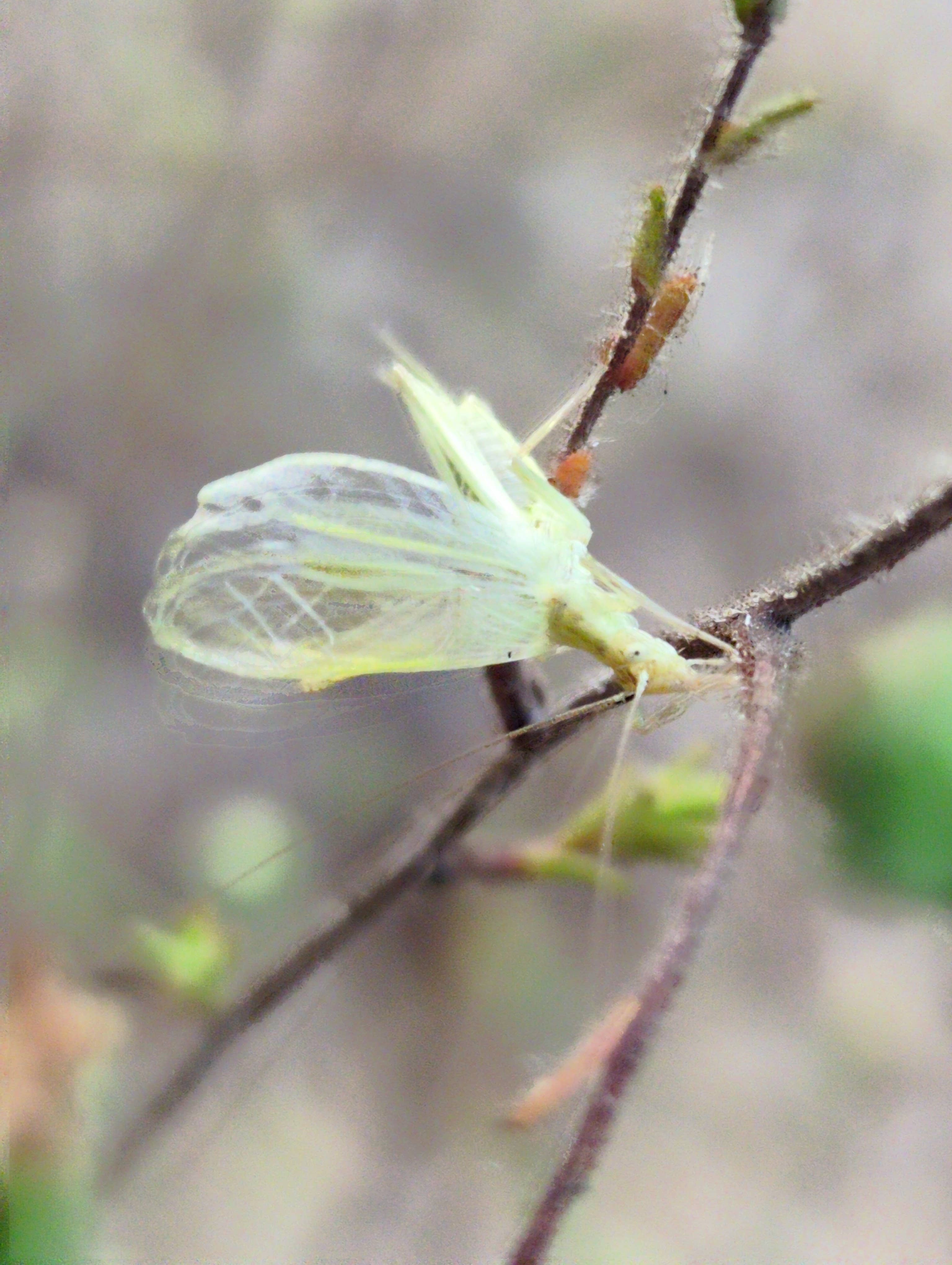
Genus Oecanthus
I didn't manage to catch the heart shape here, because these guys are really hard to photograph. They're Small, move a lot, sit deep in bushes, and are easily spooked. The bush was always shaking with the wind so getting it in focus was a pain.
A weird looking cricket right? They'res a whole subfamily of them: Tree Crickets (Subfamily Oecanthinae). This is a globally distributed subfamily, and actually the genus we have here (Oecanthus) is also distributed globally.
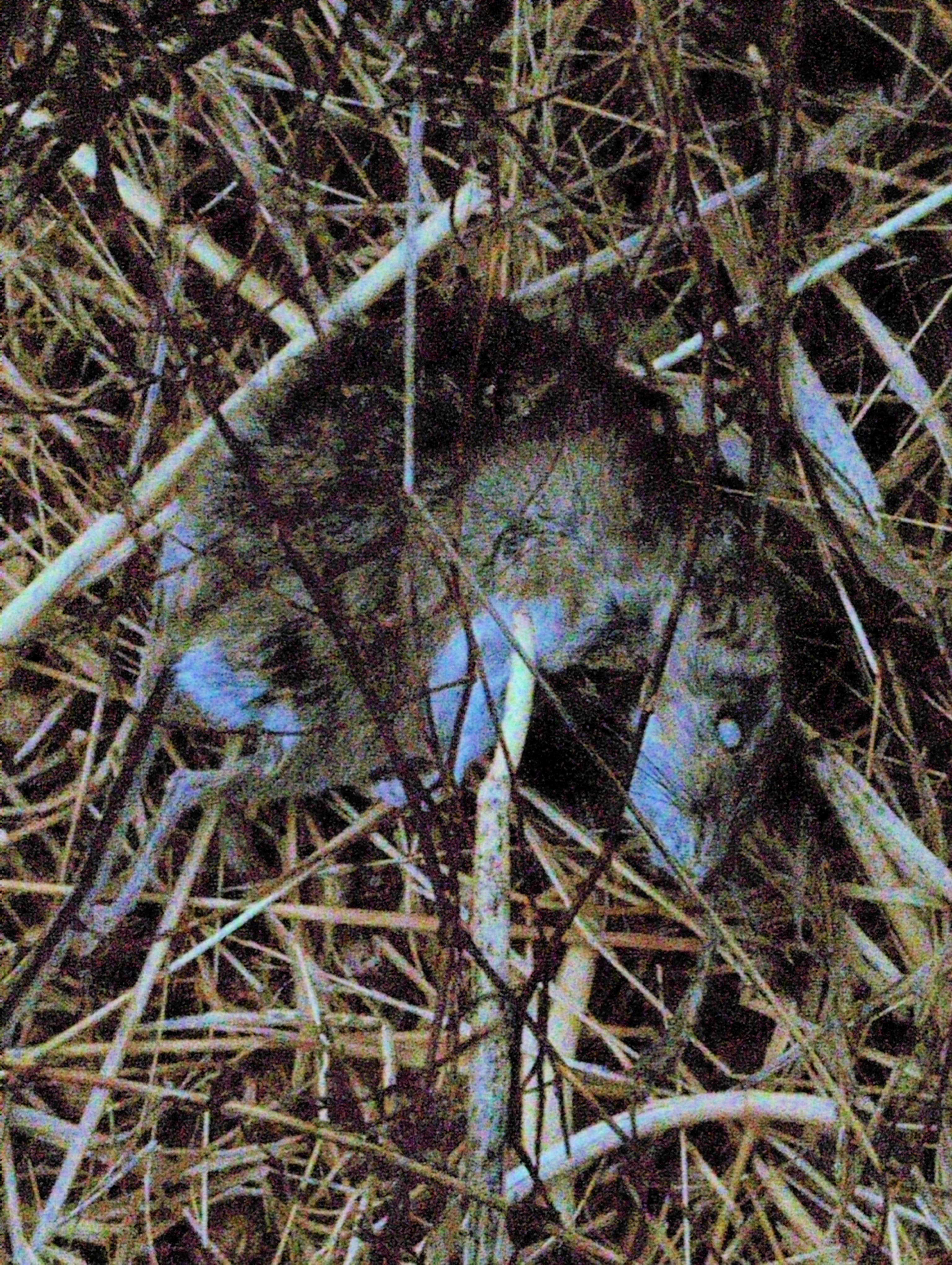
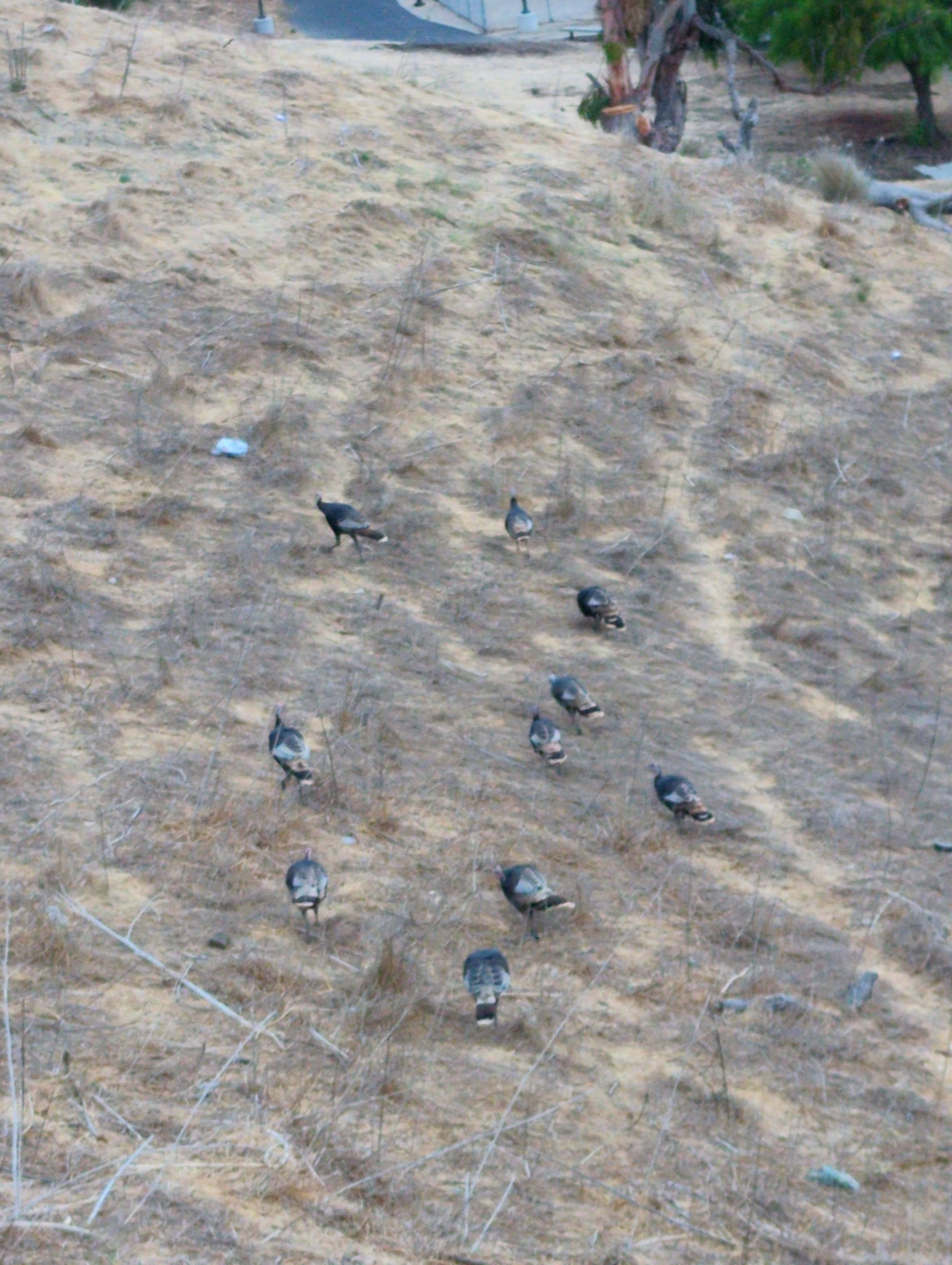
On my way back I passed by 2 students sitting in the grass with their laptops. I overheard them saying "dead rat" and "we saw deer tracks" and some other context that made it seem like they were logging observations for a bio class they were in. I was a little annoyed that they weren't putting in more effort to find animals because it seemed like such a fun thing to do for a class. And if you actually give a shit it's not hard to get some interesting and satisfying observations.
I actually didn't know where I was going, so I asked them, "Which way gets back?"
They pointed me towards the right direction, but just to be sure I asked, "Past the turkeys?"
Then they said "We didn't see any turkeys."
As you can see from the picture above, there were a bunch of turkeys. They couldn't see them because they were sitting and tall grass was obstructing their view. Assuming they'd want to log the observation for their class I responded, "Stand up. There are a bunch of turkeys right there."
Then Cal Poly's best bio students said, "We don't want to get up."
Whether it's in UNSW in Australia or at Cal Poly in the USA, I can't seem to escape terrible bio students. At UNSW I took a Marine Bio class and I ended up with group mates that couldn't tell a grebe from a cormorant. And they didn't care enough to learn the difference despite having to survey wetland birds for class.
Oct 16
SLO
Someone followed me back from Europe.
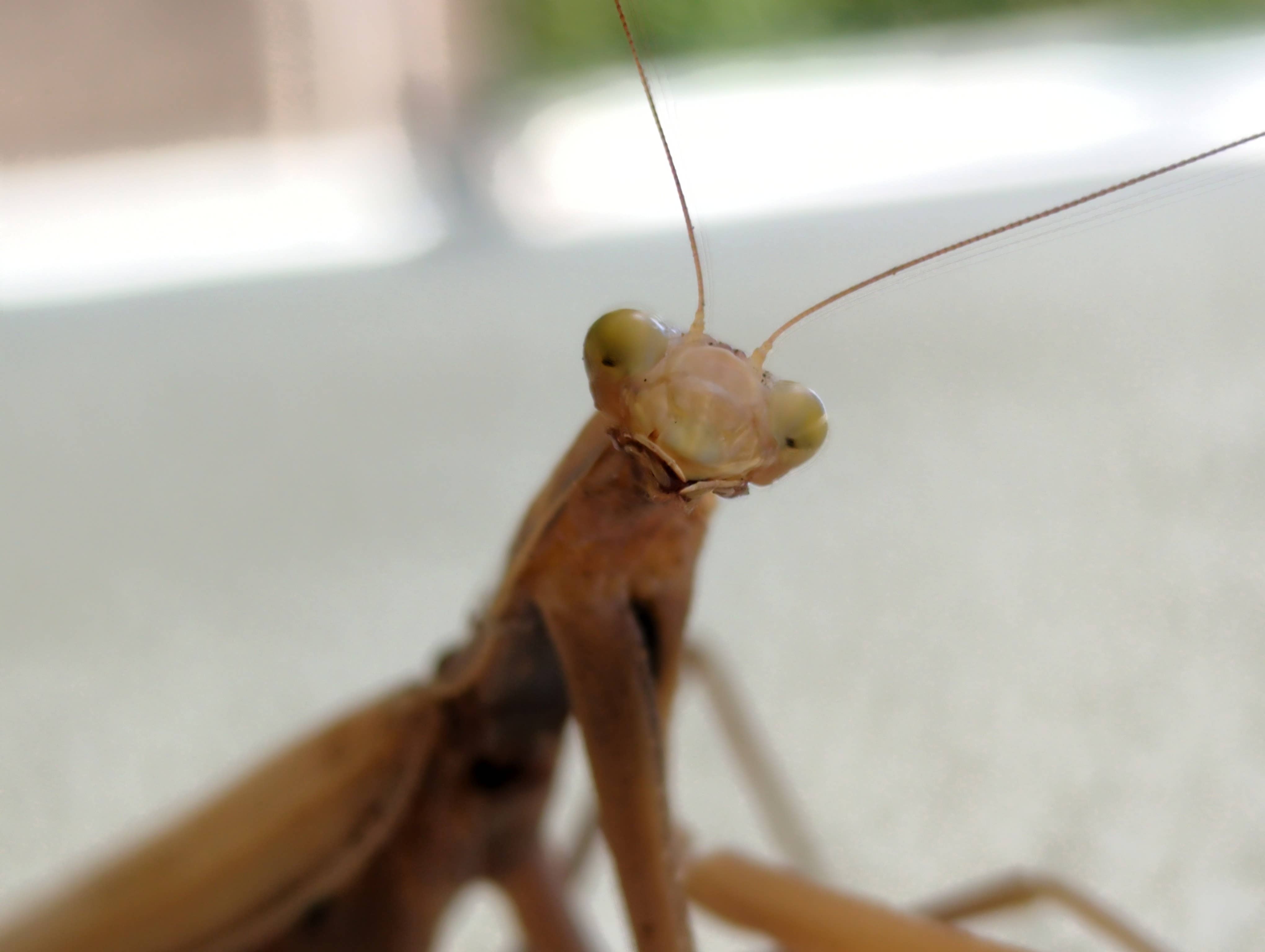
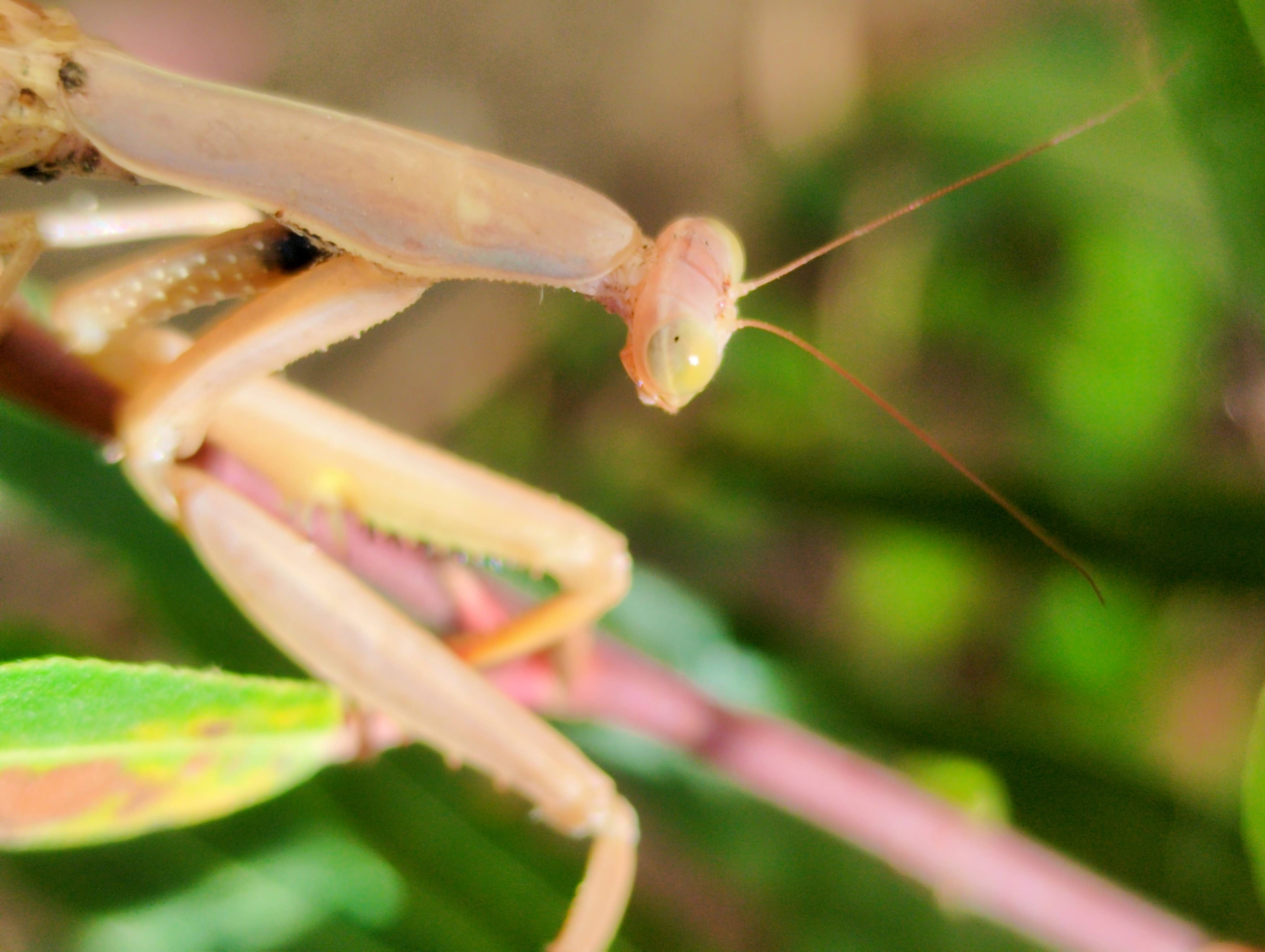
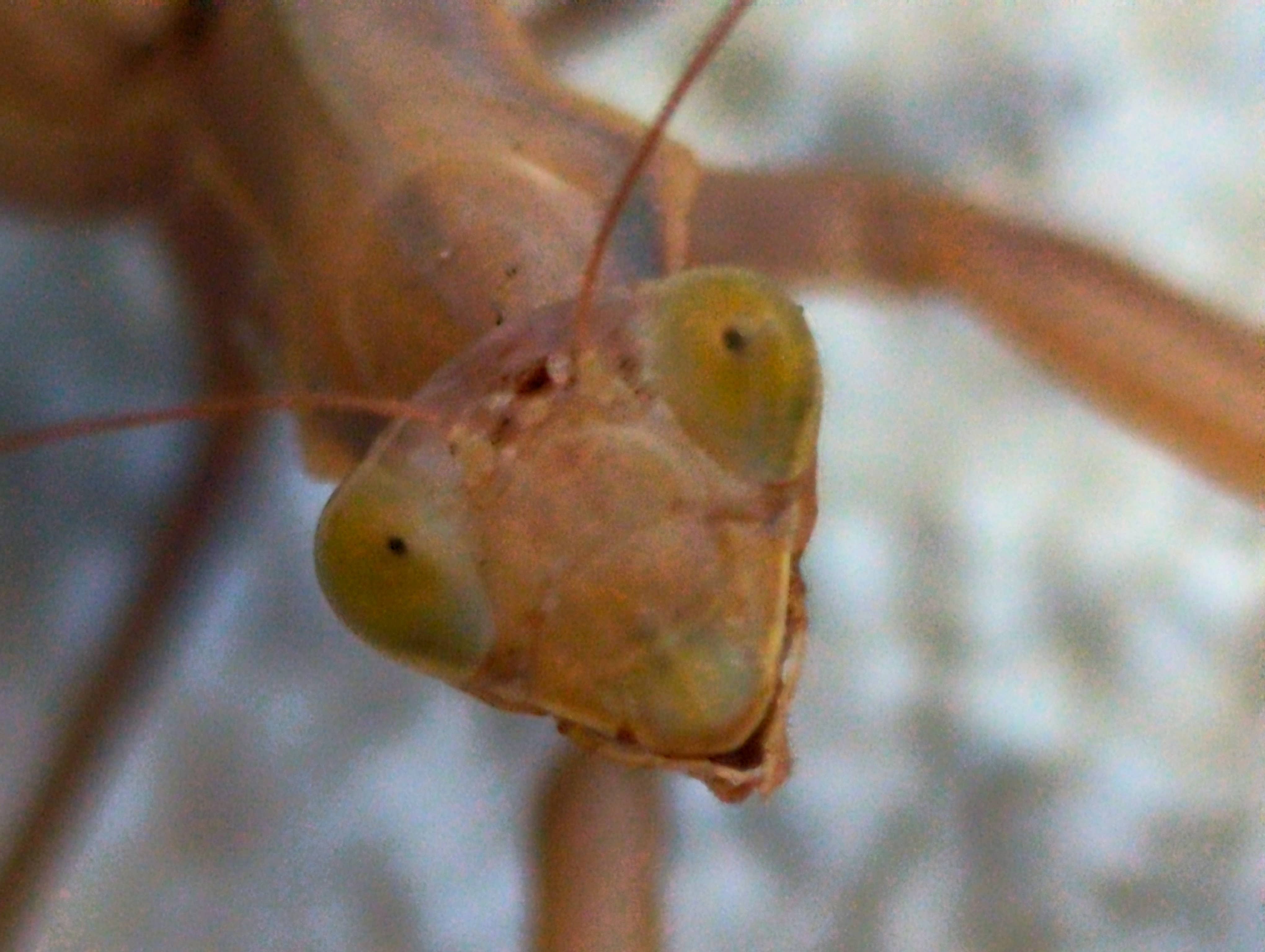
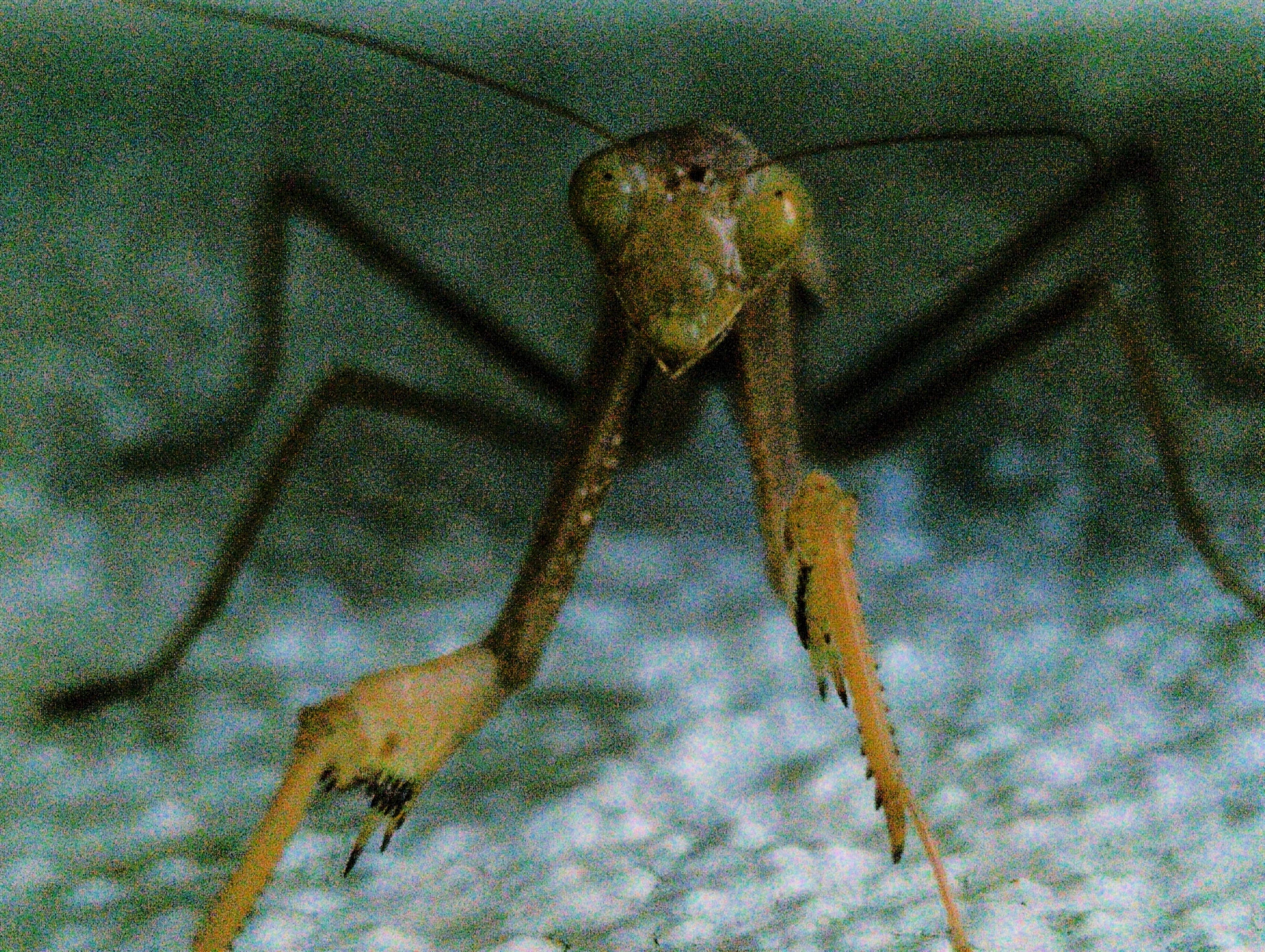
European Mantis (Mantis religiosa)
Oct 17
Terrace Hill, SLO
Apparently late to the party, we went looking for the Tsuchinshan-ATLAS comet. It was at its brightest at the beginning of October, and it was fading away at this point.
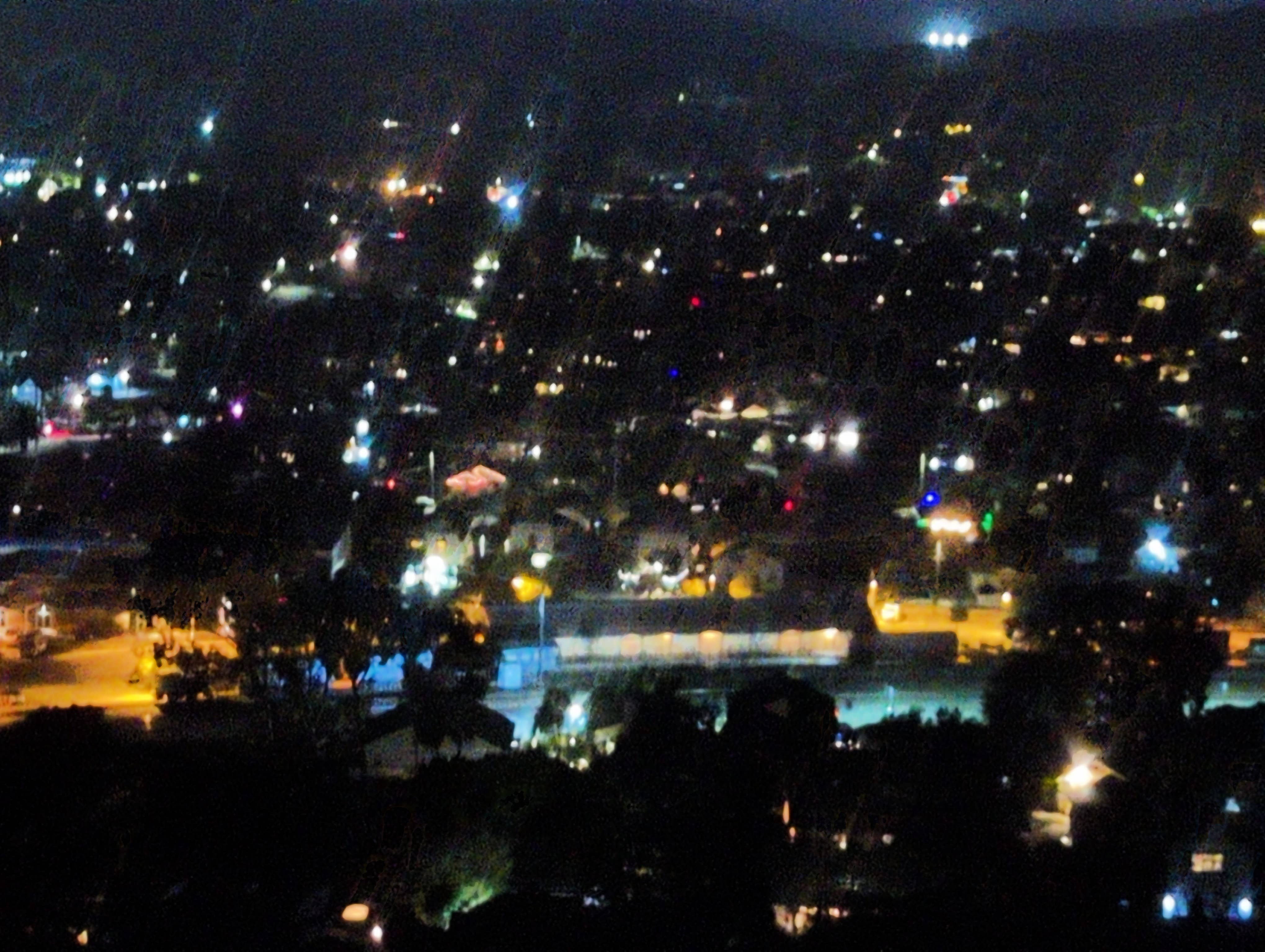
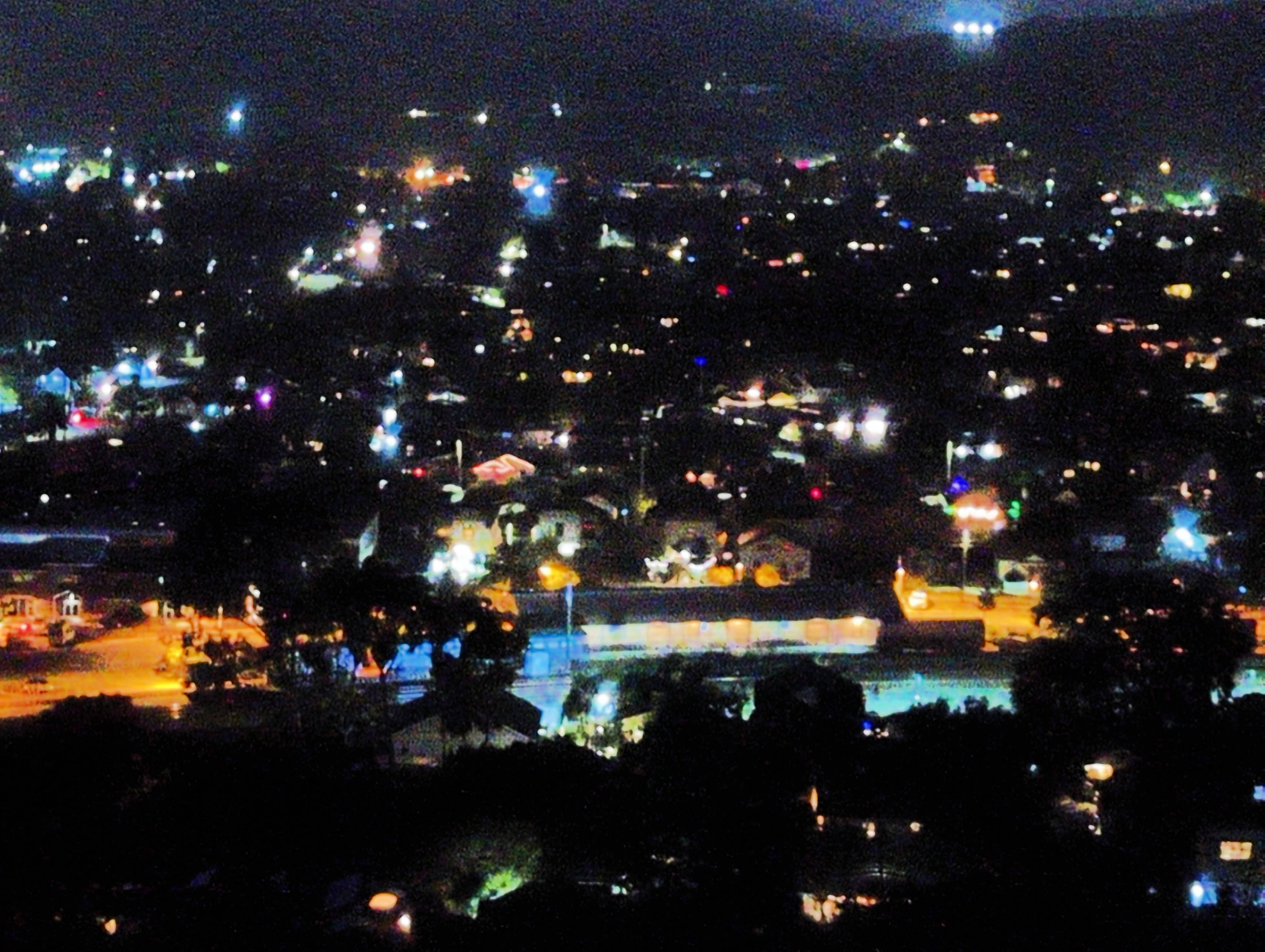
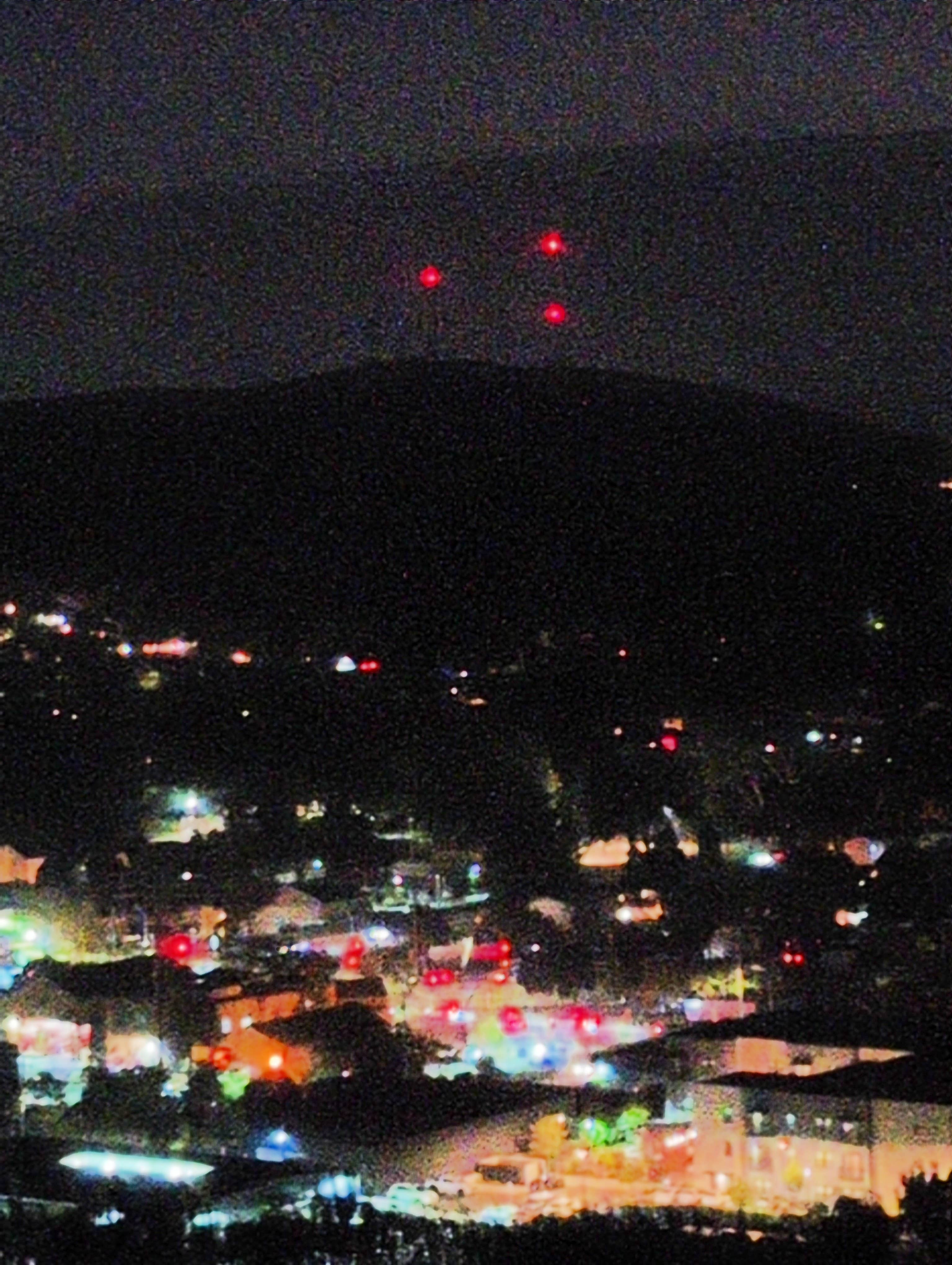
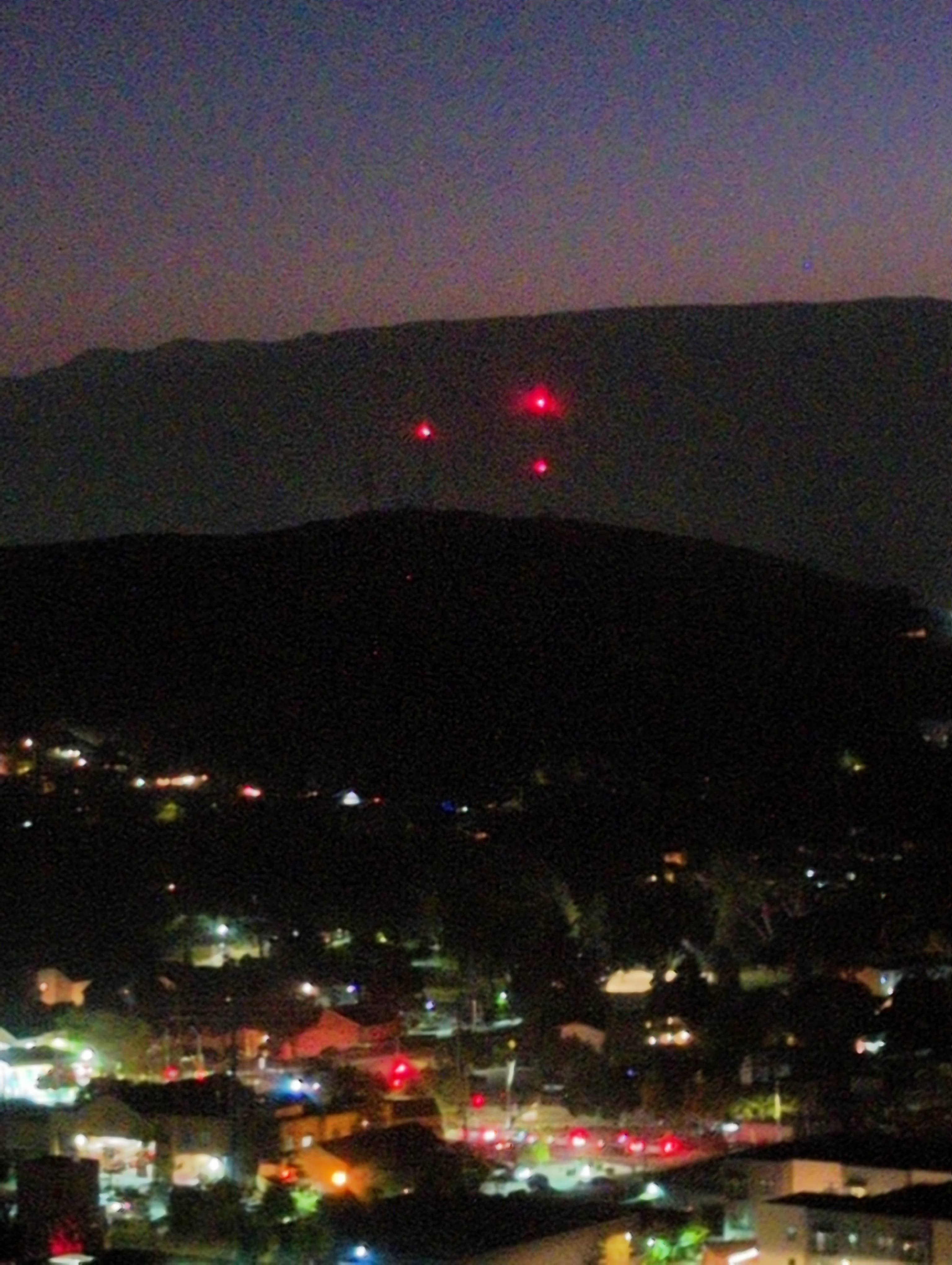
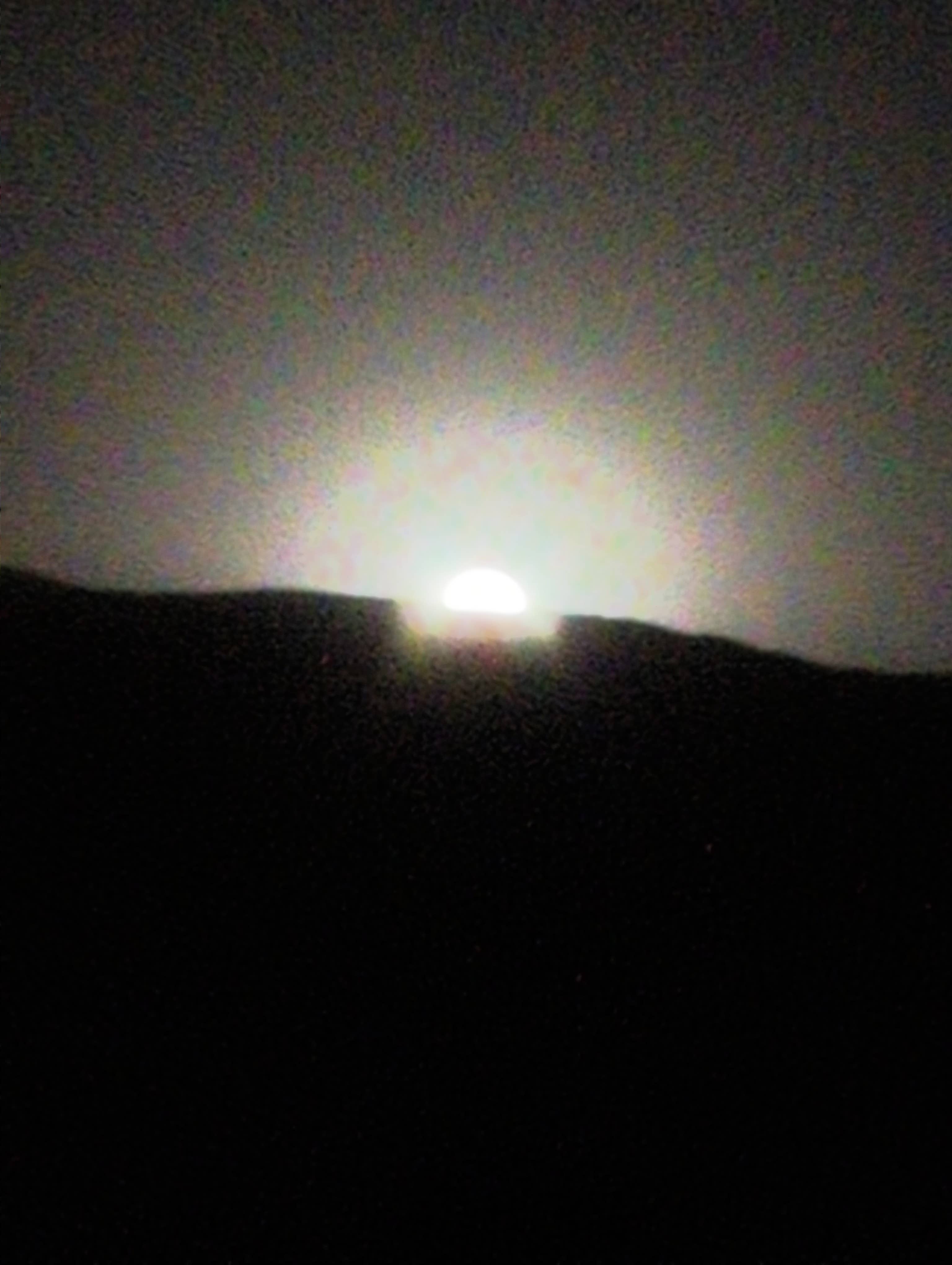
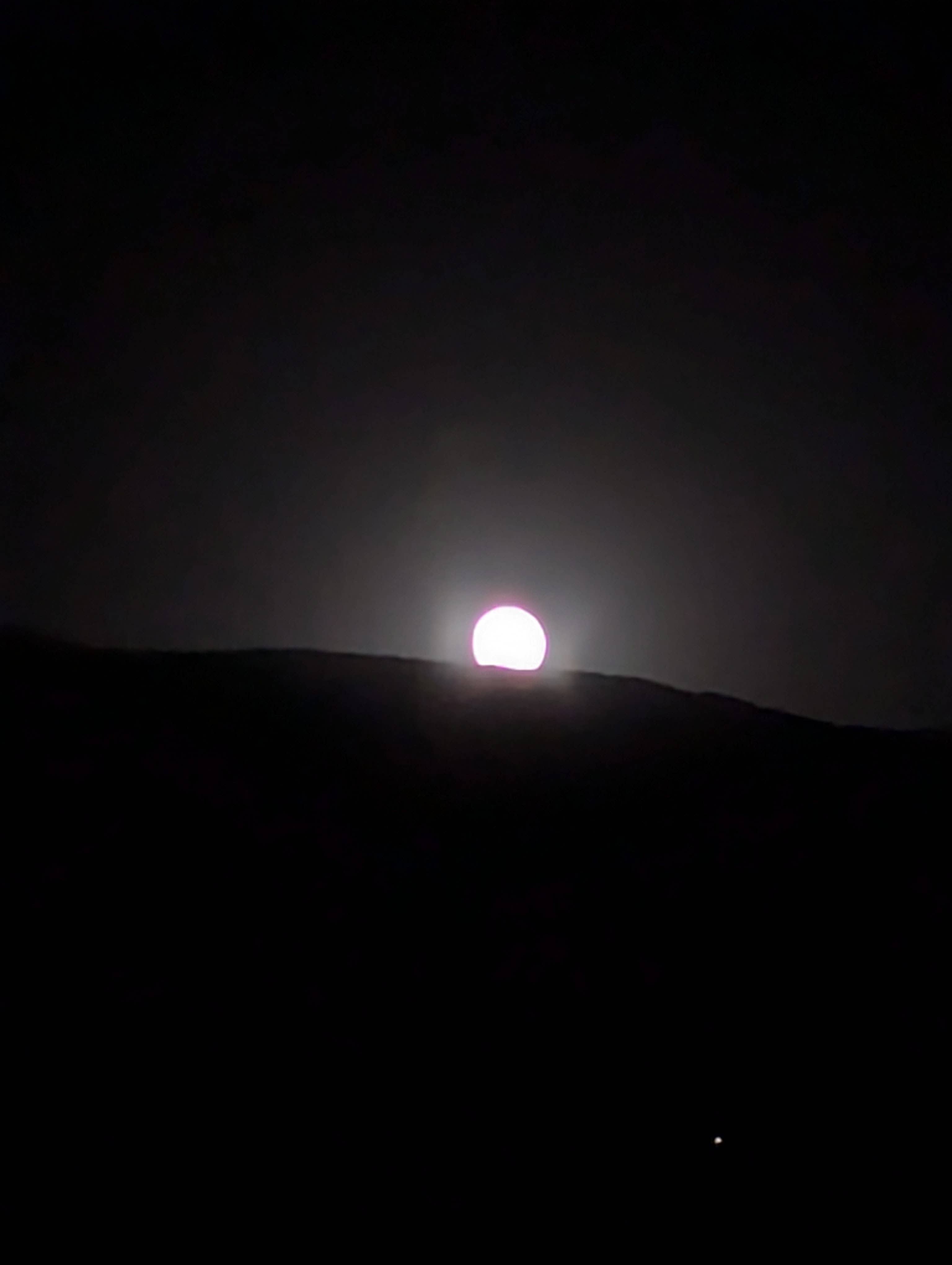
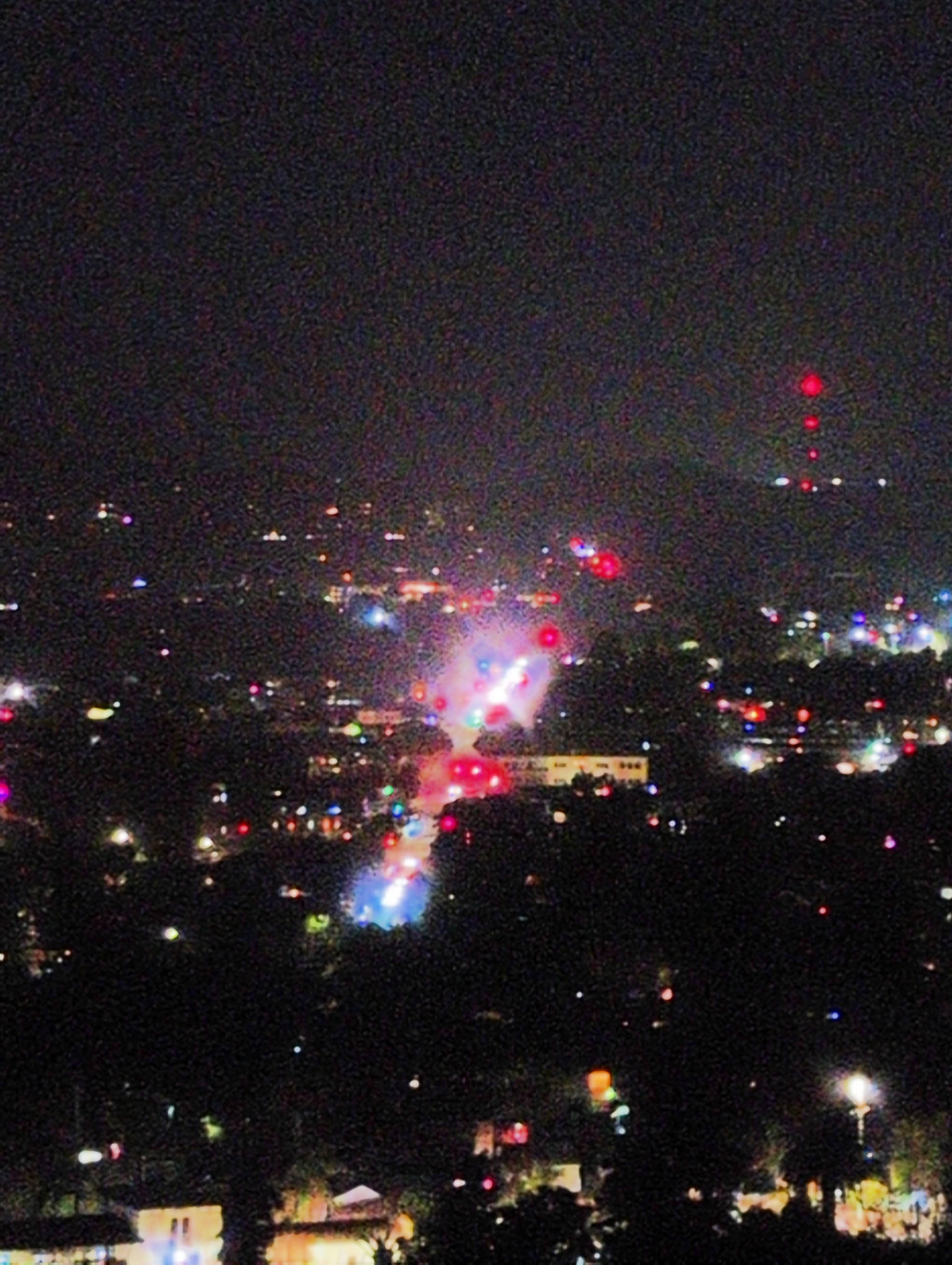

It was a mistake to try to backlog October! I've realized I want to journal, y'know, daily. So I'm cutting it short here. My goal will be to journal in more of an active way, rather than backlogging days. Hopefully starting in 2025. Thanks for reading this far, I think if I'm journing things that are more recent for me I'll be able to do a better job writing about them.
Until next time. Jacojournal Corp.